How to keep a pool warm
A different problem from heating one, and a cheaper one. Heat you never lost costs nothing to replace.
Quick picks
Ranked by effect per dollar on the loss paths below, not by price. Two of these exist because the best answer only works if you actually use it.
| # | Product | Best for | Price |
|---|---|---|---|
| 1 | 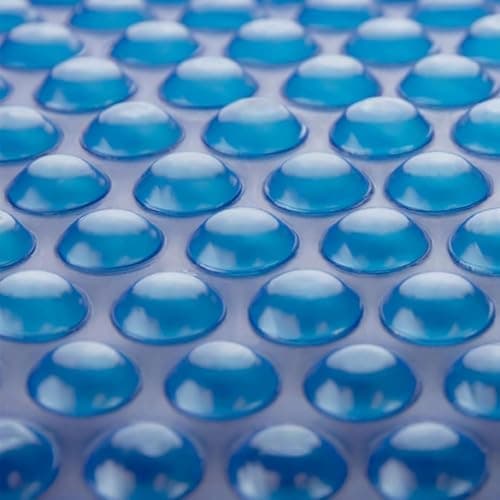 The one that does most of the work Sun2Solar 1600 Series Ultimate Blue Solar Cover Evaporation is about 70% of the loss. A cover is the only thing on this list that addresses it directly. | An inground pool you cover most nights, every season | |
| 2 | No photo The one that makes the first one happen Blue Wave Solar Cover Reel Every published saving assumes the cover is on. A reel is what decides whether it is. | Any inground pool with a cover you are not using enough | |
| 3 | No photo When a blanket will not get used HeatSavr Liquid Solar Cover A molecule-thick film that dispenses itself. Less effect than a blanket, but it is on the water every night. | Odd-shaped pools and anyone who will never use a blanket | |
| 4 | 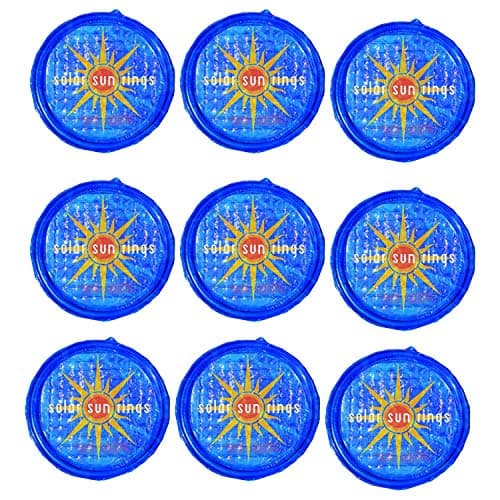 The partial-coverage middle ground Solar Sun Rings Dropped on a few discs at a time. You get roughly the fraction of the surface you actually covered. | A pool you would otherwise leave uncovered because the blanket is too much work |
#ad We earn a commission if you buy through this link, at no extra cost to you. It never changes the ranking. How this site is funded. Prices last checked October 17, 2026.
Keeping is cheaper than adding
Most of the money spent on pool temperature goes on equipment that adds heat. That is the second half of the problem. The first half is that the pool is losing heat continuously, and a degree you never lost costs nothing to put back.
This page is only about the keeping half. Adding heat is a separate question with a separate answer, and the order matters: retention first, because it makes every heating decision afterwards smaller and cheaper.
Where the heat actually goes
A pool loses heat four ways, and they are nowhere near equal in size. The Department of Energy puts about 70% of the total loss on evaporation alone.
| Path | Roughly | What stops it |
|---|---|---|
| Evaporation | About 70% | A cover — the only thing that addresses it directly |
| Radiation to the night sky | Part of the remainder | A cover, partly. Nothing else practical |
| Conduction to ground and walls | Small | Essentially nothing you can retrofit |
| Wind driving evaporation harder | A multiplier on the first row | A windbreak, fencing, planting |
The evaporation share is DOE's. The split of the remaining 30% between radiation and conduction is not something we have a published breakdown for, so we do not put numbers on it — the useful point is that one path dominates and it has one answer.
That distribution is the whole strategy. One path is worth more than everything else combined, and there is exactly one product that addresses it.
| Each pound of 80°F water that evaporates carries away | 1,048 BTU |
| A gallon weighs about 8.33 lb, so a gallon carries | about 8,730 BTU |
This is why a pool that is visibly dropping an inch a week is also dropping temperature. The water level and the temperature are the same measurement. The full derivation, in dollars.
1. Cover it, and cover it consistently
DOE puts the heating-cost saving from covering a pool when it is not in use at 50 to 70%. Nothing else on this page is in that range, and nothing else is close.
The word doing the work in that sentence is consistently. The saving is not a property of owning a cover, it is a property of the cover being on the water. A blanket that goes on four nights out of seven delivers a bit over half of what the figure promises, and the commonest failure in this whole subject is a cover that stopped going on in week three because deploying it alone was a fight.
Which is why a reel is not an accessory. On any pool big enough that the blanket is a two-person job, it is the purchase that decides whether the cover was worth buying at all.
On thickness: it is a service-life decision, not a heat one. The only published hands-on comparison in this category measured the same temperature change across every cover in its group. The cost-per-year comparison is the way to choose.
2. Deal with the wind
Wind does not cool a pool directly in any meaningful amount. What it does is strip the humid layer sitting on the surface and let evaporation run much harder, which is why it belongs with the first row rather than as its own effect.
The DOE figure here is startling and worth quoting exactly: a surface wind of just 7 mph can raise a pool’s energy consumption by 300% — four times the still-air figure. Seven miles an hour is a light breeze.
A windbreak has to be at the water surface to do anything. A tall fence twenty feet away does very little; hedging or fencing close to the pool edge does a lot. If your pool sits in the open and you have never considered this, it may be the largest uncosted item on your heating bill.
The complete version of a windbreak is a structure over the water rather than beside it. Our roundup of pool domes and enclosures ranks what you can buy, and separates the transparent domes that warm the water from the opaque ones sold under the same search term that cannot.
3. Choose a lower target temperature
This one is free and people dismiss it, but the DOE number behind it is large: every extra degree of target temperature costs 10 to 30% more to hold.
DOE puts active swimming at 78 to 80°F and recreational use at 82 to 84°F. Those are genuinely different activities with genuinely different comfort requirements, and a household that swims lengths does not need the temperature a household that floats and chats does. What each target actually costs works it through.
Dropping a target from 84 to 82 is not a small saving. On the DOE range it is somewhere between a fifth and half your heating bill, for two degrees most people cannot reliably feel.
4. Run the pump when it helps, not when it hurts
Circulation itself does not add or remove much heat. But the water going through an exposed pipe run, an uncovered filter, or a solar collector at the wrong time of day does.
- Run filtration in the warmest part of the day rather than overnight where you can. Water moving through above-ground plumbing at 3am is losing heat to the cold air around it.
- If you have solar collectors, stop circulating through them after dark. A panel on a roof at night is a radiator pointed at the sky, and it will actively cool the pool if you keep pushing water through it.
- Do not chase this too far. Filtration exists to keep the water safe. Cutting run time below what the pool needs to stay clear is not a heat strategy, it is a chemistry problem waiting to happen.
5. Liquid covers and rings, for the pools where a blanket will not happen
Both of these are worse than a blanket on the physics and better than a blanket on the behavior, and for a lot of households that is the trade that matters.
A liquid cover — Coverfree is the one we look at closely — is a molecule-thick alcohol film that spreads across the surface and slows evaporation. It does nothing for daytime solar gain, it is disturbed by swimmers and wind, and it is unquestionably less effective than a physical blanket. It is also self-dispensing, so it is on the water every night without anyone deciding to put it there.
Solar rings give you roughly the fraction of the surface you actually covered — evaporation carries on through every gap, in proportion. Their argument is the same: several discs dropped on one at a time gets done, where a full blanket does not.
What does not work
- Black hosepipe coiled on the deck as a retention measure. It is a heat-adding trick, not a keeping one, and the honest version of it needs far more tubing than people expect.
- A winter cover left on in the shoulder season. It is opaque, so it blocks the sun that would warm the water. The two covers are not interchangeable.
- Insulating the pool walls on an existing pool. Conduction is the smallest of the four paths and retrofitting it is not practical.
The order to do it in
- Measure the overnight drop, so you know whether this is your problem.
- Buy a cover, and a reel if the pool is large enough to need one.
- Deal with wind at the water surface if the pool sits exposed.
- Drop the target temperature a degree or two and see if anyone notices.
- Move filtration into daylight hours.
- Re-measure. Then, and only then, size a heater to whatever gap is left — which will be a smaller and cheaper heater than the one you would have bought first.
For the shoulder months specifically, stretching the swim season takes the same measures and ranks them for April and October rather than July.
Every pick, in detail
What each one publishes, what is good and bad about it, and — the section this category usually omits — what we could not judge without owning one.
Sun2Solar 1600 Series Ultimate Blue Solar Cover
The cover to buy if you intend to keep using it in five years. 16 mil is the thickest tier the category sells, and thickness on a solar cover buys durability rather than heat — Bob Vila measured every cover in its hands-on group at the same 4 to 5 degrees, from 12-mil clear to 16-mil blue. Pay the extra for the one that survives being dragged over the coping twice a day, not for a temperature difference that did not show up in the only published one-hour test in this category.
Best for An inground pool you cover most nights, every season
| Price shown for | 24 ft roundThis product is sold in several sizes on one listing. The live price and photograph on this page are the ones Amazon returns for this variant; other sizes are priced separately. | Retail listing |
|---|---|---|
| Thickness | 16 milThe manufacturer publishes no retrievable specification sheet; figure is as listed at retail. | Retail listing |
| Color | Blue | Retail listing |
| Stated lifespan | 5 to 10 years for the 16-mil tierSwim University's published figure for 16-mil covers generally, not a Sun2Solar warranty statement. | Retail listing |
| Bubble side | Bubbles face the waterCategory-wide instruction, not brand-specific. The bubbles are the insulating layer and they have to touch the water. | Published standard |
4 to 5 degrees F in one hour
Claimed by Bob Vila, measured across all covers in their group. Conditions: One hour under 2pm sun on 89 to 92 degree F days. Source
Their figure was the same for every cover they put on the water. Read our reconciliation of what a one-hour reading actually measures before you plan around this number.
- Thickest tier sold, which is where the durability difference actually is
- Blue absorbs more of the incoming energy at the surface than clear does
- Cuts oversize to your pool shape with household scissors
- Heavy and awkward at 16 mil — a large inground cover is genuinely a two-person job without a reel
- Costs meaningfully more than the 12-mil version for no measured heating advantage
- Whether the seams hold up over five seasons of daily handling
- How the bubble layer survives repeated dragging over rough coping
- Whether the stated lifespan tier holds for this specific product line
These need a unit in hand across a season. We do not have one, so we do not have an opinion worth printing on them.
#ad We earn a commission if you buy through this link, at no extra cost to you. It never changes the ranking. How this site is funded. Prices last checked October 17, 2026.
Blue Wave Solar Cover Reel
A reel is the single highest-leverage purchase in this whole category and almost nobody frames it that way. Every DOE saving figure assumes the cover is on the pool when the pool is not in use. A cover that takes two people and five minutes comes off on Friday and goes back on in October. A reel turns that into thirty seconds alone, which is the difference between the savings existing and not.
Best for Any inground pool with a cover you are not using enough
| Type | Wheeled above-ground-style reel for inground and above-ground useThe manufacturer publishes no retrievable specification sheet; figure is as listed at retail. | Retail listing |
|---|---|---|
| Why it matters | Converts a two-person five-minute job into a one-person thirty-second jobOur framing, not a manufacturer claim. The published savings all assume the cover is actually on. | Our arithmetic |
- Turns the cover into something you will genuinely use daily
- Keeps the cover off the ground, which is where covers get damaged
- Wheels, so it moves out of the way
- Costs a real fraction of what the cover itself costs
- Takes up deck space permanently
- Assembly is fiddly on every reel in this category
- How the tube and hardware hold up outdoors across seasons
- Whether the width range covers your pool without a wobble
- Assembly quality and hardware fit
These need a unit in hand across a season. We do not have one, so we do not have an opinion worth printing on them.
#ad We earn a commission if you buy through this link, at no extra cost to you. It never changes the ranking. How this site is funded. Prices last checked October 17, 2026.
HeatSavr Liquid Solar Cover
A monolayer chemical that spreads a molecule-thick film across the surface to slow evaporation. It is the only option here that does not require you to physically cover anything, which is exactly why people buy it — and it is also the reason to be careful with the claims: a film that thin is disrupted by swimmers, wind and the return jets, and it is doing nothing for the hours after that until it re-spreads.
Best for Odd-shaped pools and anyone who will never use a blanket
| How it works | Self-spreading monolayer that slows surface evaporation | Published standard |
|---|---|---|
| Typical price | About $10 to $30 or moreSwim University's published range for liquid covers generally, read 2026-09-02. | Retail listing |
| Effect on daytime gain | None to speak ofA monolayer is optically negligible. Any benefit is on the evaporation side, which is the overnight-retention mechanism, not daytime gain. | Our arithmetic |
- Works on any pool shape, including the ones no blanket fits
- Nothing to store, fold, drag or trip over
- Cheap enough to try
- Disrupted by swimming, wind and circulation, and takes time to re-form
- Nothing published that would let you quantify what it actually saves
- Does not warm the pool during the day the way a physical cover can
- How much evaporation it actually suppresses on a real pool
- How quickly the film re-forms after use
- Whether dosing frequency in practice matches the label
These need a unit in hand across a season. We do not have one, so we do not have an opinion worth printing on them.
#ad We earn a commission if you buy through this link, at no extra cost to you. It never changes the ranking. How this site is funded. Prices last checked October 17, 2026.
Solar Sun Rings
Floating discs you drop on one at a time instead of wrestling a full blanket, sold individually. That convenience is the whole product, and it comes out of the physics: rings leave gaps, and evaporation carries on through every square foot you did not cover. Expect a fraction of a full cover's effect roughly in proportion to the surface you actually covered, and buy them because you will use them, not because they work better.
Best for A pool you would otherwise leave uncovered because the blanket is too much work
| Price shown for | One 60-inch ringSolar Sun Rings list this 60-inch ring by pack count, each pack its own listing: single, 3, 6 and 9. The live price and photograph on this page are the ones Amazon returns for the single-ring listing; the multi-ring packs are priced separately and work out cheaper per ring. | Retail listing |
|---|---|---|
| Coverage | Partial — discs leave gaps between and at the edgesThe gap is not a defect, it is how the product works. It does mean the DOE cover-saving figures do not apply at full strength. | Published standard |
| Typical price | About $40 to $55 each, or about $150 and up per multi-ring packRead from the brand's own current Amazon listings on 2026-10-12: $54.99 for the single ring, and $149.97, $269.94 and $359.91 for the 3, 6 and 9-ring packs — about $40 to $50 a ring as the pack gets larger. Check the live price before buying. | Retail listing |
- One person can put them on and take them off in a couple of minutes
- No reel, no folding, no dragging anything over the coping
- Buy a few at a time instead of committing to one large purchase
- Partial coverage means partial results — the gaps keep evaporating
- Per square foot of coverage they cost far more than a blanket
- Wind moves them around
- How much surface a given number of rings really covers on your pool shape
- How long the material lasts against a full blanket
- Whether the anchoring holds in a breeze at your site
These need a unit in hand across a season. We do not have one, so we do not have an opinion worth printing on them.
#ad We earn a commission if you buy through this link, at no extra cost to you. It never changes the ranking. How this site is funded. Prices last checked October 17, 2026.
Questions people actually ask
What is the cheapest way to keep a pool warm?
How much heat does a pool lose overnight?
Does a solar cover keep a pool warm at night?
Does wind really make that much difference to a pool?
Is it cheaper to keep a pool warm or to heat it up when needed?
- Average retail price of electricity to US residential customers: 18.34 cents/kWh, June 2026U.S. Energy Information Administration · read 2026-09-02
- US residential natural gas price: $24.09 per thousand cubic feet, June 2026U.S. Energy Information Administration · read 2026-09-02
- US residential propane price: $2.674 per gallon, week ending 30 March 2026U.S. Energy Information Administration · read 2026-09-02
- Energy content conversion factors: 3,412 BTU per kWh, 1,036 BTU per cubic foot of natural gas, 91,452 BTU per gallon of propaneU.S. Energy Information Administration · read 2026-09-02
- U.S. Department of Energy pool-energy figures (evaporation share, BTU per pound evaporated, cover savings, recommended temperatures, wind effect)Recreonics, reproducing and attributing the U.S. Department of Energy · read 2026-09-02
- Pool heater roundup: the 8.33 BTU per gallon per °F figure, attributed on the page to Alicia Toedter of Leslie'sBob Vila · read 2026-09-02
Every URL above was fetched and returned content on the date shown. Where a figure is ours rather than somebody else’s, the arithmetic is on the page and on the methodology page. If you find an error in it, we would genuinely like to know.
Read next
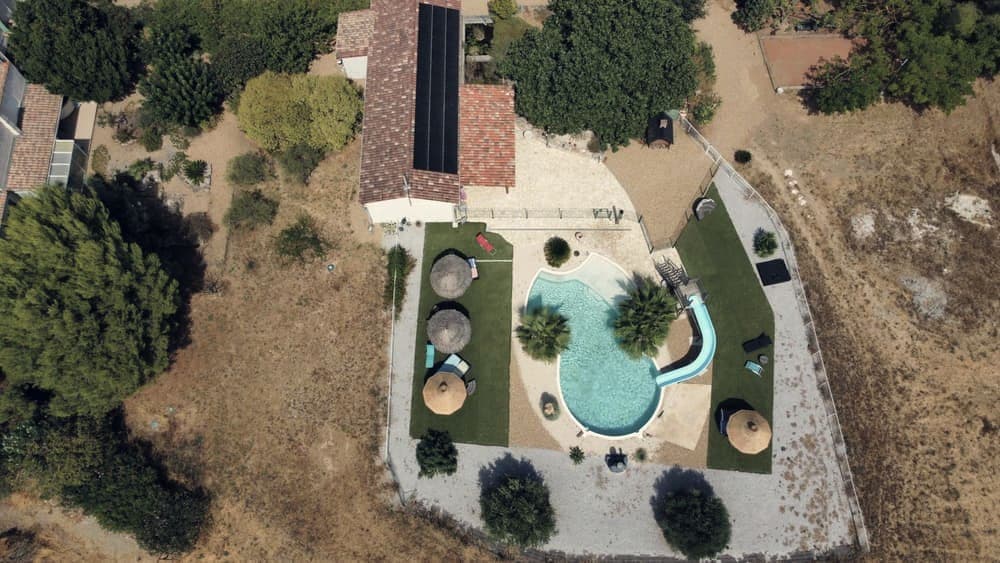
Pool domes and enclosures
Domes and enclosures for above-ground pools, ranked on shell transparency and on whether the maker publishes a fitment spec you can measure against. With the DOE wind figure behind the whole idea.
Cover Free liquid solar blanket review
Natural Chemistry's Coverfree: the weekly dose arithmetic nobody works out, how long a quart really lasts on your pool, and why the 85% and 70% claims on the same listing are not consistent.
Pool thermometers worth buying
Wireless, analog and WiFi-logging pool thermometers ranked on whether you will actually take the dusk-and-dawn reading, what each maker publishes, and the surface-reading limit every float shares.
Keeping a pool warm overnight
The specific problem of overnight heat loss: what causes it, what each fix is worth, and the order to try them in.

Stretching the swim season
What actually adds weeks at each end of the season, why the shoulder season is a different problem from midsummer, and the order to spend in.
How fast a pool loses heat
Evaporation, radiation, convection and conduction, with the arithmetic on what each night actually costs and a measurement you can take yourself.
Solar pool covers worth buying
Ranked on the specifications that actually differ between covers — thickness tier and published lifespan — because the only hands-on test in this category found no heating difference at all.
Your pool is too cold. Start here.
A decision tree rather than an essay: four measurements that identify which problem your cold pool actually has, and what each one costs to fix.