How long does it take to heat a pool?
One division, and one trap. The division is easy; the trap costs people money.
Quick picks
Ranked by speed, which on this page is the thing being measured.
| # | Product | Best for | Price |
|---|---|---|---|
| 1 | 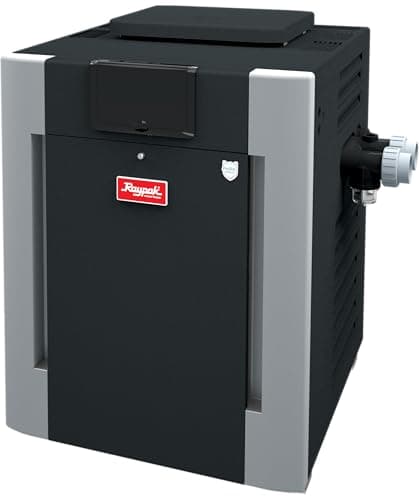 Fastest Raypak Digital Natural Gas Pool Heater About 5 hours for a 10-degree rise on a 20,000-gallon pool. | Heating fast and occasionally, rather than holding a temperature | |
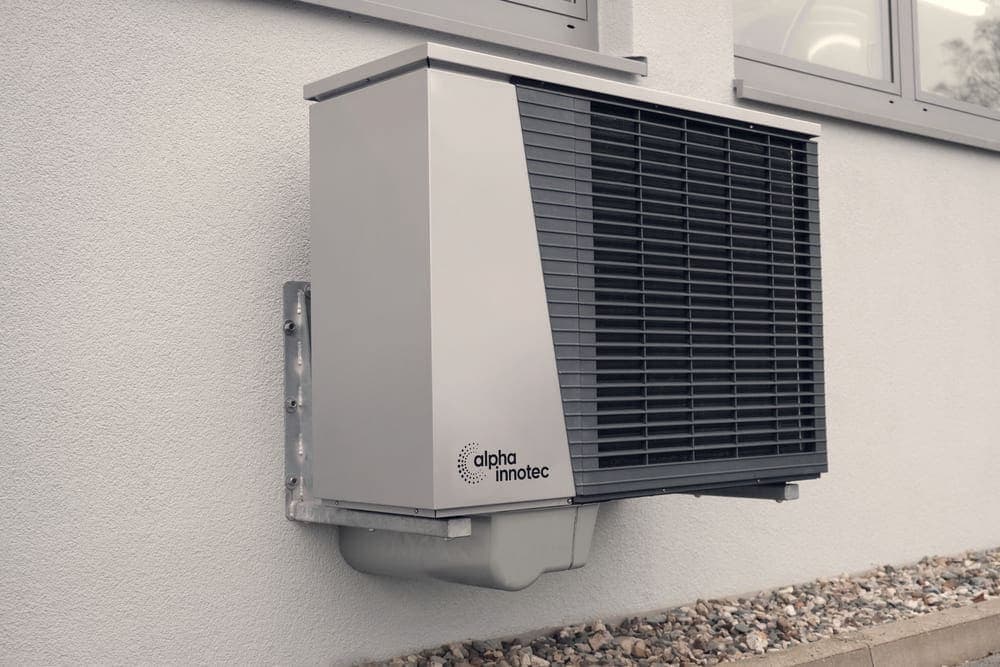
| 2 | 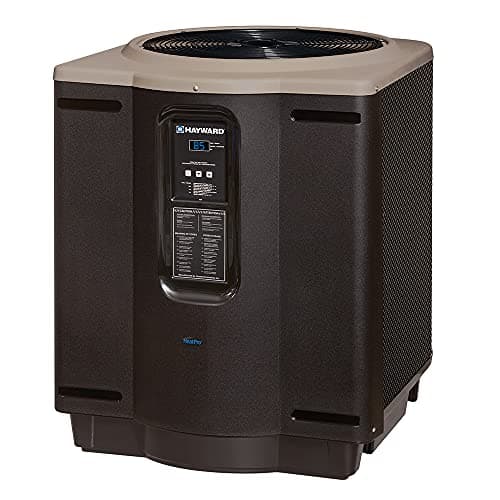 Slower, much cheaper Hayward HeatPro Pool Heat Pump About 12 hours for the same job, at about 38% of the cost. | Lowest running cost per degree when you want real temperature control | |
| 3 | 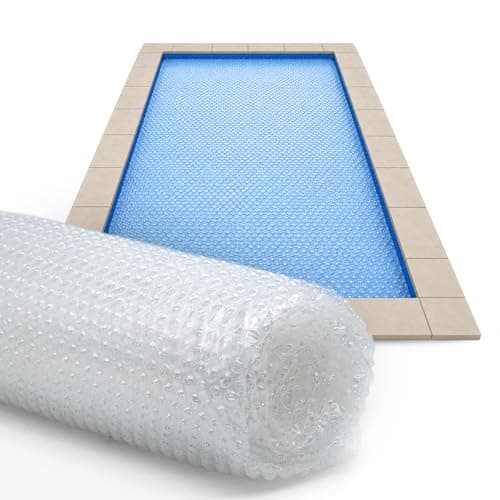 Shortens every heat-up Sun2Solar 1200 Series Crystal Clear Solar Cover A heater fighting live heat loss is doing part of the job twice. | Most pools, most budgets — the default recommendation |
#ad We earn a commission if you buy through this link, at no extra cost to you. It never changes the ranking. How this site is funded. Prices last checked October 18, 2026.
The formula
| Energy needed = gallons x 8.33 x ΔT | |
| Hours = energy needed ÷ delivered BTU per hour |
That is the whole thing. Everything below is applying it, plus one correction for how heaters are rated.
The 8.33 is BTU per gallon per degree Fahrenheit — a gallon of pool water weighs about 8.33 pounds, and one BTU raises one pound by one degree by definition. The derivation is here.
The trap
Worked examples
| 20,000 x 8.33 x 10 | = 1,666,000 BTU needed |
| 400,000 BTU/hr gas x 82% = 328,000 delivered | |
| 1,666,000 ÷ 328,000 | = 5.1 hours |
| 140,000 BTU/hr heat pump (already output) | |
| 1,666,000 ÷ 140,000 | = 11.9 hours |
Five hours on gas, twelve on a heat pump — same pool, same ten degrees
| Pool | 400k BTU gas (82%) | 250k BTU gas (82%) | 140k BTU heat pump | 100k BTU heat pump |
|---|---|---|---|---|
| 10,000 gal | 2.5 | 4.1 | 5.9 | 8.3 |
| 15,000 gal | 3.8 | 6.1 | 8.9 | 12.5 |
| 20,000 gal | 5.1 | 8.1 | 11.9 | 16.7 |
| 25,000 gal | 6.4 | 10.2 | 14.9 | 20.8 |
| 30,000 gal | 7.6 | 12.2 | 17.9 | 25.0 |
Ideal figures: they assume nothing escapes while you heat. In practice some does, and the gap between these numbers and reality is exactly the heat your pool is losing during the heat-up — which is what a cover reduces.
The calculator does this for your pool and handles the input/output conversion so you can compare two real heaters honestly.
Why real heat-ups take longer than the table
The table assumes a perfectly insulated pool, which yours is not. While the heater runs, the pool is losing heat to evaporation, to the night sky and to the air — and DOE puts about 70% of that loss down to evaporation alone. Your heater is filling a bucket with a hole in it.
Two consequences worth acting on:
- Cover the pool while it heats. Free, and it directly reduces the loss the heater is competing against. It matters most in cool air and wind — a 7 mph breeze can raise energy consumption by 300%, per DOE.
- Heat during the day rather than overnight. The air is warmer, the sun is contributing, and radiative loss to a clear night sky is not happening.
Does a bigger pump heat it faster?
No, beyond a point. The flow rate has to sit within the heater’s specified range so the water spends the right amount of time in the heat exchanger. Below that range you get poor transfer and possible overheating; above it you gain nothing and can actually reduce efficiency. The heater’s output is what sets the pace.
The practical answer
For most residential pools with a sensibly sized heater, expect overnight for a heat pump and an afternoon for a gas heater. If you can plan a day ahead, the heat pump’s extra hours cost you nothing but foresight and save you the running-cost multiple every single time.
Every pick, in detail
What each one publishes, what is good and bad about it, and — the section this category usually omits — what we could not judge without owning one.
Raypak Digital Natural Gas Pool Heater
The right answer when speed matters more than running cost — a weekend pool you want warm on Friday afternoon rather than one you hold at temperature all season. At the assumptions we publish, gas costs roughly two and a half times what a heat pump costs per delivered BTU, and it will get there in a fifth of the time. Buy the speed if you need the speed.
Best for Heating fast and occasionally, rather than holding a temperature
| Type | Natural gas or propane fired, digital controlThe manufacturer publishes no retrievable specification sheet; figure is as listed at retail. | Retail listing |
|---|---|---|
| Rating convention | Rated by BTU/hr INPUTA 400,000 BTU gas heater burns 400,000 BTU an hour and delivers roughly 82% of it. Do not compare that number directly against a heat pump's output rating. | Published standard |
| Cost per million BTU delivered | About $28.36 at our published assumptionsUS average residential natural gas at $24.09/Mcf (EIA, June 2026) and an assumed 82% thermal efficiency. | Our arithmetic |
- Fast — hours rather than most of a day on a full-size pool
- Works the same in cold air, unlike a heat pump
- Lower purchase price than a heat pump of equivalent real output
- Roughly two and a half times a heat pump's cost per delivered BTU
- Needs a gas line sized for it, which is often the real cost
- Propane instead of natural gas raises the running cost by about a quarter again
- The efficiency this specific unit achieves in service
- Heat exchanger life against your water chemistry
- Whether your existing gas supply can feed it without an upgrade
These need a unit in hand across a season. We do not have one, so we do not have an opinion worth printing on them.
#ad We earn a commission if you buy through this link, at no extra cost to you. It never changes the ranking. How this site is funded. Prices last checked October 18, 2026.
Hayward HeatPro Pool Heat Pump
If you are heating a pool with electricity, this is the shape of machine to do it with. A heat pump moves heat instead of making it, and at the assumptions we publish it delivers a million BTU into the water for about a fifth of what an electric resistance heater costs to deliver the same. It is slower than gas and it fades as the air gets colder, which is exactly when you want it — that trade is the whole decision.
Best for Lowest running cost per degree when you want real temperature control
| Type | Air-source heat pumpThe manufacturer publishes no retrievable specification sheet; figure is as listed at retail. | Retail listing |
|---|---|---|
| Rating convention | Rated by BTU/hr OUTPUTThis is the trap in the category. Gas heaters are rated by fuel INPUT, heat pumps by heat OUTPUT. A 140,000 BTU heat pump and a 140,000 BTU gas heater do not deliver the same heat. | Published standard |
| Cost per million BTU delivered | About $10.75 at our published assumptionsUS average residential electricity at 18.34 cents/kWh (EIA, June 2026) and an assumed COP of 5.0. Both are substitutable on our running-cost calculator. | Our arithmetic |
- Cheapest running cost per delivered BTU of any controllable heater
- No gas line, no combustion, no flue
- Holds a set temperature rather than depending on the weather
- Slow — expect most of a day to move a full-size pool ten degrees
- Efficiency falls with air temperature, so it is weakest in the shoulder season
- High purchase price against a gas heater of comparable output
- The COP this specific unit achieves at your conditions
- Compressor and control-board longevity
- Noise at the distance your deck actually sits from it
These need a unit in hand across a season. We do not have one, so we do not have an opinion worth printing on them.
#ad We earn a commission if you buy through this link, at no extra cost to you. It never changes the ranking. How this site is funded. Prices last checked October 18, 2026.
Sun2Solar 1200 Series Crystal Clear Solar Cover
The value pick, and the one whose logic actually holds up. A clear cover transmits more sunlight into the body of the pool instead of absorbing it at the surface, and 12 mil is the point where lifespan stops being the limiting factor. Bob Vila measured this and the 16-mil blue at the same 4 to 5 degrees in an hour, so you are paying less for the same measured result and giving up some years of service life.
Best for Most pools, most budgets — the default recommendation
| Price shown for | 20 x 40 ft rectangleThis product is sold in several sizes on one listing. The live price and photograph on this page are the ones Amazon returns for this variant; other sizes are priced separately. | Retail listing |
|---|---|---|
| Thickness | 12 milThe manufacturer publishes no retrievable specification sheet; figure is as listed at retail. | Retail listing |
| Color | Clear | Retail listing |
| Stated lifespan | 3 to 4 years for the 12-mil clear tierSwim University's published figure for 12-mil clear covers generally. | Retail listing |
| Bubble side | Bubbles face the water | Published standard |
4 to 5 degrees F in one hour
Claimed by Bob Vila, measured across all covers in their group. Conditions: One hour under 2pm sun on 89 to 92 degree F days. Source
- Clear transmits more light into the water instead of stopping it at the surface
- 12 mil is the sweet spot: real service life without 16-mil bulk
- Cheaper than the 16-mil tier with no measured heating penalty
- Shorter published lifespan tier than 16 mil
- A clear cover shows algae and debris more obviously, which some people dislike
- Whether clear genuinely outlasts or under-lasts blue in the same thickness
- Real-world tear resistance at a pool with rough edges
- How much the clear material clouds over a season of UV
These need a unit in hand across a season. We do not have one, so we do not have an opinion worth printing on them.
#ad We earn a commission if you buy through this link, at no extra cost to you. It never changes the ranking. How this site is funded. Prices last checked October 18, 2026.
Questions people actually ask
How long does it take to heat a pool 10 degrees?
Why is my pool heating slower than the calculator says?
Can I speed up pool heating?
- Average retail price of electricity to US residential customers: 18.34 cents/kWh, June 2026U.S. Energy Information Administration · read 2026-09-02
- US residential natural gas price: $24.09 per thousand cubic feet, June 2026U.S. Energy Information Administration · read 2026-09-02
- US residential propane price: $2.674 per gallon, week ending 30 March 2026U.S. Energy Information Administration · read 2026-09-02
- Energy content conversion factors: 3,412 BTU per kWh, 1,036 BTU per cubic foot of natural gas, 91,452 BTU per gallon of propaneU.S. Energy Information Administration · read 2026-09-02
- U.S. Department of Energy pool-energy figures (evaporation share, BTU per pound evaporated, cover savings, recommended temperatures, wind effect)Recreonics, reproducing and attributing the U.S. Department of Energy · read 2026-09-02
- Pool heater roundup: the 8.33 BTU per gallon per °F figure, attributed on the page to Alicia Toedter of Leslie'sBob Vila · read 2026-09-02
Every URL above was fetched and returned content on the date shown. Where a figure is ours rather than somebody else’s, the arithmetic is on the page and on the methodology page. If you find an error in it, we would genuinely like to know.
Read next

Pool heating time calculator
Enter your gallons, the rise you want and your heater's rating. Handles the gas-versus-heat-pump rating trap and prints the whole calculation.
How to heat a pool fast
What actually governs heating speed, the input-versus-output rating trap that makes gas heaters look faster than they are, and the tricks that do and do not help.
What size pool heater do I need?
How to size a heater from your pool's actual energy requirement, the input-versus-output rating trap, and why the answer gets smaller once you own a cover.

How much does it cost to heat a pool?
The complete cost model: what a million BTU costs to deliver with each fuel, what that means per degree and per pool size, and why heat-up cost is not your monthly bill.
Heat pump vs gas pool heater
The two options priced per delivered BTU and timed on the same pool, with the one question that decides which trade suits you.