How much does it cost to heat a pool?
Not a range somebody remembered. A model you can run on your own pool, built from published prices with every step shown.

Quick picks
The four purchases the numbers on this page point at, including the one they point away from.
| # | Product | Best for | Price |
|---|---|---|---|
| 1 |  Biggest single saving available Sun2Solar 1200 Series Crystal Clear Solar Cover DOE puts covering a pool when not in use at 50-70% of heating cost. Nothing else comes close per dollar. | Most pools, most budgets — the default recommendation | |
| 2 | 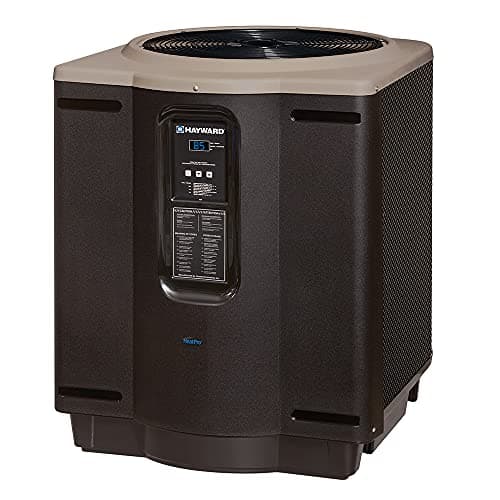 Cheapest controllable heat Hayward HeatPro Pool Heat Pump $10.75 per million BTU delivered against $28.36 for gas. | Lowest running cost per degree when you want real temperature control | |
| 3 | No photo Zero running cost SmartPool SunHeater S601P Solar Heating System The only line in the table below that reads $0.00. | Adding real heat with no running cost, on a sunny site | |
| — | No photo The expensive mistake An electric resistance pool heater $53.75 per million BTU — five times a heat pump on the same electricity. | Spas and very small above-ground pools only |
#ad We earn a commission if you buy through this link, at no extra cost to you. It never changes the ranking. How this site is funded. Prices last checked October 18, 2026.
Why the usual answer is useless
Search this question and you will be told gas runs $200 to $500 a month and a heat pump $50 to $150. Those ranges may well be true of somebody. They are not derived from anything you can check, and they cannot tell you whether they describe a 10,000-gallon pool in Arizona or a 30,000-gallon pool in Michigan.
So here is the model instead. It has three inputs, all published, and it produces an answer for your pool rather than for an average one.
Step one: what a million BTU costs to buy
| Natural gas: $24.09 per Mcf ÷ 1.036 MMBtu per Mcf | = $23.25 |
| Propane: $2.674/gal ÷ 91,452 BTU/gal x 1,000,000 | = $29.24 |
| Electricity: $0.1834/kWh ÷ 3,412 BTU/kWh x 1,000,000 | = $53.75 |
Prices are US residential averages from the EIA: electricity and natural gas for June 2026, propane for the week ending 30 March 2026. Energy contents are EIA's published conversion factors. At this stage electricity looks ruinous, which is exactly the comparison that gets published and exactly why it misleads.
Step two: divide by what the equipment delivers
This is the step the category leaves out, and it inverts the ranking completely.
| Solar: no fuel | = $0.00 |
| Heat pump: $53.75 ÷ COP 5.0 | = $10.75 |
| Natural gas: $23.25 ÷ 82% efficiency | = $28.36 |
| Propane: $29.24 ÷ 82% efficiency | = $35.66 |
| Electric resistance: $53.75 ÷ COP 1.0 | = $53.75 |
The cheapest and dearest controllable options differ by a factor of five
A heat pump does not make heat, it moves it — delivering about five units for every one it draws. That is why electricity goes from worst to best depending entirely on which machine is on the end of it. COP 5.0 and 82% efficiency are our stated assumptions; both are editable in the calculator.
Step three: your pool, your degrees
| BTU = gallons x 8.33 x degrees | |
| Cost = (BTU ÷ 1,000,000) x cost per million BTU delivered |
| Pool | Solar | Heat pump | Natural gas | Propane | Resistance |
|---|---|---|---|---|---|
| 10,000 gal | $0.00 | $8.95 | $23.62 | $29.70 | $44.77 |
| 15,000 gal | $0.00 | $13.43 | $35.43 | $44.55 | $67.16 |
| 20,000 gal | $0.00 | $17.91 | $47.24 | $59.41 | $89.55 |
| 30,000 gal | $0.00 | $26.86 | $70.86 | $89.11 | $134.32 |
One-time temperature RISE, not a monthly bill. See the next section — that distinction is where most published figures go wrong.
| Pool | Heat pump | Natural gas | Electric resistance |
|---|---|---|---|
| 10,000 gal | $0.90 | $2.36 | $4.48 |
| 20,000 gal | $1.79 | $4.72 | $8.95 |
| 30,000 gal | $2.69 | $7.09 | $13.43 |
Heat-up cost is not your monthly bill
This is the distinction the whole category blurs, and getting it right changes what you should spend money on.
Everything above is the cost of a one-time temperature rise. Your monthly bill is dominated by maintenance — replacing the heat that leaks out continuously, which DOE attributes about 70% to evaporation.
| A 20,000-gallon pool dropping 3°F overnight | |
| 20,000 x 8.33 x 3 = 499,800 BTU lost | |
| Replacing it, heat pump: $5.37 a night | |
| Replacing it, natural gas: $14.17 a night | |
| x 30 nights | = $161.19 to $425.19 a month |
That is where the monthly bill actually comes from
And roughly 70% of it is evaporation — which is why a cover changes the running cost far more than it changes the heat-up time, and why the first thing to measure is your overnight drop rather than your heater's rating.
What this model does not include
Stated plainly, because a model whose limits are hidden is worse than no model:
- Your weather. Air temperature, humidity, wind and sky conditions all move a real pool around, and none of them are inputs here. DOE’s wind figure alone — a 7 mph breeze raising energy consumption by 300% — tells you how large that term can be.
- Your actual heat loss rate. We use your measured overnight drop for that, because it is the only honest substitute for modeling your specific site.
- Equipment efficiency in service. We assume 82% for gas and a COP of 5.0 for a heat pump. Real numbers vary with maintenance, water chemistry and air temperature.
- Your local energy prices. These are national averages, and US residential electricity varies roughly threefold across states. Put your own rate into the calculator — it is the input that changes the answer most.
Every pick, in detail
What each one publishes, what is good and bad about it, and — the section this category usually omits — what we could not judge without owning one.
Sun2Solar 1200 Series Crystal Clear Solar Cover
The value pick, and the one whose logic actually holds up. A clear cover transmits more sunlight into the body of the pool instead of absorbing it at the surface, and 12 mil is the point where lifespan stops being the limiting factor. Bob Vila measured this and the 16-mil blue at the same 4 to 5 degrees in an hour, so you are paying less for the same measured result and giving up some years of service life.
Best for Most pools, most budgets — the default recommendation
| Price shown for | 20 x 40 ft rectangleThis product is sold in several sizes on one listing. The live price and photograph on this page are the ones Amazon returns for this variant; other sizes are priced separately. | Retail listing |
|---|---|---|
| Thickness | 12 milThe manufacturer publishes no retrievable specification sheet; figure is as listed at retail. | Retail listing |
| Color | Clear | Retail listing |
| Stated lifespan | 3 to 4 years for the 12-mil clear tierSwim University's published figure for 12-mil clear covers generally. | Retail listing |
| Bubble side | Bubbles face the water | Published standard |
4 to 5 degrees F in one hour
Claimed by Bob Vila, measured across all covers in their group. Conditions: One hour under 2pm sun on 89 to 92 degree F days. Source
- Clear transmits more light into the water instead of stopping it at the surface
- 12 mil is the sweet spot: real service life without 16-mil bulk
- Cheaper than the 16-mil tier with no measured heating penalty
- Shorter published lifespan tier than 16 mil
- A clear cover shows algae and debris more obviously, which some people dislike
- Whether clear genuinely outlasts or under-lasts blue in the same thickness
- Real-world tear resistance at a pool with rough edges
- How much the clear material clouds over a season of UV
These need a unit in hand across a season. We do not have one, so we do not have an opinion worth printing on them.
#ad We earn a commission if you buy through this link, at no extra cost to you. It never changes the ranking. How this site is funded. Prices last checked October 18, 2026.
Hayward HeatPro Pool Heat Pump
If you are heating a pool with electricity, this is the shape of machine to do it with. A heat pump moves heat instead of making it, and at the assumptions we publish it delivers a million BTU into the water for about a fifth of what an electric resistance heater costs to deliver the same. It is slower than gas and it fades as the air gets colder, which is exactly when you want it — that trade is the whole decision.
Best for Lowest running cost per degree when you want real temperature control
| Type | Air-source heat pumpThe manufacturer publishes no retrievable specification sheet; figure is as listed at retail. | Retail listing |
|---|---|---|
| Rating convention | Rated by BTU/hr OUTPUTThis is the trap in the category. Gas heaters are rated by fuel INPUT, heat pumps by heat OUTPUT. A 140,000 BTU heat pump and a 140,000 BTU gas heater do not deliver the same heat. | Published standard |
| Cost per million BTU delivered | About $10.75 at our published assumptionsUS average residential electricity at 18.34 cents/kWh (EIA, June 2026) and an assumed COP of 5.0. Both are substitutable on our running-cost calculator. | Our arithmetic |
- Cheapest running cost per delivered BTU of any controllable heater
- No gas line, no combustion, no flue
- Holds a set temperature rather than depending on the weather
- Slow — expect most of a day to move a full-size pool ten degrees
- Efficiency falls with air temperature, so it is weakest in the shoulder season
- High purchase price against a gas heater of comparable output
- The COP this specific unit achieves at your conditions
- Compressor and control-board longevity
- Noise at the distance your deck actually sits from it
These need a unit in hand across a season. We do not have one, so we do not have an opinion worth printing on them.
#ad We earn a commission if you buy through this link, at no extra cost to you. It never changes the ranking. How this site is funded. Prices last checked October 18, 2026.
SmartPool SunHeater S601P Solar Heating System
Solar panels that plumb into the return line and heat the water with sunlight rather than fuel, which puts their running cost at zero — the only entry in the whole heating category where that is true. The trade is that you cannot dial in a temperature: the panels deliver what the sun gives them on the day, and on a cloudy week they deliver very little.
Best for Adding real heat with no running cost, on a sunny site
| Type | Roof, rack or ground-mounted solar collector panels, plumbed inline | Manufacturer |
|---|---|---|
| Collector area | Two 2 x 20 ft panels, 80 sq ft totalThis is the number to size from. The trade rule of thumb is collector area equal to 50-100% of the pool's surface, so a 16 x 32 pool needs several of these systems rather than one. | Manufacturer |
| Material | Polypropylene, stated not to corrode or scale | Manufacturer |
| Also required | One SK21 System Installation Kit per installation, sold separatelyThe manufacturer's own wording. One SK21 serves up to four of these two-panel systems. The panels on their own are not a complete installation, which is the commonest surprise in this product category. | Manufacturer |
| Running cost | $0 in fuelThe circulation pump is already running for filtration. There is no additional fuel or electricity cost attributable to the heat. | Our arithmetic |
Up to 6 to 10 degrees F
Claimed by SunHeater, on its own product page for the S601P. Conditions: Stated as under favorable conditions; no time period given. Source
Worth reading beside the figure below. The manufacturer's own claim for this product is 6 to 10 degrees. The retail listings for the same model say up to 15. The larger number is the one further from the manufacturer.
As much as 15 degrees F
Claimed by Bob Vila, describing the S601P. Conditions: Stated as requiring ample sunlight; no time period given. Source
Note the phrasing: with ample sunlight it can boost temperature by as much as 15 degrees. That is a cumulative ceiling reached over days of good sun, not a figure you will see in an afternoon.
- Zero fuel cost, forever — nothing else in this category can say that
- No combustion, no gas line, no additional electrical service
- Panels can be added to as the budget allows
- You get the sun's schedule, not yours
- Needs real unshaded mounting area, and plumbing work to install
- Does nothing on a cold cloudy week, which is when you most want it
- Actual heat output at your latitude, roof pitch and shading
- How the panel material survives a decade of UV and freeze cycles
- Whether the included fittings suit your existing plumbing
These need a unit in hand across a season. We do not have one, so we do not have an opinion worth printing on them.
#ad We earn a commission if you buy through this link, at no extra cost to you. It never changes the ranking. How this site is funded. Prices last checked October 18, 2026.
An electric resistance pool heater
Skip it for a full-size pool, and the arithmetic is not close. At the same electricity price, a resistance heater costs about five times what a heat pump costs to deliver the same heat, because it makes heat instead of moving it. It has a legitimate niche on a small above-ground pool or a spa where the volume is tiny and the install is a plug. On 20,000 gallons it is the most expensive way to heat water that exists.
Best for Spas and very small above-ground pools only
| Cost per million BTU delivered | About $53.75 at our published assumptionsUS average residential electricity at 18.34 cents/kWh (EIA, June 2026) at a coefficient of performance of 1.0. Compare with about $10.75 for a heat pump on the same electricity. | Our arithmetic |
|---|---|---|
| Efficiency | About 1:1 — no efficiency to argue about | Published standard |
- Cheap to buy and often just plugs in
- Genuinely sensible on a spa or a very small pool
- About five times a heat pump's running cost for identical heat
- Draws serious current, which frequently means an electrical upgrade
- On a full-size pool the running cost is punishing
- Element life in your water chemistry
- Whether your existing circuit can carry it
These need a unit in hand across a season. We do not have one, so we do not have an opinion worth printing on them.
#ad We earn a commission if you buy through this link, at no extra cost to you. It never changes the ranking. How this site is funded. Prices last checked October 18, 2026.
Questions people actually ask
How much does it cost to heat a pool per month?
How much does it cost to raise a pool 10 degrees?
What is the cheapest fuel to heat a pool with?
Does turning the temperature down really save that much?
- Average retail price of electricity to US residential customers: 18.34 cents/kWh, June 2026U.S. Energy Information Administration · read 2026-09-02
- US residential natural gas price: $24.09 per thousand cubic feet, June 2026U.S. Energy Information Administration · read 2026-09-02
- US residential propane price: $2.674 per gallon, week ending 30 March 2026U.S. Energy Information Administration · read 2026-09-02
- Energy content conversion factors: 3,412 BTU per kWh, 1,036 BTU per cubic foot of natural gas, 91,452 BTU per gallon of propaneU.S. Energy Information Administration · read 2026-09-02
- U.S. Department of Energy pool-energy figures (evaporation share, BTU per pound evaporated, cover savings, recommended temperatures, wind effect)Recreonics, reproducing and attributing the U.S. Department of Energy · read 2026-09-02
- Pool heater roundup: the 8.33 BTU per gallon per °F figure, attributed on the page to Alicia Toedter of Leslie'sBob Vila · read 2026-09-02
Every URL above was fetched and returned content on the date shown. Where a figure is ours rather than somebody else’s, the arithmetic is on the page and on the methodology page. If you find an error in it, we would genuinely like to know.
Read next
The most efficient pool heaters
Efficiency ranked properly: COP against thermal efficiency, why a heater rated 100% is the worst buy, what the 2028 federal standard changes, and the picks that come out on top.
Gas vs electric pool heater
Gas sits between the two electric options, not against them: cheaper to run than a resistance element, much dearer than a heat pump, and faster than both.

How long does it take to heat a pool?
The heating-time formula with worked examples across pool sizes and heater types, and the input-versus-output rating difference that makes listings misleading.
What a pool heater really costs
Purchase, install and running cost taken together, and why the cheapest heater to buy is regularly the most expensive one to own.
What a pool heat pump costs to run
The heat pump running-cost derivation, what happens to it in cold air, and the two inputs that change the answer more than anything else.

Does a solar cover pay for itself?
The full payback derivation from one measurement you can take tonight, plus a sensitivity table for people whose pool is nothing like the example.
Heat pump vs gas pool heater
The two options priced per delivered BTU and timed on the same pool, with the one question that decides which trade suits you.
The ideal pool temperature
DOE's recommended ranges for swimming and for lounging, why they differ, and the 10-to-30%-per-degree figure that makes the setpoint the biggest lever you own.