Building your own solar pool heater
The one heating technology where a home-built version genuinely works. Also the one where the internet undersells the fiddly parts.
Quick picks
The commercial equivalent for anyone whose sizing arithmetic comes out large, and the cover the whole thing depends on.
| # | Product | Best for | Price |
|---|---|---|---|
| 1 | No photo The commercial version SmartPool SunHeater S601P Solar Heating System If the sizing arithmetic below says you need a lot of area, buying it is usually less work than building it. | Adding real heat with no running cost, on a sunny site | |
| 2 | 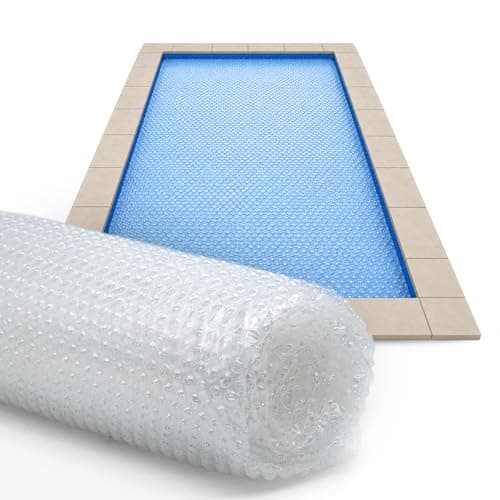 Do this regardless Sun2Solar 1200 Series Crystal Clear Solar Cover Collecting heat all day and losing it all night is the classic DIY solar mistake. | Most pools, most budgets — the default recommendation |
#ad We earn a commission if you buy through this link, at no extra cost to you. It never changes the ranking. How this site is funded. Prices last checked October 17, 2026.
Why this one is actually feasible
Most DIY versions of pool equipment are a bad idea. This is the exception, because a solar collector is genuinely simple: a long run of dark tubing in the sun, with pool water going through it. There is no combustion, no refrigerant, no pressure vessel and no control system to get wrong.
The physics are the same as a commercial panel. Where a manufactured collector wins is in surface area per foot of run, freeze tolerance, UV stability and neatness. Where a homemade one wins is cost — often a tenth of the price.
How much collector do you actually need?
This is the step that decides whether the project is sensible, and it is the step most guides skip.
| Clear midday sun at the surface | about 653 W/m² (NASA-derived) |
| = about 2,228 BTU per hour per m² collected | |
| A collector absorbs far better than open water, | |
| but the arriving energy is still the ceiling. | |
| Trade guidance: collector area = 50-100% of pool surface | |
| 16 x 32 pool = 512 sq ft of surface |
256 to 512 square feet of collector for a full-size pool
That is a substantial structure — the size of a small roof. This is the number that most commonly turns a weekend DIY project into a 'buy the panels' decision, and it is better to find it out now.
On an above-ground pool at 254 square feet of surface, you are looking at 127 to 254 square feet of collector, which is genuinely achievable with a couple of racks beside the pool. That is where DIY solar makes most sense.
The basic build
- The collector. Black irrigation poly tubing, coiled or serpentined on a frame, or on a south-facing roof or fence. More tubing in the sun equals more heat; that is the whole design.
- Mount it dark and angled. A dark backing board behind the tubing raises the temperature. Tilt toward the midday sun.
- Plumb it after the filter. Water goes filter → collector → pool. Never before the filter: you do not want debris in the tubing.
- Fit a bypass valve. Non-negotiable, and the part people skip. You need to be able to isolate the collector for backwashing, for cold weather and for the days when it is doing more harm than good. Which valve, and why it is not optional on solar is its own page.
- Cover the pool at night. Genuinely part of the build, not an afterthought — see below.
The four parts that are harder than the videos suggest
Stated plainly, because this is where projects stall:
- Head loss. Several hundred feet of small-bore tubing is a serious restriction. Your existing pump has a finite head budget, and a collector that starves your filtration is a worse problem than a cold pool. Use larger-bore tubing than feels necessary, and run multiple shorter parallel loops rather than one long series run.
- Freeze damage. Water in tubing that freezes splits it, usually at a fitting, usually where you cannot see it. In a freezing climate the collector has to drain completely for winter, which means designing the drain in from the start rather than adding it later.
- UV degradation. Cheap black tubing goes brittle in sun. That is exactly what it is for and exactly what kills it. Budget on replacing it, and buy UV-stabilized tubing if you can.
- Night-time reverse loss. The catch nobody mentions. If the pump keeps circulating after dark, the collector radiates to a cold night sky and you are actively pumping heat out of the pool. Either close the bypass at dusk or fit a differential controller that only opens the collector loop when it is warmer than the pool.
When to buy instead
If your arithmetic above says you need 300-plus square feet of collector on a roof, buy manufactured panels. They handle the head loss, the mounting and the freeze drain-down as designed features rather than as problems you solve twice. DIY solar shines on small and medium pools with ground-level space and a straightforward plumbing run.
If you go that way, the manufactured-panel install guide covers the same ground for bought collectors — sizing, mounting, the plumbing path and the pump specification — so you can compare the two projects on equal terms before committing.
Every pick, in detail
What each one publishes, what is good and bad about it, and — the section this category usually omits — what we could not judge without owning one.
SmartPool SunHeater S601P Solar Heating System
Solar panels that plumb into the return line and heat the water with sunlight rather than fuel, which puts their running cost at zero — the only entry in the whole heating category where that is true. The trade is that you cannot dial in a temperature: the panels deliver what the sun gives them on the day, and on a cloudy week they deliver very little.
Best for Adding real heat with no running cost, on a sunny site
| Type | Roof, rack or ground-mounted solar collector panels, plumbed inline | Manufacturer |
|---|---|---|
| Collector area | Two 2 x 20 ft panels, 80 sq ft totalThis is the number to size from. The trade rule of thumb is collector area equal to 50-100% of the pool's surface, so a 16 x 32 pool needs several of these systems rather than one. | Manufacturer |
| Material | Polypropylene, stated not to corrode or scale | Manufacturer |
| Also required | One SK21 System Installation Kit per installation, sold separatelyThe manufacturer's own wording. One SK21 serves up to four of these two-panel systems. The panels on their own are not a complete installation, which is the commonest surprise in this product category. | Manufacturer |
| Running cost | $0 in fuelThe circulation pump is already running for filtration. There is no additional fuel or electricity cost attributable to the heat. | Our arithmetic |
Up to 6 to 10 degrees F
Claimed by SunHeater, on its own product page for the S601P. Conditions: Stated as under favorable conditions; no time period given. Source
Worth reading beside the figure below. The manufacturer's own claim for this product is 6 to 10 degrees. The retail listings for the same model say up to 15. The larger number is the one further from the manufacturer.
As much as 15 degrees F
Claimed by Bob Vila, describing the S601P. Conditions: Stated as requiring ample sunlight; no time period given. Source
Note the phrasing: with ample sunlight it can boost temperature by as much as 15 degrees. That is a cumulative ceiling reached over days of good sun, not a figure you will see in an afternoon.
- Zero fuel cost, forever — nothing else in this category can say that
- No combustion, no gas line, no additional electrical service
- Panels can be added to as the budget allows
- You get the sun's schedule, not yours
- Needs real unshaded mounting area, and plumbing work to install
- Does nothing on a cold cloudy week, which is when you most want it
- Actual heat output at your latitude, roof pitch and shading
- How the panel material survives a decade of UV and freeze cycles
- Whether the included fittings suit your existing plumbing
These need a unit in hand across a season. We do not have one, so we do not have an opinion worth printing on them.
#ad We earn a commission if you buy through this link, at no extra cost to you. It never changes the ranking. How this site is funded. Prices last checked October 17, 2026.
Sun2Solar 1200 Series Crystal Clear Solar Cover
The value pick, and the one whose logic actually holds up. A clear cover transmits more sunlight into the body of the pool instead of absorbing it at the surface, and 12 mil is the point where lifespan stops being the limiting factor. Bob Vila measured this and the 16-mil blue at the same 4 to 5 degrees in an hour, so you are paying less for the same measured result and giving up some years of service life.
Best for Most pools, most budgets — the default recommendation
| Price shown for | 20 x 40 ft rectangleThis product is sold in several sizes on one listing. The live price and photograph on this page are the ones Amazon returns for this variant; other sizes are priced separately. | Retail listing |
|---|---|---|
| Thickness | 12 milThe manufacturer publishes no retrievable specification sheet; figure is as listed at retail. | Retail listing |
| Color | Clear | Retail listing |
| Stated lifespan | 3 to 4 years for the 12-mil clear tierSwim University's published figure for 12-mil clear covers generally. | Retail listing |
| Bubble side | Bubbles face the water | Published standard |
4 to 5 degrees F in one hour
Claimed by Bob Vila, measured across all covers in their group. Conditions: One hour under 2pm sun on 89 to 92 degree F days. Source
- Clear transmits more light into the water instead of stopping it at the surface
- 12 mil is the sweet spot: real service life without 16-mil bulk
- Cheaper than the 16-mil tier with no measured heating penalty
- Shorter published lifespan tier than 16 mil
- A clear cover shows algae and debris more obviously, which some people dislike
- Whether clear genuinely outlasts or under-lasts blue in the same thickness
- Real-world tear resistance at a pool with rough edges
- How much the clear material clouds over a season of UV
These need a unit in hand across a season. We do not have one, so we do not have an opinion worth printing on them.
#ad We earn a commission if you buy through this link, at no extra cost to you. It never changes the ranking. How this site is funded. Prices last checked October 17, 2026.
Questions people actually ask
Does a DIY solar pool heater actually work?
How much black tubing do I need to heat my pool?
Will a solar heater cool my pool at night?
- Earth's energy budget: 1,360 W/m² of solar energy at the top of the atmosphere, about 48% absorbed at the surfaceNASA Earth Observatory · read 2026-09-02
- U.S. Department of Energy pool-energy figures (evaporation share, BTU per pound evaporated, cover savings, recommended temperatures, wind effect)Recreonics, reproducing and attributing the U.S. Department of Energy · read 2026-09-02
- Pool heater roundup: the 8.33 BTU per gallon per °F figure, attributed on the page to Alicia Toedter of Leslie'sBob Vila · read 2026-09-02
Every URL above was fetched and returned content on the date shown. Where a figure is ours rather than somebody else’s, the arithmetic is on the page and on the methodology page. If you find an error in it, we would genuinely like to know.
Read next
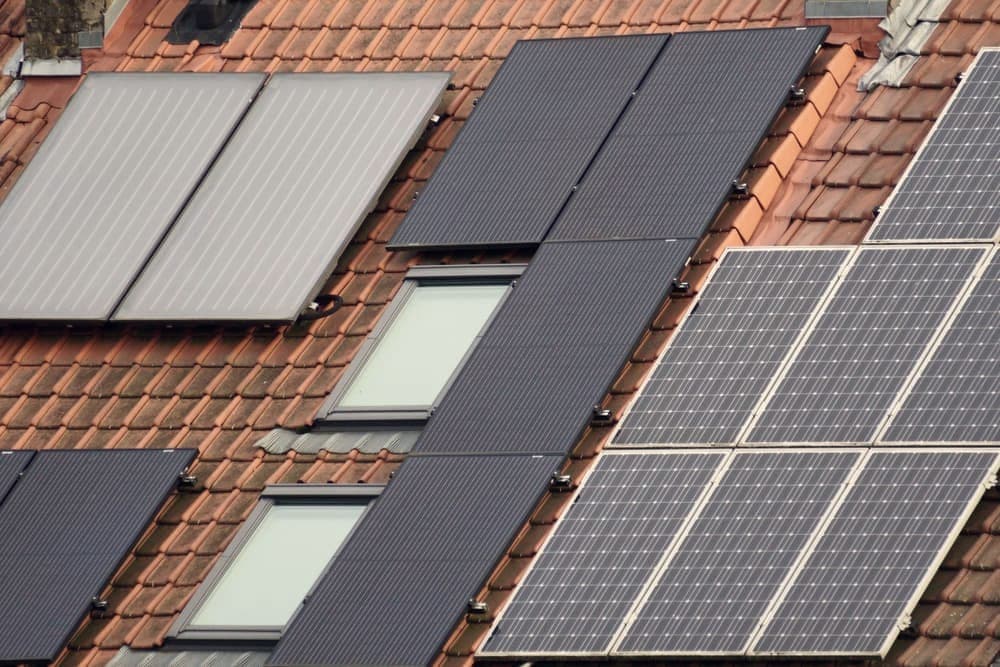
How to heat a pool with solar panels
How much collector area you actually need, where it can go, how it plumbs in, the pump specification that rules people out, and the system kit that is not in the panel box.
Intex solar mat review
The 28685E solar mat: a collector plumbed into a small pool's filter line, rated to 8,000 gallons, with no running cost at all. What Intex publishes and where the limits are.
Solar pool heaters
Solar collector panels: zero fuel cost forever, at the price of getting the sun's schedule instead of your own. Ranked, with the trade stated plainly.
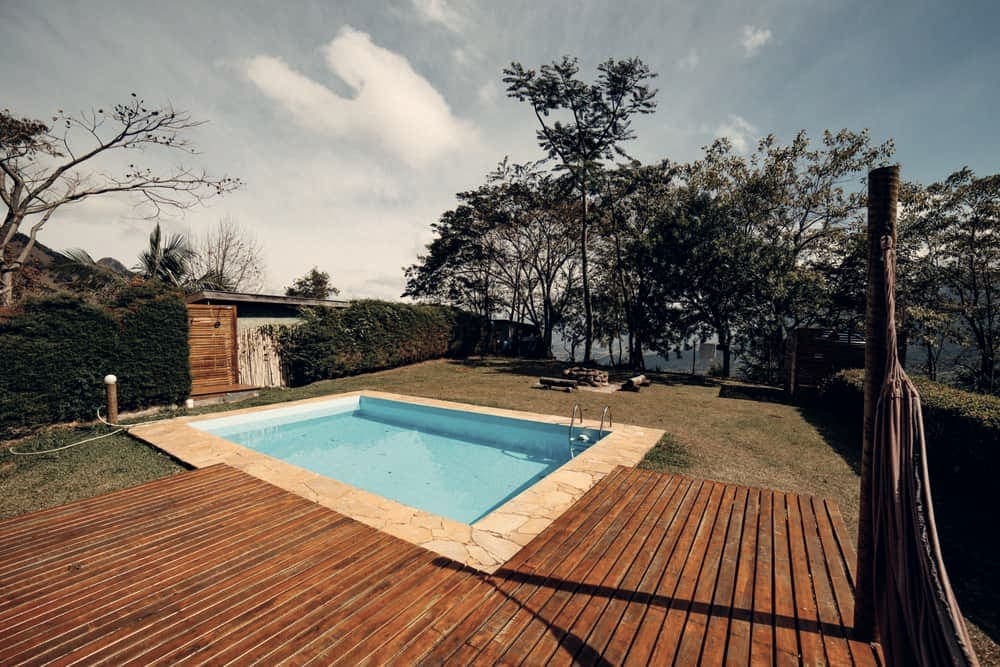
Heating a pool without a heater
Everything that adds or keeps heat without buying a heater, with the published figure behind each one, and a clear statement of where the approach runs out.

The cheapest way to heat a pool
Cheapest to buy is a cover. Cheapest to run is solar, then a heat pump. The arithmetic for both, and a spending order that works at any budget.
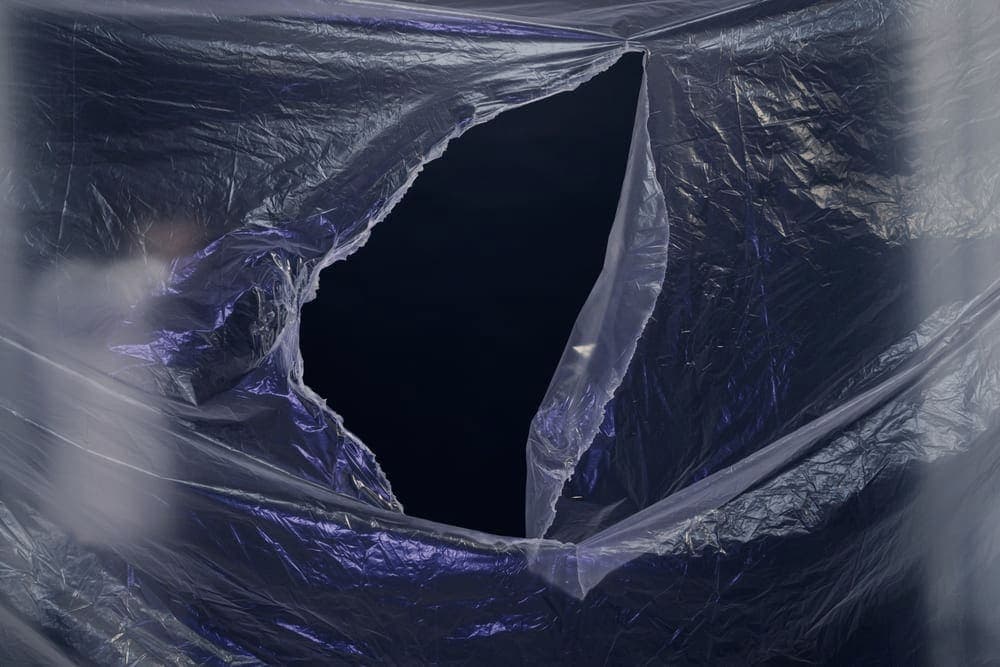
Solar pool covers worth buying
Ranked on the specifications that actually differ between covers — thickness tier and published lifespan — because the only hands-on test in this category found no heating difference at all.
How to heat a pool
The complete walkthrough: what your pool actually needs in BTU, every heating option priced per delivered million BTU, and the order to try them in.