Solar cover vs winter cover
Not two grades of the same product. One is translucent so sunlight reaches the water; the other is opaque so it does not.
Quick picks
One of each, plus the accessory that decides whether the solar one earns its money. These are complements, not alternatives — most pools that get closed for winter want both.
| # | Product | Best for | Price |
|---|---|---|---|
| 1 | 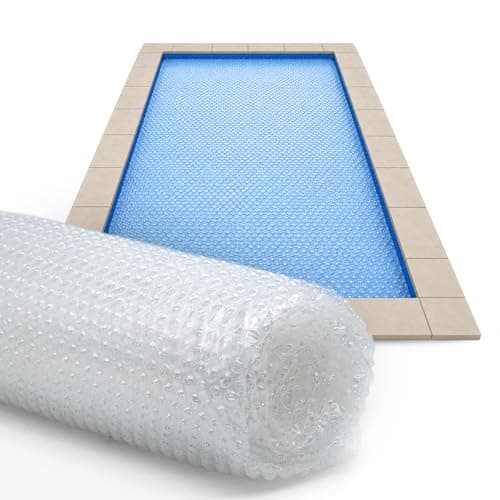 Buy this for warmth Sun2Solar 1200 Series Crystal Clear Solar Cover Translucent 12 mil. This is the cover that makes the water warmer, and the only one of the two that does. | Most pools, most budgets — the default recommendation | |
| 2 | 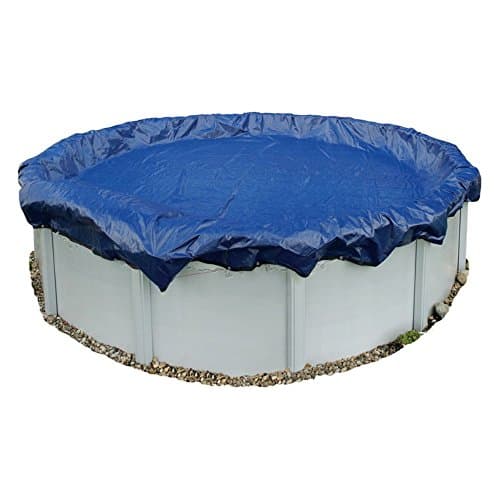 Buy this for closing Blue Wave Arctic Armor Above-Ground Winter Pool Cover Opaque, cabled down, built to sit there from autumn to spring. It will not warm anything, and it is not meant to. | Closing an above-ground pool for winter, not stretching the season | |
| 3 | No photo Buy this alongside the solar one Blue Wave Solar Cover Reel A solar cover only pays while it is actually on the pool. A reel is what makes that happen more than twice. | Any inground pool with a cover you are not using enough | |
| — | No photo Not the compromise it looks like An 8-mil blue solar cover An 8-mil solar cover is not a cheap winter cover. It is a short-lived solar cover. | Nothing we would recommend |
#ad We earn a commission if you buy through this link, at no extra cost to you. It never changes the ranking. How this site is funded. Prices last checked October 18, 2026.
The difference is light, and everything follows from it
People shop for “a pool cover” and find two products at wildly different prices, and reasonably assume the dearer one is the better version of the cheaper one. It is not. These are two different tools that happen to share a shape, and the specification that separates them is light transmission.
A solar cover is translucent on purpose. Sunlight passes through it into the water, where it is absorbed. A winter cover is opaque on purpose. Sunlight is stopped at the surface, which is exactly what you want on a pool that has been shut down, because sunlight is what feeds the algae bloom you would otherwise find in April.
Once you hold that one difference, every other difference between them stops looking arbitrary:
| Solar cover | Winter cover | |
|---|---|---|
| Light through it | Yes, by design | No, by design |
| What it is made of | Bubble-wrap film, 8 to 16 mil | Woven opaque sheet, tarpaulin-like |
| When it is on | Every night and most days, in season | From closing to opening, continuously |
| How it stays put | It floats. Nothing holds it | Cable and winch, or water bags |
| Effect on temperature | Raises it — suppresses evaporation and admits sun | Lowers it — blocks the sun that warms the water |
| Taken on and off | Daily, ideally with a reel | Twice a year |
| Typical service life | 1 to 10 years by thickness tier | Sold on multi-year warranty terms |
Service-life figures for solar covers are the published lifespan tiers by thickness; a winter cover's number is a warranty term, which is a commercial promise rather than a measurement. Neither is something we have verified by owning one.
What a solar cover is actually doing
The Department of Energy attributes about 70% of a pool’s heat loss to evaporation. A solar cover is a lid on that, and the suppression of evaporation is the larger half of its job by a wide margin — larger than the sunlight it lets through, which is the half the marketing leads with. The mechanism, with the energy arithmetic separates the two effects properly.
Because it floats and weighs very little, it comes on and off daily. That is the point: it is in service during the swimming season, when you are fighting to hold a temperature you paid for. Whether it earns its money depends almost entirely on whether it goes back on at dusk, which is why a reel is a bigger purchase decision than which brand of blanket you buy.
What a winter cover is actually doing
A winter cover has nothing to do with temperature. Its job list is short and none of it is heat:
- Keep debris out of a pool nobody is skimming for six months.
- Keep sunlight out, so the algae that would otherwise bloom in still, unchlorinated water has no energy source.
- Stay put through weather, which is why it comes with a cable and a winch rather than floating.
That is a real job worth paying for if you close your pool. It is simply not the job you are shopping for if you arrived here because the water is too cold in May.
Do you need both?
If you close your pool for winter: yes, and they do not overlap at all. The winter cover goes on at closing and comes off at opening. The solar cover works the season in between. Neither substitutes for the other for a single day.
If you live somewhere the pool never fully closes: you need the solar cover and probably not the winter one. What you want instead is to keep the solar cover on more of the time, which is the whole argument of stretching the swim season.
Where safety covers fit
There is a third product that muddies the search results. A safety cover is a winter cover engineered to hold weight — anchored into the deck, rated to stop a child or an animal falling in. Some are solid and some are mesh that lets rain through.
Safety covers are a different purchase with a different justification, and they are mostly dealer-fitted rather than something you buy in a box. What matters for this comparison is that they sit on the winter side of the line: none of them is a heating product, and a mesh one lets sunlight through to the water in a way that helps algae rather than temperature.
Can you use one as the other?
A winter cover as a solar cover: no. It blocks the light, and it is far too heavy and awkward to take off and put back on daily. The cover that does not get used does nothing, and this one will not get used.
A solar cover as a winter cover: also no, and this is the more expensive mistake because it sounds plausible. A bubble film left on a closed pool for six months gets no maintenance, collects standing water and leaves, and comes off in the spring in pieces — you have spent a season’s worth of solar cover to do a job it was not built for.
The related idea — a plain tarpaulin instead of either — fails for the same reason as the winter cover: it is opaque, so it cannot warm anything, and it is not cut or fixed to sit on a pool. Our full answer on using a tarp as a pool cover goes through the four jobs a cover can do and which ones a tarp manages.
The order to buy in
- Solar cover first, because it works during the months you actually want the pool. The ranked picks, and which thickness to get — the answer is a lifespan decision, not a heat one.
- A reel next, if the pool is big enough that deploying the blanket alone is a two-person job. This is the purchase that decides whether the first one was worth making.
- Winter cover last, and only if you genuinely close the pool. Size it to your pool with the overlap the manufacturer states, and check that the cable and winch are included rather than extra.
If your reason for being here is that the pool is simply too cold, the decision tree for a cold pool starts with four measurements and tells you whether a cover is even your problem.
Every pick, in detail
What each one publishes, what is good and bad about it, and — the section this category usually omits — what we could not judge without owning one.
Sun2Solar 1200 Series Crystal Clear Solar Cover
The value pick, and the one whose logic actually holds up. A clear cover transmits more sunlight into the body of the pool instead of absorbing it at the surface, and 12 mil is the point where lifespan stops being the limiting factor. Bob Vila measured this and the 16-mil blue at the same 4 to 5 degrees in an hour, so you are paying less for the same measured result and giving up some years of service life.
Best for Most pools, most budgets — the default recommendation
| Price shown for | 20 x 40 ft rectangleThis product is sold in several sizes on one listing. The live price and photograph on this page are the ones Amazon returns for this variant; other sizes are priced separately. | Retail listing |
|---|---|---|
| Thickness | 12 milThe manufacturer publishes no retrievable specification sheet; figure is as listed at retail. | Retail listing |
| Color | Clear | Retail listing |
| Stated lifespan | 3 to 4 years for the 12-mil clear tierSwim University's published figure for 12-mil clear covers generally. | Retail listing |
| Bubble side | Bubbles face the water | Published standard |
4 to 5 degrees F in one hour
Claimed by Bob Vila, measured across all covers in their group. Conditions: One hour under 2pm sun on 89 to 92 degree F days. Source
- Clear transmits more light into the water instead of stopping it at the surface
- 12 mil is the sweet spot: real service life without 16-mil bulk
- Cheaper than the 16-mil tier with no measured heating penalty
- Shorter published lifespan tier than 16 mil
- A clear cover shows algae and debris more obviously, which some people dislike
- Whether clear genuinely outlasts or under-lasts blue in the same thickness
- Real-world tear resistance at a pool with rough edges
- How much the clear material clouds over a season of UV
These need a unit in hand across a season. We do not have one, so we do not have an opinion worth printing on them.
#ad We earn a commission if you buy through this link, at no extra cost to you. It never changes the ranking. How this site is funded. Prices last checked October 18, 2026.
Blue Wave Arctic Armor Above-Ground Winter Pool Cover
A closing cover, not a heating one, and that distinction is the entire reason it appears on this site. It is opaque woven polyethylene, it straps down with a cable and a winch, and its job is to sit on a shut pool from autumn to spring keeping debris and sunlight out. It will not warm your water, it is not designed to, and if what you want is a few more swimmable weeks then this is the wrong product and a solar cover is the right one.
Best for Closing an above-ground pool for winter, not stretching the season
| Price shown for | 24 ft roundBlue Wave lists each size and color of this cover as a separate item, so the live price and photograph here are for the 24 ft round. Check the size in the title before ordering — the listings are otherwise near-identical. | Retail listing |
|---|---|---|
| Material | Laminated scrim polyethylene at a 14 x 14 scrim count, reinforced heat-sealed seamsThe manufacturer publishes no retrievable specification sheet; figure is as listed at retail. | Retail listing |
| Fixing | 4 ft overlap, metal grommets every 2 ft | Retail listing |
| Underside | Black, stated to block sunlight and inhibit dirt buildup | Retail listing |
| Included | Vinyl-coated cable and a ratcheting winch | Retail listing |
| Warranty | 15-year limited — full coverage in year 1, prorated in years 2 through 15Unusually specific for this category, and unusually long. Read the proration: the full-replacement window is the first year, and the remaining fourteen are a declining credit. A warranty term is a commercial promise rather than a measured service life. | Manufacturer |
| Light transmission | None by designThis is the specification that separates it from a solar cover. A solar cover is transparent or translucent so sunlight reaches the water; a winter cover is opaque so it does not. | Published standard |
- Does the job it is actually for — keeps a closed pool clean through winter
- Cable and winch included rather than sold separately
- A 15-year limited warranty, which is long for a winter cover and published rather than implied
- Adds no heat and is not a season-extension product in any sense
- Far too heavy and awkward to take on and off daily, so it cannot double as a nightly cover
- Blocks the sunlight your pool needs, so leaving it on in the shoulder season makes the water colder
- Whether it reaches its stated warranty term in your climate
- How the seams survive standing water and ice load
- Whether the stated overlap is generous or tight against your pool's real diameter
These need a unit in hand across a season. We do not have one, so we do not have an opinion worth printing on them.
#ad We earn a commission if you buy through this link, at no extra cost to you. It never changes the ranking. How this site is funded. Prices last checked October 18, 2026.
Blue Wave Solar Cover Reel
A reel is the single highest-leverage purchase in this whole category and almost nobody frames it that way. Every DOE saving figure assumes the cover is on the pool when the pool is not in use. A cover that takes two people and five minutes comes off on Friday and goes back on in October. A reel turns that into thirty seconds alone, which is the difference between the savings existing and not.
Best for Any inground pool with a cover you are not using enough
| Type | Wheeled above-ground-style reel for inground and above-ground useThe manufacturer publishes no retrievable specification sheet; figure is as listed at retail. | Retail listing |
|---|---|---|
| Why it matters | Converts a two-person five-minute job into a one-person thirty-second jobOur framing, not a manufacturer claim. The published savings all assume the cover is actually on. | Our arithmetic |
- Turns the cover into something you will genuinely use daily
- Keeps the cover off the ground, which is where covers get damaged
- Wheels, so it moves out of the way
- Costs a real fraction of what the cover itself costs
- Takes up deck space permanently
- Assembly is fiddly on every reel in this category
- How the tube and hardware hold up outdoors across seasons
- Whether the width range covers your pool without a wobble
- Assembly quality and hardware fit
These need a unit in hand across a season. We do not have one, so we do not have an opinion worth printing on them.
#ad We earn a commission if you buy through this link, at no extra cost to you. It never changes the ranking. How this site is funded. Prices last checked October 18, 2026.
An 8-mil blue solar cover
Skip it. This is the one place in the category where the cheap option is a false economy, and the published lifespan tiers say so plainly: 8-mil blue covers are put at one to two years, against three to four for 12 mil and five to ten for 16 mil. There is no measured heating advantage to the thicker cover, so thickness is buying you years — and the 8-mil is the tier where you buy the same thing again next summer.
Best for Nothing we would recommend
| Thickness | 8 mil | Retail listing |
|---|---|---|
| Stated lifespan | 1 to 2 yearsSwim University's published lifespan tier for 8-mil blue covers. | Retail listing |
- Cheapest entry into a cover of any kind
- One to two years against three to four for a 12-mil, at a fraction of the price difference
- Thin material is harder to handle without tearing at the edge
- No measured heating advantage lost by going thicker, so there is nothing to gain here
- Whether a specific 8-mil cover beats its tier average
- How much of the price gap is material and how much is brand
These need a unit in hand across a season. We do not have one, so we do not have an opinion worth printing on them.
#ad We earn a commission if you buy through this link, at no extra cost to you. It never changes the ranking. How this site is funded. Prices last checked October 18, 2026.
Questions people actually ask
Can I use a winter cover as a solar cover?
Is a solar cover the same as a regular pool cover?
Do I need a winter cover if I have a solar cover?
Will a winter cover keep my pool warmer?
Which is more expensive, a solar cover or a winter cover?
- U.S. Department of Energy pool-energy figures (evaporation share, BTU per pound evaporated, cover savings, recommended temperatures, wind effect)Recreonics, reproducing and attributing the U.S. Department of Energy · read 2026-09-02
- U.S. Department of Energy, Energy Saver: Swimming Pool Covers (archived — the live page now returns 404)U.S. Department of Energy via the Internet Archive · read 2026-09-02
- Hands-on solar cover comparison: 4 to 5°F measured in one hour of 2pm sun on 89–92°F days, with the method statedBob Vila · read 2026-09-02
- Solar cover guide: 0.7°F per hour under noontime sun, 10–15°F held, and published lifespan tiers by thicknessSwim University · read 2026-09-02
- Water density: 62.424 pounds per cubic foot at 39.2°FU.S. Geological Survey, Water Science School · read 2026-09-02
- Blue Wave Arctic Armor BWC908 24 ft round above-ground winter cover listing: 14x14 laminated scrim polyethylene with reinforced heat-sealed seams, 4 ft overlap, metal grommets every 2 ft, black underside stated to block sunlight and inhibit dirt buildup, vinyl-coated cable and ratcheting winch included, 15-year limited warranty with full coverage in year 1 and prorated coverage in years 2 through 15Blue Wave, as listed at retail · read 2026-10-03
#ad Where a retailer’s listing is cited above as the source of a published specification, that link is an affiliate link, at no extra cost to you. Independent sources and manufacturer documentation are never wrapped and earn nothing. How this site is funded.
Every URL above was fetched and returned content on the date shown. Where a figure is ours rather than somebody else’s, the arithmetic is on the page and on the methodology page. If you find an error in it, we would genuinely like to know.
Read next
Solar pool covers worth buying
Ranked on the specifications that actually differ between covers — thickness tier and published lifespan — because the only hands-on test in this category found no heating difference at all.

8, 12 or 16 mil: which solar cover thickness
Thickness buys years, not degrees. The published lifespan tiers, the cost per year of service, and the case for 12 mil on a large pool.

How a solar cover heats a pool
Transmission during the day, evaporation suppression at night. The two mechanisms separated, with the energy arithmetic for each.
Solar cover reels
Why a reel is the highest-leverage buy in pool heating, and which ones to look at. Thirty seconds alone versus five minutes and a helper decides whether a cover saves anything.

Stretching the swim season
What actually adds weeks at each end of the season, why the shoulder season is a different problem from midsummer, and the order to spend in.

Can you use a tarp as a pool cover?
A tarp blocks the sunlight a solar cover exists to let through, so it cannot warm water. The four jobs a pool cover can do, which ones a tarp manages, and what to buy for each.