Solar sun rings
Easier than a blanket, and worse than one. Both of those are true, and which matters more depends entirely on whether you would actually use the blanket.
Quick picks
One product and two honest alternatives, because for most pools the right answer to 'should I buy rings' is 'buy a reel'.
| # | Product | Best for | Price |
|---|---|---|---|
| 1 | 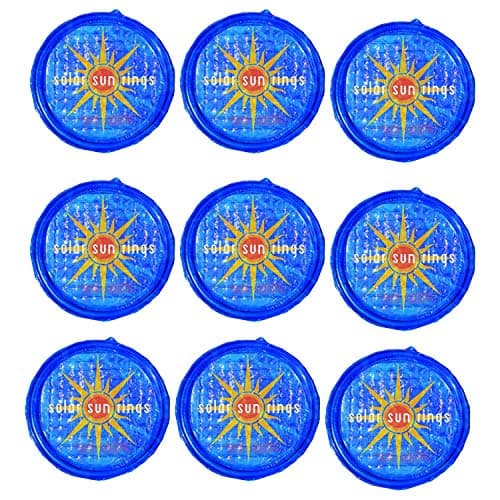 The category Solar Sun Rings Sold individually, so you can build coverage gradually. Buy them because you will use them. | A pool you would otherwise leave uncovered because the blanket is too much work | |
| 2 | 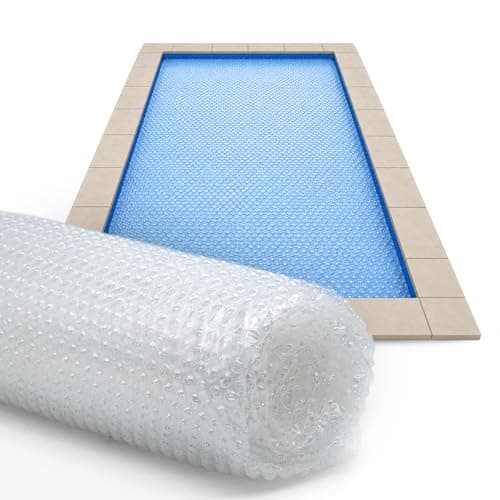 The honest alternative Sun2Solar 1200 Series Crystal Clear Solar Cover A full blanket does more for less, if you will actually put it on. | Most pools, most budgets — the default recommendation | |
| 3 | No photo What to buy instead Blue Wave Solar Cover Reel If the reason you want rings is that the blanket is too much work, this fixes the actual problem. | Any inground pool with a cover you are not using enough |
#ad We earn a commission if you buy through this link, at no extra cost to you. It never changes the ranking. How this site is funded. Prices last checked October 17, 2026.
What they are, and the trade you are making
Solar rings are floating discs, typically a few feet across, that you drop onto the pool one at a time instead of wrestling a full blanket across it. That is the entire product proposition and it is a real one: a person can put six rings on a pool in two minutes, alone, without a reel, without folding anything, and without dragging plastic over the coping.
The trade is coverage. Circles do not tile. However carefully you place them, rings leave gaps between each other and a crescent of open water around the edge, and evaporation carries on through every square foot you did not cover.
| Circles at their densest packing | about 91% of a plane |
| Realistically, hand-placed on a moving surface | about 70-80% |
| Edges of a rectangular pool | poorly served by circles |
Expect roughly 70-80% of a full blanket's effect, at more than 100% of the cost
This is geometry rather than a measurement. The exact figure depends on your pool's shape and how many rings you buy, but the direction is not in doubt: partial coverage gives partial results, and nobody selling rings puts a number on how partial.
The cost per square foot is genuinely worse
Solar rings are sold individually at published prices of roughly $40 to $55 each, or about $150 and up for a multi-ring pack. A full 12-mil blanket for a medium pool sits in a published range of about $75 to $225 and covers everything.
Per square foot of pool actually covered, rings are the more expensive option by a clear margin, and they cover less of it. If you are comparing them on value, the blanket wins and it is not close.
So when are they right?
When the blanket would not get used. That is a real category and it is larger than the value argument suggests, because the value argument assumes perfect compliance and people are not perfectly compliant.
Rings are the right call if:
- Your pool is an awkward shape where a blanket is a nuisance to deploy and store
- There is nowhere to put a reel, and without a reel the blanket is a two-person job
- You want to build coverage gradually rather than commit to one purchase
- You have tried a blanket and it lives in the shed. Seventy percent of something beats one hundred percent of nothing.
Practical notes
Wind moves them. Rings are light and they drift. On a breezy site they end up in a heap at the downwind end, which is both less effective and annoying. Most designs anchor to each other; use it.
They stack for storage, which is a genuine advantage over a blanket that has to be rolled or folded and takes up a corner of the yard either way.
Count on more than you think. Work out your surface area and divide by the area of one ring, then add a couple, because you will not achieve theoretical packing on real water.
A note on temperature claims: rings are marketed with the same “up to X degrees” language as blankets, and the same caution applies. Our reconciliation of those numbers explains why they range so wildly and which question each one is actually answering.
Every pick, in detail
What each one publishes, what is good and bad about it, and — the section this category usually omits — what we could not judge without owning one.
Solar Sun Rings
Floating discs you drop on one at a time instead of wrestling a full blanket, sold individually. That convenience is the whole product, and it comes out of the physics: rings leave gaps, and evaporation carries on through every square foot you did not cover. Expect a fraction of a full cover's effect roughly in proportion to the surface you actually covered, and buy them because you will use them, not because they work better.
Best for A pool you would otherwise leave uncovered because the blanket is too much work
| Price shown for | One 60-inch ringSolar Sun Rings list this 60-inch ring by pack count, each pack its own listing: single, 3, 6 and 9. The live price and photograph on this page are the ones Amazon returns for the single-ring listing; the multi-ring packs are priced separately and work out cheaper per ring. | Retail listing |
|---|---|---|
| Coverage | Partial — discs leave gaps between and at the edgesThe gap is not a defect, it is how the product works. It does mean the DOE cover-saving figures do not apply at full strength. | Published standard |
| Typical price | About $40 to $55 each, or about $150 and up per multi-ring packRead from the brand's own current Amazon listings on 2026-10-12: $54.99 for the single ring, and $149.97, $269.94 and $359.91 for the 3, 6 and 9-ring packs — about $40 to $50 a ring as the pack gets larger. Check the live price before buying. | Retail listing |
- One person can put them on and take them off in a couple of minutes
- No reel, no folding, no dragging anything over the coping
- Buy a few at a time instead of committing to one large purchase
- Partial coverage means partial results — the gaps keep evaporating
- Per square foot of coverage they cost far more than a blanket
- Wind moves them around
- How much surface a given number of rings really covers on your pool shape
- How long the material lasts against a full blanket
- Whether the anchoring holds in a breeze at your site
These need a unit in hand across a season. We do not have one, so we do not have an opinion worth printing on them.
#ad We earn a commission if you buy through this link, at no extra cost to you. It never changes the ranking. How this site is funded. Prices last checked October 17, 2026.
Sun2Solar 1200 Series Crystal Clear Solar Cover
The value pick, and the one whose logic actually holds up. A clear cover transmits more sunlight into the body of the pool instead of absorbing it at the surface, and 12 mil is the point where lifespan stops being the limiting factor. Bob Vila measured this and the 16-mil blue at the same 4 to 5 degrees in an hour, so you are paying less for the same measured result and giving up some years of service life.
Best for Most pools, most budgets — the default recommendation
| Price shown for | 20 x 40 ft rectangleThis product is sold in several sizes on one listing. The live price and photograph on this page are the ones Amazon returns for this variant; other sizes are priced separately. | Retail listing |
|---|---|---|
| Thickness | 12 milThe manufacturer publishes no retrievable specification sheet; figure is as listed at retail. | Retail listing |
| Color | Clear | Retail listing |
| Stated lifespan | 3 to 4 years for the 12-mil clear tierSwim University's published figure for 12-mil clear covers generally. | Retail listing |
| Bubble side | Bubbles face the water | Published standard |
4 to 5 degrees F in one hour
Claimed by Bob Vila, measured across all covers in their group. Conditions: One hour under 2pm sun on 89 to 92 degree F days. Source
- Clear transmits more light into the water instead of stopping it at the surface
- 12 mil is the sweet spot: real service life without 16-mil bulk
- Cheaper than the 16-mil tier with no measured heating penalty
- Shorter published lifespan tier than 16 mil
- A clear cover shows algae and debris more obviously, which some people dislike
- Whether clear genuinely outlasts or under-lasts blue in the same thickness
- Real-world tear resistance at a pool with rough edges
- How much the clear material clouds over a season of UV
These need a unit in hand across a season. We do not have one, so we do not have an opinion worth printing on them.
#ad We earn a commission if you buy through this link, at no extra cost to you. It never changes the ranking. How this site is funded. Prices last checked October 17, 2026.
Blue Wave Solar Cover Reel
A reel is the single highest-leverage purchase in this whole category and almost nobody frames it that way. Every DOE saving figure assumes the cover is on the pool when the pool is not in use. A cover that takes two people and five minutes comes off on Friday and goes back on in October. A reel turns that into thirty seconds alone, which is the difference between the savings existing and not.
Best for Any inground pool with a cover you are not using enough
| Type | Wheeled above-ground-style reel for inground and above-ground useThe manufacturer publishes no retrievable specification sheet; figure is as listed at retail. | Retail listing |
|---|---|---|
| Why it matters | Converts a two-person five-minute job into a one-person thirty-second jobOur framing, not a manufacturer claim. The published savings all assume the cover is actually on. | Our arithmetic |
- Turns the cover into something you will genuinely use daily
- Keeps the cover off the ground, which is where covers get damaged
- Wheels, so it moves out of the way
- Costs a real fraction of what the cover itself costs
- Takes up deck space permanently
- Assembly is fiddly on every reel in this category
- How the tube and hardware hold up outdoors across seasons
- Whether the width range covers your pool without a wobble
- Assembly quality and hardware fit
These need a unit in hand across a season. We do not have one, so we do not have an opinion worth printing on them.
#ad We earn a commission if you buy through this link, at no extra cost to you. It never changes the ranking. How this site is funded. Prices last checked October 17, 2026.
Questions people actually ask
Do solar rings work as well as a solar cover?
How many solar rings do I need?
Are solar rings worth the money?
- U.S. Department of Energy pool-energy figures (evaporation share, BTU per pound evaporated, cover savings, recommended temperatures, wind effect)Recreonics, reproducing and attributing the U.S. Department of Energy · read 2026-09-02
- U.S. Department of Energy, Energy Saver: Swimming Pool Covers (archived — the live page now returns 404)U.S. Department of Energy via the Internet Archive · read 2026-09-02
- Hands-on solar cover comparison: 4 to 5°F measured in one hour of 2pm sun on 89–92°F days, with the method statedBob Vila · read 2026-09-02
- Solar cover guide: 0.7°F per hour under noontime sun, 10–15°F held, and published lifespan tiers by thicknessSwim University · read 2026-09-02
- Water density: 62.424 pounds per cubic foot at 39.2°FU.S. Geological Survey, Water Science School · read 2026-09-02
Every URL above was fetched and returned content on the date shown. Where a figure is ours rather than somebody else’s, the arithmetic is on the page and on the methodology page. If you find an error in it, we would genuinely like to know.
Read next
Solar covers for kidney, oval and freeform pools
Kidney, oval, freeform and L-shaped pools: when a cut-to-shape cover is worth it, when to buy a rectangle and trim, and how much material each approach wastes.
Solar heaters for above-ground pools
Every kind of solar heater sold for above-ground pools, ranked on collector area against pool surface — the arithmetic that shows why one dome does almost nothing and one panel system is only a start.
Cover Free liquid solar blanket review
Natural Chemistry's Coverfree: the weekly dose arithmetic nobody works out, how long a quart really lasts on your pool, and why the 85% and 70% claims on the same listing are not consistent.
Solar pool covers worth buying
Ranked on the specifications that actually differ between covers — thickness tier and published lifespan — because the only hands-on test in this category found no heating difference at all.
Liquid solar covers
How liquid covers actually work, why the mechanism means they help overnight and not in daylight, and the honest limits of what anybody can tell you about them.
Solar cover reels
Why a reel is the highest-leverage buy in pool heating, and which ones to look at. Thirty seconds alone versus five minutes and a helper decides whether a cover saves anything.
Do solar pool covers work?
The 4-degrees-versus-15-degrees contradiction that runs through this entire category, reconciled from published physics. Three different quantities being reported as one.
Keeping a pool warm overnight
The specific problem of overnight heat loss: what causes it, what each fix is worth, and the order to try them in.