The ideal pool temperature
Two published numbers, four degrees apart, and a cost difference between them that most people never see stated.

Quick picks
One purchase for holding a temperature and one for setting it, which are different problems.
| # | Product | Best for | Price |
|---|---|---|---|
| 1 | 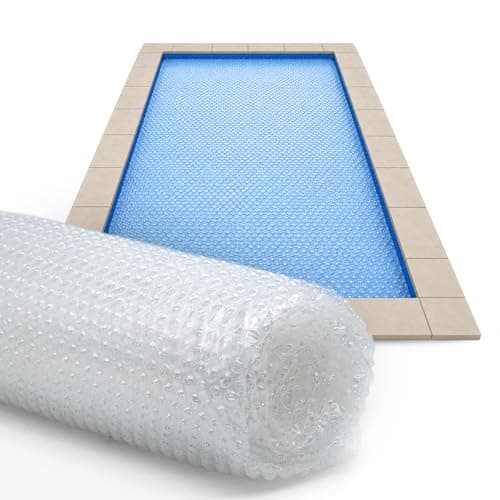 How to hold a temperature cheaply Sun2Solar 1200 Series Crystal Clear Solar Cover Every degree you hold costs 10-30% more. A cover means holding it against a smaller loss. | Most pools, most budgets — the default recommendation | |
| 2 | 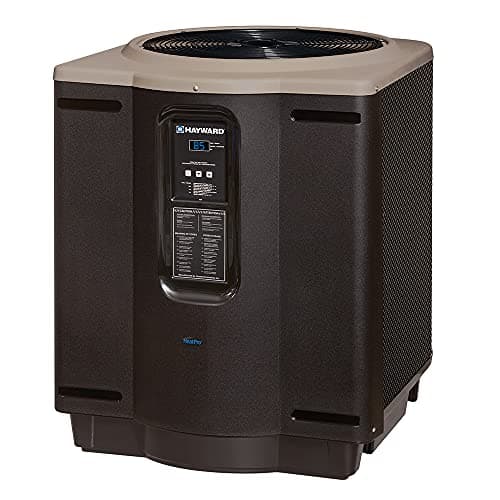 How to set a temperature at all Hayward HeatPro Pool Heat Pump If you want a number rather than whatever the weather gave you, this is the cheapest way to have one. | Lowest running cost per degree when you want real temperature control |
#ad We earn a commission if you buy through this link, at no extra cost to you. It never changes the ranking. How this site is funded. Prices last checked October 18, 2026.
The published answer
The Department of Energy publishes two ranges, and the gap between them is the whole point:
| Use | Temperature |
|---|---|
| Active swimming | 78-80°F |
| Recreational use | 82-84°F |
Two different numbers because they describe two different activities. A lap swimmer generates heat continuously and wants cooler water; a child standing chest-deep in it does not and wants warmer.
Most people never see those framed as separate cases, and a lot of pools get heated to the recreational number for a pool that is used for swimming. That mistake costs real money, for reasons the next section makes uncomfortable.
What each degree costs
DOE’s published figure is that raising the target temperature by one degree raises heating cost by 10 to 30%, depending on location.
Read that carefully: not 10 to 30% of a degree’s worth of energy. Ten to thirty percent of the whole bill, per degree. Going from 80 to 84 is four degrees of setpoint and potentially a doubling of the cost.
| 20,000 gal x 8.33 x 1°F | = 166,600 BTU |
| x $28.36 per million BTU (gas) | = $4.72 |
$4.72 to get there once
Trivial. The expensive part is the ongoing 10 to 30% on every subsequent day of the season, which is what DOE's figure is describing.
How to choose your number
Work backwards from who is actually in the pool.
- Lap swimming or exercise: 78°F, possibly cooler. Competitive swimming pools run cooler than this. Warm water genuinely makes hard swimming unpleasant.
- General family use, mixed swimming and playing: 80°F is the sensible default and it sits at the top of DOE’s swimming range.
- Small children, or a lot of standing around: 82 to 84°F. Small bodies lose heat faster and people who are not moving do not generate any.
- Therapy or a spa: higher again, and outside what a pool heating page can usefully advise on.
The practical test: set it at 80°F for a fortnight and see whether anybody complains. If they do not, you have found your number, and you are saving 10 to 30% per degree against every alternative above it.
Why your pool feels colder than the reading
Two things routinely make a pool feel colder than the thermometer says, and neither is a fault.
Air temperature and wind. Water conducts heat away from skin roughly twenty-five times faster than air does, so 80°F water on an 85°F day feels warm and the same water on a 68°F windy evening feels cold. The pool has not changed.
You may be reading the wrong water. On a sunny afternoon, and especially under a cover, the top layer of a pool can be several degrees warmer than the body of water beneath it — our arithmetic puts the top foot at around 3°F per hour of sun against 0.66°F for the whole pool. Read a foot down, away from the returns, or after twenty minutes of circulation. Why the surface layer behaves like that.
Holding it is a different problem from reaching it
Reaching a temperature is an energy calculation and it is easy: gallons x 8.33 x degrees, divided by your heater. Holding it is a loss calculation, and losses run all night whether or not you are heating.
Which is why the cheapest way to hold a higher temperature is not a bigger heater but a smaller loss. DOE puts about 70% of that loss down to evaporation, and a cover is the only cheap thing that addresses it. How fast a pool actually loses heat works the numbers.
Every pick, in detail
What each one publishes, what is good and bad about it, and — the section this category usually omits — what we could not judge without owning one.
Sun2Solar 1200 Series Crystal Clear Solar Cover
The value pick, and the one whose logic actually holds up. A clear cover transmits more sunlight into the body of the pool instead of absorbing it at the surface, and 12 mil is the point where lifespan stops being the limiting factor. Bob Vila measured this and the 16-mil blue at the same 4 to 5 degrees in an hour, so you are paying less for the same measured result and giving up some years of service life.
Best for Most pools, most budgets — the default recommendation
| Price shown for | 20 x 40 ft rectangleThis product is sold in several sizes on one listing. The live price and photograph on this page are the ones Amazon returns for this variant; other sizes are priced separately. | Retail listing |
|---|---|---|
| Thickness | 12 milThe manufacturer publishes no retrievable specification sheet; figure is as listed at retail. | Retail listing |
| Color | Clear | Retail listing |
| Stated lifespan | 3 to 4 years for the 12-mil clear tierSwim University's published figure for 12-mil clear covers generally. | Retail listing |
| Bubble side | Bubbles face the water | Published standard |
4 to 5 degrees F in one hour
Claimed by Bob Vila, measured across all covers in their group. Conditions: One hour under 2pm sun on 89 to 92 degree F days. Source
- Clear transmits more light into the water instead of stopping it at the surface
- 12 mil is the sweet spot: real service life without 16-mil bulk
- Cheaper than the 16-mil tier with no measured heating penalty
- Shorter published lifespan tier than 16 mil
- A clear cover shows algae and debris more obviously, which some people dislike
- Whether clear genuinely outlasts or under-lasts blue in the same thickness
- Real-world tear resistance at a pool with rough edges
- How much the clear material clouds over a season of UV
These need a unit in hand across a season. We do not have one, so we do not have an opinion worth printing on them.
#ad We earn a commission if you buy through this link, at no extra cost to you. It never changes the ranking. How this site is funded. Prices last checked October 18, 2026.
Hayward HeatPro Pool Heat Pump
If you are heating a pool with electricity, this is the shape of machine to do it with. A heat pump moves heat instead of making it, and at the assumptions we publish it delivers a million BTU into the water for about a fifth of what an electric resistance heater costs to deliver the same. It is slower than gas and it fades as the air gets colder, which is exactly when you want it — that trade is the whole decision.
Best for Lowest running cost per degree when you want real temperature control
| Type | Air-source heat pumpThe manufacturer publishes no retrievable specification sheet; figure is as listed at retail. | Retail listing |
|---|---|---|
| Rating convention | Rated by BTU/hr OUTPUTThis is the trap in the category. Gas heaters are rated by fuel INPUT, heat pumps by heat OUTPUT. A 140,000 BTU heat pump and a 140,000 BTU gas heater do not deliver the same heat. | Published standard |
| Cost per million BTU delivered | About $10.75 at our published assumptionsUS average residential electricity at 18.34 cents/kWh (EIA, June 2026) and an assumed COP of 5.0. Both are substitutable on our running-cost calculator. | Our arithmetic |
- Cheapest running cost per delivered BTU of any controllable heater
- No gas line, no combustion, no flue
- Holds a set temperature rather than depending on the weather
- Slow — expect most of a day to move a full-size pool ten degrees
- Efficiency falls with air temperature, so it is weakest in the shoulder season
- High purchase price against a gas heater of comparable output
- The COP this specific unit achieves at your conditions
- Compressor and control-board longevity
- Noise at the distance your deck actually sits from it
These need a unit in hand across a season. We do not have one, so we do not have an opinion worth printing on them.
#ad We earn a commission if you buy through this link, at no extra cost to you. It never changes the ranking. How this site is funded. Prices last checked October 18, 2026.
Questions people actually ask
What is the ideal temperature for a swimming pool?
Is 80 degrees warm enough for a pool?
How much does one degree cost on a pool?
Why does my pool feel cold at 82 degrees?
- U.S. Department of Energy pool-energy figures (evaporation share, BTU per pound evaporated, cover savings, recommended temperatures, wind effect)Recreonics, reproducing and attributing the U.S. Department of Energy · read 2026-09-02
- U.S. Department of Energy, Energy Saver: Swimming Pool Covers (archived — the live page now returns 404)U.S. Department of Energy via the Internet Archive · read 2026-09-02
- Earth's energy budget: 1,360 W/m² of solar energy at the top of the atmosphere, about 48% absorbed at the surfaceNASA Earth Observatory · read 2026-09-02
- US residential natural gas price: $24.09 per thousand cubic feet, June 2026U.S. Energy Information Administration · read 2026-09-02
- Energy content conversion factors: 3,412 BTU per kWh, 1,036 BTU per cubic foot of natural gas, 91,452 BTU per gallon of propaneU.S. Energy Information Administration · read 2026-09-02
Every URL above was fetched and returned content on the date shown. Where a figure is ours rather than somebody else’s, the arithmetic is on the page and on the methodology page. If you find an error in it, we would genuinely like to know.
Read next
How fast a pool loses heat
Evaporation, radiation, convection and conduction, with the arithmetic on what each night actually costs and a measurement you can take yourself.

How much does it cost to heat a pool?
The complete cost model: what a million BTU costs to deliver with each fuel, what that means per degree and per pool size, and why heat-up cost is not your monthly bill.
Keeping a pool warm overnight
The specific problem of overnight heat loss: what causes it, what each fix is worth, and the order to try them in.

Stretching the swim season
What actually adds weeks at each end of the season, why the shoulder season is a different problem from midsummer, and the order to spend in.

Solar pool covers worth buying
Ranked on the specifications that actually differ between covers — thickness tier and published lifespan — because the only hands-on test in this category found no heating difference at all.