8, 12 or 16 mil: which solar cover thickness
The only published hands-on comparison found no heating difference between thicknesses. So this is a durability decision, and it is a straightforward one.
Quick picks
Ranked on cost per year of published service life, which is the only axis on which these tiers reliably differ.
| # | Product | Best for | Price |
|---|---|---|---|
| 1 | 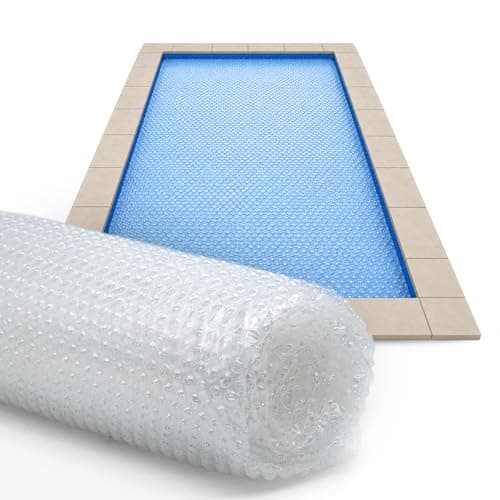 Best cost per year Sun2Solar 1200 Series Crystal Clear Solar Cover 12 mil, 3-4 published years. The tier where the arithmetic works best for most people. | Most pools, most budgets — the default recommendation | |
| 2 | 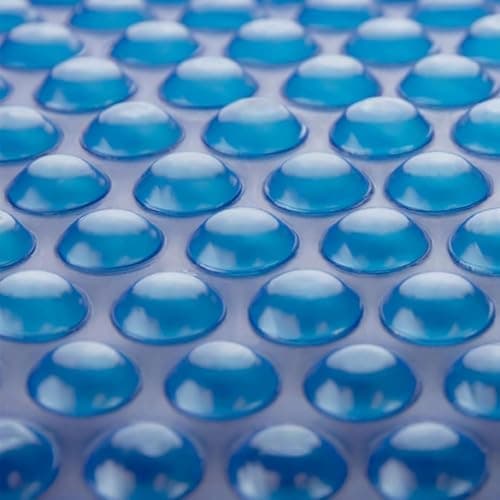 Longest service life Sun2Solar 1600 Series Ultimate Blue Solar Cover 16 mil, 5-10 published years. Buy it for the years, not for warmer water. | An inground pool you cover most nights, every season | |
| — | No photo Skip this An 8-mil blue solar cover 1-2 years for a fraction less money. The worst cost-per-year in the category. | Nothing we would recommend |
#ad We earn a commission if you buy through this link, at no extra cost to you. It never changes the ranking. How this site is funded. Prices last checked October 18, 2026.
Start with what thickness does not do
Thicker covers are marketed as warmer covers, and the only published hands-on comparison in this category does not support it. Bob Vila put a group spanning 12-mil clear to 16-mil blue on the water for an hour each and reported that “each of the pool covers increased the temperature 4 to 5 degrees Fahrenheit”. The entire spread across four brands and two thickness tiers was one degree, which is inside the noise of a pool thermometer.
That is consistent with the physics. A cover’s daytime job is transmitting energy that is already limited by what the sun delivers, and its overnight job is stopping evaporation — which a sealed film does whether it is 12 mil or 16. The mechanism page works through both.
What thickness does do
It buys years. Swim University publishes lifespan tiers by thickness, and they are the most useful published figures in this whole category:
| Thickness | Typical color | Published lifespan |
|---|---|---|
| 4 mil | Blue | About 1 year |
| 8 mil | Blue | 1 to 2 years |
| 12 mil | Clear | 3 to 4 years |
| 16 mil | Clear | 5 to 10 years |
Swim University's published tiers, read 2026-09-02. These are category figures rather than a warranty from any manufacturer — and no manufacturer we could reach publishes a lifespan figure of its own.
Cost per year, which is the number that decides it
Published prices for solar covers run roughly $75 to $225 depending on size and tier. Working from the middle of the lifespan ranges above, and taking representative prices for a medium pool:
| Thickness | Say you pay | Mid-range life | Per year |
|---|---|---|---|
| 8 mil | $80 | 1.5 years | $53 |
| 12 mil | $130 | 3.5 years | $37 |
| 16 mil | $190 | 7.5 years | $25 |
Prices here are illustrative round numbers for the arithmetic, not quotes — check the live price before you buy. The direction is what matters: the thinner cover is the more expensive one per year of use, and it is not close.
On cost per year, 16 mil wins and 8 mil is the worst buy in the category. That is the opposite of how these are usually shelved.
The real argument for 12 mil
If 16 mil is the best cost per year, why is our overall pick a 12-mil cover? Because there is one factor the arithmetic above does not capture: a 16-mil cover is noticeably heavier, and weight decides whether the cover gets used.
Every published saving assumes the cover is on the pool when the pool is not in use. On a 16-by-32 pool, a wet 16-mil blanket is a genuine two-person job without a reel. A 12-mil is manageable. If the choice is a 16-mil cover you find a chore or a 12-mil cover you deploy every night, take the 12 — a cover that is used has infinitely better economics than one that is not.
With a reel, that argument largely disappears and 16 mil becomes the better buy. Which is another way of saying the reel is the purchase that unlocks the rest of the decision.
A note on the budget brands
All of the above assumes a mil rating on the label means the same thing from one brand to the next, and for the established pool brands that is a reasonable assumption. For the direct-import brands it is an assumption rather than a fact: there is no published standard forcing a common measurement method, and frequently no published service life to check the tier against at all. The VEVOR review works through what that uncertainty is worth.
Two things this page deliberately leaves out. Thickness interacts with pool size, and above a certain area the heavier cover is the worse buy because nobody can lift it — the size-by-size guide works that through. And if you have been shopping for a “thermal” or “insulated” cover rather than a solar one, those mostly describe the same product — with one genuine exception that publishes real material ratings.
Quick recommendation
- Inground pool with a reel: 16 mil. Best cost per year, and the handling problem is solved.
- Inground pool without a reel: 12 mil, and buy a reel next.
- Above-ground pool: fit matters more than thickness. Buy the cover made for your pool. Details here.
- Any pool, 8 mil: no. The saving is small and the lifespan penalty is large.
Every pick, in detail
What each one publishes, what is good and bad about it, and — the section this category usually omits — what we could not judge without owning one.
Sun2Solar 1200 Series Crystal Clear Solar Cover
The value pick, and the one whose logic actually holds up. A clear cover transmits more sunlight into the body of the pool instead of absorbing it at the surface, and 12 mil is the point where lifespan stops being the limiting factor. Bob Vila measured this and the 16-mil blue at the same 4 to 5 degrees in an hour, so you are paying less for the same measured result and giving up some years of service life.
Best for Most pools, most budgets — the default recommendation
| Price shown for | 20 x 40 ft rectangleThis product is sold in several sizes on one listing. The live price and photograph on this page are the ones Amazon returns for this variant; other sizes are priced separately. | Retail listing |
|---|---|---|
| Thickness | 12 milThe manufacturer publishes no retrievable specification sheet; figure is as listed at retail. | Retail listing |
| Color | Clear | Retail listing |
| Stated lifespan | 3 to 4 years for the 12-mil clear tierSwim University's published figure for 12-mil clear covers generally. | Retail listing |
| Bubble side | Bubbles face the water | Published standard |
4 to 5 degrees F in one hour
Claimed by Bob Vila, measured across all covers in their group. Conditions: One hour under 2pm sun on 89 to 92 degree F days. Source
- Clear transmits more light into the water instead of stopping it at the surface
- 12 mil is the sweet spot: real service life without 16-mil bulk
- Cheaper than the 16-mil tier with no measured heating penalty
- Shorter published lifespan tier than 16 mil
- A clear cover shows algae and debris more obviously, which some people dislike
- Whether clear genuinely outlasts or under-lasts blue in the same thickness
- Real-world tear resistance at a pool with rough edges
- How much the clear material clouds over a season of UV
These need a unit in hand across a season. We do not have one, so we do not have an opinion worth printing on them.
#ad We earn a commission if you buy through this link, at no extra cost to you. It never changes the ranking. How this site is funded. Prices last checked October 18, 2026.
Sun2Solar 1600 Series Ultimate Blue Solar Cover
The cover to buy if you intend to keep using it in five years. 16 mil is the thickest tier the category sells, and thickness on a solar cover buys durability rather than heat — Bob Vila measured every cover in its hands-on group at the same 4 to 5 degrees, from 12-mil clear to 16-mil blue. Pay the extra for the one that survives being dragged over the coping twice a day, not for a temperature difference that did not show up in the only published one-hour test in this category.
Best for An inground pool you cover most nights, every season
| Price shown for | 24 ft roundThis product is sold in several sizes on one listing. The live price and photograph on this page are the ones Amazon returns for this variant; other sizes are priced separately. | Retail listing |
|---|---|---|
| Thickness | 16 milThe manufacturer publishes no retrievable specification sheet; figure is as listed at retail. | Retail listing |
| Color | Blue | Retail listing |
| Stated lifespan | 5 to 10 years for the 16-mil tierSwim University's published figure for 16-mil covers generally, not a Sun2Solar warranty statement. | Retail listing |
| Bubble side | Bubbles face the waterCategory-wide instruction, not brand-specific. The bubbles are the insulating layer and they have to touch the water. | Published standard |
4 to 5 degrees F in one hour
Claimed by Bob Vila, measured across all covers in their group. Conditions: One hour under 2pm sun on 89 to 92 degree F days. Source
Their figure was the same for every cover they put on the water. Read our reconciliation of what a one-hour reading actually measures before you plan around this number.
- Thickest tier sold, which is where the durability difference actually is
- Blue absorbs more of the incoming energy at the surface than clear does
- Cuts oversize to your pool shape with household scissors
- Heavy and awkward at 16 mil — a large inground cover is genuinely a two-person job without a reel
- Costs meaningfully more than the 12-mil version for no measured heating advantage
- Whether the seams hold up over five seasons of daily handling
- How the bubble layer survives repeated dragging over rough coping
- Whether the stated lifespan tier holds for this specific product line
These need a unit in hand across a season. We do not have one, so we do not have an opinion worth printing on them.
#ad We earn a commission if you buy through this link, at no extra cost to you. It never changes the ranking. How this site is funded. Prices last checked October 18, 2026.
An 8-mil blue solar cover
Skip it. This is the one place in the category where the cheap option is a false economy, and the published lifespan tiers say so plainly: 8-mil blue covers are put at one to two years, against three to four for 12 mil and five to ten for 16 mil. There is no measured heating advantage to the thicker cover, so thickness is buying you years — and the 8-mil is the tier where you buy the same thing again next summer.
Best for Nothing we would recommend
| Thickness | 8 mil | Retail listing |
|---|---|---|
| Stated lifespan | 1 to 2 yearsSwim University's published lifespan tier for 8-mil blue covers. | Retail listing |
- Cheapest entry into a cover of any kind
- One to two years against three to four for a 12-mil, at a fraction of the price difference
- Thin material is harder to handle without tearing at the edge
- No measured heating advantage lost by going thicker, so there is nothing to gain here
- Whether a specific 8-mil cover beats its tier average
- How much of the price gap is material and how much is brand
These need a unit in hand across a season. We do not have one, so we do not have an opinion worth printing on them.
#ad We earn a commission if you buy through this link, at no extra cost to you. It never changes the ranking. How this site is funded. Prices last checked October 18, 2026.
Questions people actually ask
Is a 16 mil solar cover better than 12 mil?
What is mil thickness on a pool cover?
Is an 8 mil solar cover worth buying?
- U.S. Department of Energy pool-energy figures (evaporation share, BTU per pound evaporated, cover savings, recommended temperatures, wind effect)Recreonics, reproducing and attributing the U.S. Department of Energy · read 2026-09-02
- U.S. Department of Energy, Energy Saver: Swimming Pool Covers (archived — the live page now returns 404)U.S. Department of Energy via the Internet Archive · read 2026-09-02
- Hands-on solar cover comparison: 4 to 5°F measured in one hour of 2pm sun on 89–92°F days, with the method statedBob Vila · read 2026-09-02
- Solar cover guide: 0.7°F per hour under noontime sun, 10–15°F held, and published lifespan tiers by thicknessSwim University · read 2026-09-02
- Water density: 62.424 pounds per cubic foot at 39.2°FU.S. Geological Survey, Water Science School · read 2026-09-02
Every URL above was fetched and returned content on the date shown. Where a figure is ours rather than somebody else’s, the arithmetic is on the page and on the methodology page. If you find an error in it, we would genuinely like to know.
Read next
Thermal and insulated pool covers
Thermal, insulated and solar covers are largely the same product under three names. The exception is GeoBubble, which publishes engineering the rest of the category does not.
Which solar cover to buy for your pool size
Size by size: the solar cover to buy for an 18 ft round, a 24 ft round or a 16 x 32 rectangle, and the handling-weight rule that decides the thickness.
Solar cover reels for above-ground pools
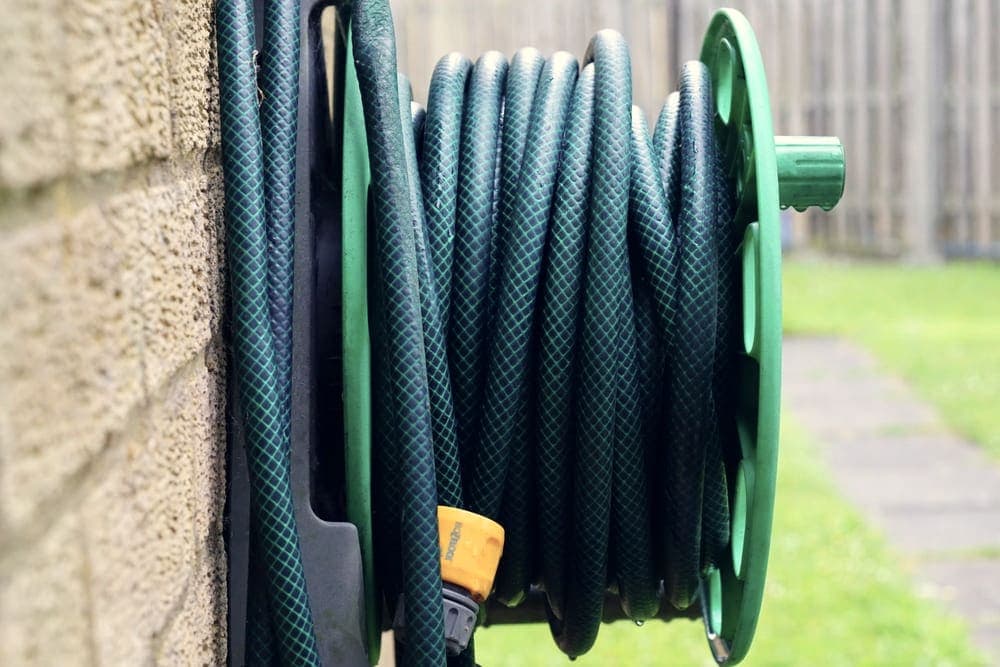
Above-ground cover reels ranked on fit first: which ones exclude Intex and soft-sided pools, which reach 30 ft, which cannot take a 16-mil cover, and which one ships without the tube.
VEVOR solar pool cover review
VEVOR sells 12 and 16 mil covers in a wide size range at a genuine discount. Here is what is published, what is not, and when the trade is worth taking.
Solar pool covers worth buying
Ranked on the specifications that actually differ between covers — thickness tier and published lifespan — because the only hands-on test in this category found no heating difference at all.
Clear vs blue solar covers
Clear transmits into the water, blue absorbs at the surface. Same energy budget either way — and the only published test measured no difference between them.
Do solar pool covers work?
The 4-degrees-versus-15-degrees contradiction that runs through this entire category, reconciled from published physics. Three different quantities being reported as one.
Solar cover reels
Why a reel is the highest-leverage buy in pool heating, and which ones to look at. Thirty seconds alone versus five minutes and a helper decides whether a cover saves anything.
Solar covers for inground pools
Which covers suit a full-size inground pool, why handling weight outranks material at that scale, and the overnight loss math for a 16-by-32.