Solar covers for above-ground pools
The rules change on a soft-sided pool: fit beats material, and the physics are on your side because there is far less water to move.
Quick picks
Ranked for soft-sided and frame above-ground pools, where fitting the actual pool outranks every other consideration.
| # | Product | Best for | Price |
|---|---|---|---|
| 1 | 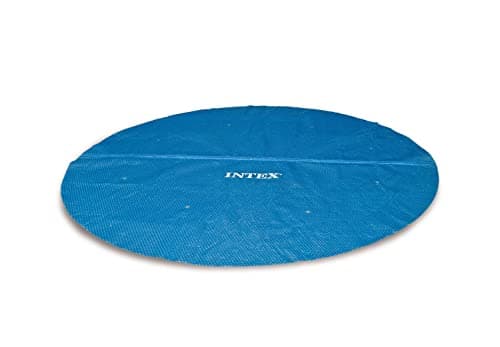 Best for Intex pools Intex Easy Set Solar Cover Sized to the frame diameter. On a soft-sided pool that is worth more than thickness. | Intex and other soft-sided above-ground pools | |
| 2 | 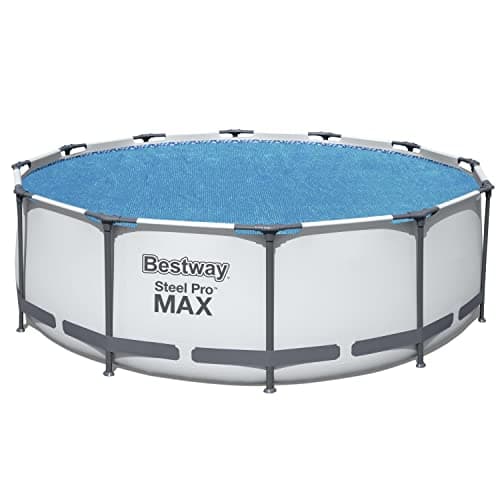 Best for Bestway pools Bestway Flowclear Solar Pool Cover Same logic, other brand. Buy the one made for the pool you own. | Bestway above-ground and Steel Pro frame pools | |
| 3 |  Best upgrade Blue Wave 12-Mil Solar Blanket If you want a cover that outlasts the pool, this is the tier to step up to. | Buying on price within the 12-mil tier | |
| 4 | 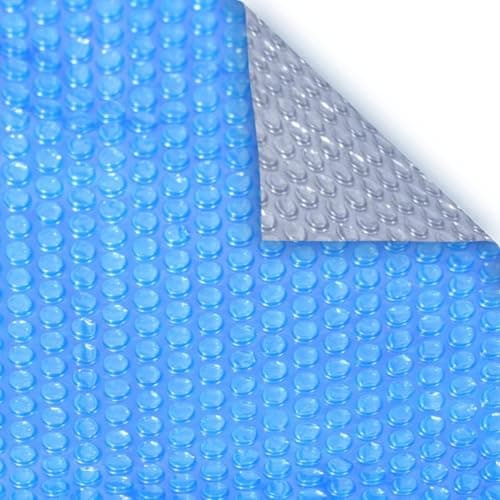 Best for odd diameters Robelle Blue/Silver Solar Cover Stocks round sizes the own-brand covers skip. | Odd pool sizes where the big brands do not have your dimension | |
| — | No photo Skip this An 8-mil blue solar cover Even on a cheap pool, one to two years is not the bargain it looks like. | Nothing we would recommend |
#ad We earn a commission if you buy through this link, at no extra cost to you. It never changes the ranking. How this site is funded. Prices last checked October 18, 2026.
Why small pools respond faster
There is a genuine physical advantage to a small pool that nobody mentions, and it is worth understanding because it changes what you should expect.
Sunlight arrives per square foot of surface. Temperature change depends on the volume you are heating. A shallow above-ground pool has a lot of surface for very little water, so the same sunshine moves it much further.
| 16 x 32 inground, 5 ft deep | 512 sq ft, 19,149 gal |
| → about 0.62°F per hour of full sun | |
| 18 ft round above-ground, 4 ft deep | 254 sq ft, 7,614 gal |
| → about 1.05°F per hour of full sun |
The small pool warms roughly 70% faster in the same sunlight
Derived from NASA’s energy budget: about 1,360 W/m² reaches the top of the atmosphere and roughly 48% is absorbed at the surface, giving about 653 W/m² under a clear midday sky. See the full derivation.
The flip side is that the same arithmetic runs backward at night. A small pool cools faster too, which is exactly why a cover matters here rather than mattering less.
Fit is the whole decision
Two of the covers below are own-brand products sold to fit one manufacturer’s pools, and we look at both in detail: the Intex cover and the Bestway Flowclear, whose product name describes the sheet rather than the pool and catches people out at the ordering stage.
On an inground pool you buy a cover sized to a rectangle and cut it to fit. On a soft-sided above-ground pool that logic falls apart, because the top rail or inflatable ring is a fixed diameter and the cover has to sit inside it without bunching.
A generic 18-foot round cover on an 18-foot Intex pool is often not the same 18 feet: the pool’s nominal diameter is measured to the outside of the frame, while the water surface is smaller. A cover made for that pool accounts for it. A generic one either rides up over the rail or floats loose with a gap around the edge, and a gap is evaporation carrying on exactly where you were trying to stop it.
Thickness on a cheap pool
The own-brand covers are thin. Nobody publishes a mil rating for the Intex or Bestway covers in a form we could retrieve, and the honest read is that they are at the bottom of the range — expect a season or two.
That is not automatically the wrong buy. If the pool itself is a three-summer proposition, a cover that outlives it by seven years is money spent on the wrong thing. But if you have a permanent steel-wall above-ground pool that will be there for a decade, step up to a 12-mil cover and buy it once.
The things that go wrong
Two failure modes are specific to above-ground pools and both are easy to avoid.
Wind gets under the edge. A soft-sided pool has no coping to weigh the cover down, so a cover with a gap catches wind and ends up in the yard. Trim for a snug fit rather than an overhang, which is the opposite of the inground advice.
The cover gets left on in full sun with nobody swimming for days. On a small, shallow pool the water can get genuinely hot — this is the one situation where a cover overshooting is a real possibility rather than a theoretical one. If the pool is above your target, take the cover off during the day and put it back at dusk, which keeps the retention benefit without the daytime gain.
On the larger above-ground pools, a cover that is awkward to handle alone tends to stop going on at all, and a reel is the fix. Check fit before you buy one: our above-ground reel picks are ranked by pool type, and the lift-and-swing designs exclude Intex, Bestway and soft-sided pools.
Every pick, in detail
What each one publishes, what is good and bad about it, and — the section this category usually omits — what we could not judge without owning one.
Intex Easy Set Solar Cover
Made to fit Intex's own above-ground pools, which is the entire reason to buy it: on a soft-sided pool, a cover that matches the frame diameter is worth more than a thicker cover that does not. It is a thin cover and it will not last like a 12-mil blanket, but on a 5,000-gallon above-ground pool the physics are in your favor anyway, because there is far less water to move.
Best for Intex and other soft-sided above-ground pools
| Price shown for | 16 ft round (28014E)This product is sold in several sizes on one listing. The live price and photograph on this page are the ones Amazon returns for this variant; other sizes are priced separately. | Retail listing |
|---|---|---|
| Fits | Sized to Intex Easy Set and metal-frame pool diametersThe manufacturer publishes no retrievable specification sheet; figure is as listed at retail. | Retail listing |
| Color | Blue | Retail listing |
| Bubble side | Bubbles face the water | Published standard |
| Evaporation reduction | 95%Intex states this on its own product pages. It publishes no temperature claim at all — the 5 to 15 degree figure that appears on some retail listings is not Intex's. | Manufacturer |
- Actually fits the pool it is made for, which most generic rounds do not
- Cheap enough to replace on the schedule a thin cover needs
- On a small pool the same sunlight moves the temperature several times faster
- Thin. Expect a season or two, not five
- Sized to Intex diameters, so it is a poor buy for anything else
- Actual thickness — Intex publishes no mil rating we could retrieve
- How it holds up to the sun in a hot climate over one full season
- Whether the fit is as close on the metal-frame pools as on the Easy Sets
These need a unit in hand across a season. We do not have one, so we do not have an opinion worth printing on them.
#ad We earn a commission if you buy through this link, at no extra cost to you. It never changes the ranking. How this site is funded. Prices last checked October 18, 2026.
Bestway Flowclear Solar Pool Cover
Bestway's answer to the Intex cover, and the same logic applies: it exists to fit Bestway's own above-ground pools, and fit is the thing that matters on a soft-sided pool. Buy it if you own the pool it was made for. There is no reason to buy it for anything else.
Best for Bestway above-ground and Steel Pro frame pools
| Price shown for | 12 ft roundThis product is sold in several sizes on one listing. The live price and photograph on this page are the ones Amazon returns for this variant; other sizes are priced separately. | Retail listing |
|---|---|---|
| Fits | Sized to Bestway above-ground pool diametersThe manufacturer publishes no retrievable specification sheet; figure is as listed at retail. | Retail listing |
| Bubble side | Bubbles face the water | Published standard |
- Matches Bestway pool diameters without cutting
- Inexpensive enough to treat as a consumable
- Thin, like every own-brand above-ground cover
- Not a sensible buy for a pool it was not sized for
- Published thickness — none is stated in a form we could retrieve
- One-season durability in a hot climate
These need a unit in hand across a season. We do not have one, so we do not have an opinion worth printing on them.
#ad We earn a commission if you buy through this link, at no extra cost to you. It never changes the ranking. How this site is funded. Prices last checked October 18, 2026.
Blue Wave 12-Mil Solar Blanket
A straightforward 12-mil blanket that competes on price and on the size range it comes in. The interesting thing about it is what it shares with everything else here: it was in the same hands-on group as the Sun2Solar covers and posted the same one-hour temperature change. If the price is better than the equivalent Sun2Solar on the day you look, there is nothing in the published evidence that says you are giving anything up.
Best for Buying on price within the 12-mil tier
| Price shown for | 12 x 24 ft rectangle (NS405)This product is sold in several sizes on one listing. The live price and photograph on this page are the ones Amazon returns for this variant; other sizes are priced separately. | Retail listing |
|---|---|---|
| Thickness | 12 milThe manufacturer publishes no retrievable specification sheet; figure is as listed at retail. | Retail listing |
| Color | Blue | Retail listing |
| Shapes | Round and rectangular, wide size range | Retail listing |
| Bubble side | Bubbles face the water | Published standard |
4 to 5 degrees F in one hour
Claimed by Bob Vila, measured across all covers in their group. Conditions: One hour under 2pm sun on 89 to 92 degree F days. Source
- Often the cheapest way into the 12-mil tier
- Broad size range including the awkward rectangular dimensions
- Blue rather than clear, so more energy is absorbed at the surface
- No published specification sheet to compare against anything
- Whether the material is meaningfully different from other 12-mil blankets
- Seam and edge durability over multiple seasons
- Consistency between production runs
These need a unit in hand across a season. We do not have one, so we do not have an opinion worth printing on them.
#ad We earn a commission if you buy through this link, at no extra cost to you. It never changes the ranking. How this site is funded. Prices last checked October 18, 2026.
Robelle Blue/Silver Solar Cover
A long-standing pool-supply brand with a wide size range and a lot of shelf presence. Treat the temperature figures attached to it the way you should treat all of them: the up-to-10-degree number that circulates for Robelle covers is a manufacturer claim being repeated by review sites that say plainly they did not verify it, and it is a cumulative figure rather than something you will see in an afternoon.
Best for Odd pool sizes where the big brands do not have your dimension
| Price shown for | 8 x 8 ftThis product is sold in several sizes on one listing. The live price and photograph on this page are the ones Amazon returns for this variant; other sizes are priced separately. | Retail listing |
|---|---|---|
| Thickness | Sold across the 8 to 16 mil range depending on lineThe manufacturer publishes no retrievable specification sheet; figure is as listed at retail. | Retail listing |
| Color | Blue over silver | Retail listing |
| Bubble side | Bubbles face the water | Published standard |
Up to 10 degrees F
Claimed by Robelle, repeated by Reviewed (USA Today). Conditions: None stated. Source
Reviewed states explicitly that it did not test these and pored over specifications and online reviews instead. This is a manufacturer claim, presented as one.
- Size range covers dimensions the bigger brands skip
- Sold at several thicknesses, so you can pick your durability tier
- The thin end of its range is not worth buying — see our thickness guide
- No published specification sheet
- Whether material quality is consistent across the thickness tiers
- Real service life against the tier averages
- How closely the finished cover matches its stated dimension
These need a unit in hand across a season. We do not have one, so we do not have an opinion worth printing on them.
#ad We earn a commission if you buy through this link, at no extra cost to you. It never changes the ranking. How this site is funded. Prices last checked October 18, 2026.
An 8-mil blue solar cover
Skip it. This is the one place in the category where the cheap option is a false economy, and the published lifespan tiers say so plainly: 8-mil blue covers are put at one to two years, against three to four for 12 mil and five to ten for 16 mil. There is no measured heating advantage to the thicker cover, so thickness is buying you years — and the 8-mil is the tier where you buy the same thing again next summer.
Best for Nothing we would recommend
| Thickness | 8 mil | Retail listing |
|---|---|---|
| Stated lifespan | 1 to 2 yearsSwim University's published lifespan tier for 8-mil blue covers. | Retail listing |
- Cheapest entry into a cover of any kind
- One to two years against three to four for a 12-mil, at a fraction of the price difference
- Thin material is harder to handle without tearing at the edge
- No measured heating advantage lost by going thicker, so there is nothing to gain here
- Whether a specific 8-mil cover beats its tier average
- How much of the price gap is material and how much is brand
These need a unit in hand across a season. We do not have one, so we do not have an opinion worth printing on them.
#ad We earn a commission if you buy through this link, at no extra cost to you. It never changes the ranking. How this site is funded. Prices last checked October 18, 2026.
Questions people actually ask
Can I use a regular solar cover on an Intex pool?
Does a solar cover work better on a small pool?
How do I stop the cover blowing off?
- U.S. Department of Energy pool-energy figures (evaporation share, BTU per pound evaporated, cover savings, recommended temperatures, wind effect)Recreonics, reproducing and attributing the U.S. Department of Energy · read 2026-09-02
- U.S. Department of Energy, Energy Saver: Swimming Pool Covers (archived — the live page now returns 404)U.S. Department of Energy via the Internet Archive · read 2026-09-02
- Hands-on solar cover comparison: 4 to 5°F measured in one hour of 2pm sun on 89–92°F days, with the method statedBob Vila · read 2026-09-02
- Solar cover guide: 0.7°F per hour under noontime sun, 10–15°F held, and published lifespan tiers by thicknessSwim University · read 2026-09-02
- Water density: 62.424 pounds per cubic foot at 39.2°FU.S. Geological Survey, Water Science School · read 2026-09-02
Every URL above was fetched and returned content on the date shown. Where a figure is ours rather than somebody else’s, the arithmetic is on the page and on the methodology page. If you find an error in it, we would genuinely like to know.
Read next
Solar cover reels for above-ground pools
Above-ground cover reels ranked on fit first: which ones exclude Intex and soft-sided pools, which reach 30 ft, which cannot take a 16-mil cover, and which one ships without the tube.
Solar heaters for above-ground pools
Every kind of solar heater sold for above-ground pools, ranked on collector area against pool surface — the arithmetic that shows why one dome does almost nothing and one panel system is only a start.
Intex solar pool cover review
Intex's own solar covers, what the manufacturer publishes about them, the temperature claim retailers add that Intex never makes, and why fit outranks thickness here.
Bestway solar pool cover review
Bestway's Flowclear covers, why the size in the product name is smaller than the pool it is for, and how to order the right one first time.
Solar pool covers worth buying
Ranked on the specifications that actually differ between covers — thickness tier and published lifespan — because the only hands-on test in this category found no heating difference at all.
Solar cover on or off during the day?
Why leaving the cover on during daylight is usually right, the two situations where it is not, and what wind does to the calculation.
How a solar cover heats a pool
Transmission during the day, evaporation suppression at night. The two mechanisms separated, with the energy arithmetic for each.

What size solar cover do I need?
Measuring for round, rectangular, oval and freeform pools, why you buy up rather than exact, and the above-ground nominal-diameter trap that catches people out.
Heaters for above-ground pools
Why a small pool is much cheaper to heat, which options make sense at that scale, and the one place an electric resistance heater is genuinely defensible.