Do you need a bypass valve on your pool heater?
It is a thirty-dollar part that decides how much work every future job on your heater is. Skipping it is the most expensive saving in this category.
Quick picks
The valve, and the three heating products whose installation instructions assume you have fitted one. Live prices come from the retail listings.
| # | Product | Best for | Price |
|---|---|---|---|
| 1 | 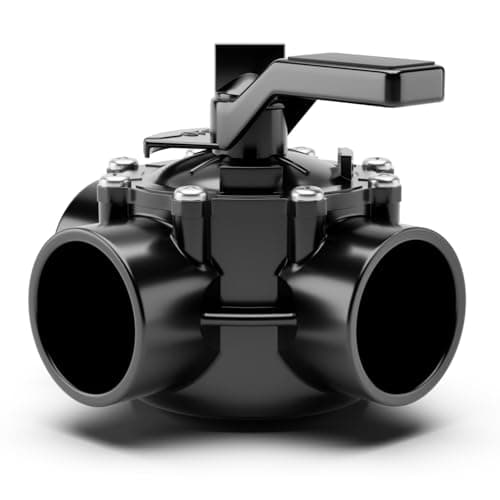 Best overall FibroPool 3-Way Positive Seal Diverter Valve, 1.5 in A 3-way positive-seal diverter in 1.5 in slip, CPVC, with lubeless PTFE seats. The part this whole page is about. | Plumbing a bypass around the new heater while the pipework is already open | |
| 2 | 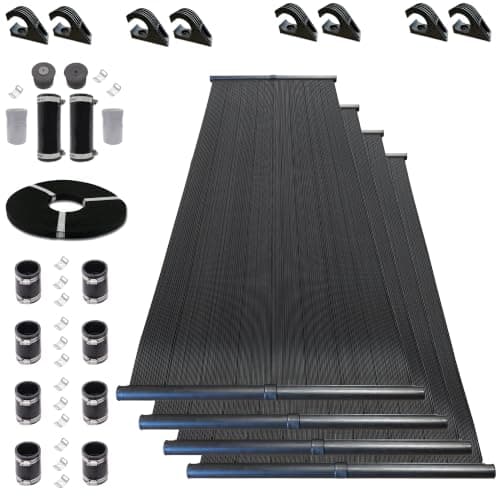 Where it is not optional SwimEasy DIY Solar Pool Heater Kit, 4 x 4x10 ft Collectors A solar collector needs to be isolated at dusk and in cold weather, or it pulls heat out of the pool it just put in. | An inground pool up to roughly 320 sq ft of surface, on a roof or a rack | |
| 3 | 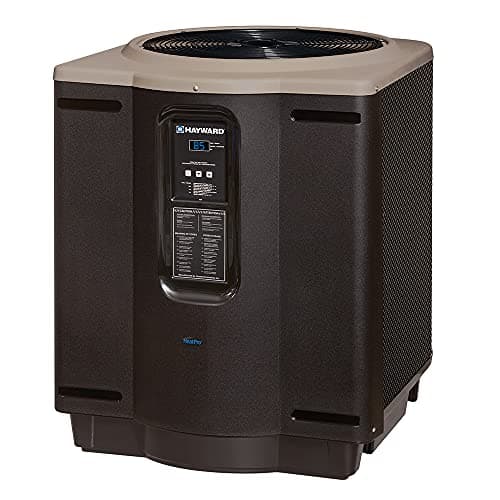 Where it saves you a drain-down Hayward HeatPro Pool Heat Pump 140,000 BTU, and a heater you will want to isolate for every service visit and every freeze warning for the next decade. | Lowest running cost per degree when you want real temperature control | |
| 4 | 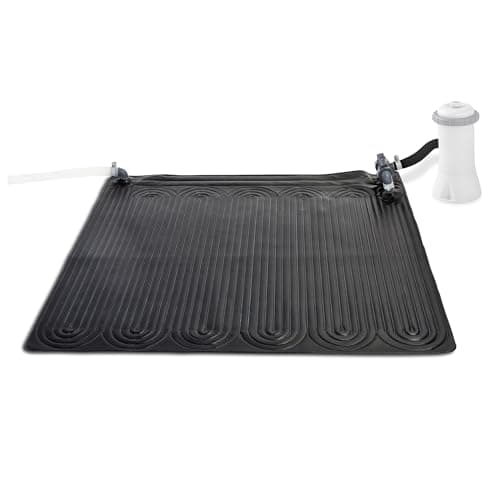 The one that includes one Intex 28685E Solar Heater Mat, 47 x 47 in Intex's own parts list for a thirty-dollar solar mat reads: connecting hose, and a bypass valve. That is how standard this part is. | An above-ground pool up to about 8,000 gallons, on a sunny site |
#ad We earn a commission if you buy through this link, at no extra cost to you. It never changes the ranking. How this site is funded. Prices last checked October 18, 2026.
What a bypass actually does
A bypass is a tee and a valve, or more usually a single 3-way diverter, plumbed so that the flow returning to the pool can be sent through the heater, around it, or split between the two. Four jobs:
- Isolate the heater for service and backwashing. Any work on the heater, any filter backwash, any winter job — with a bypass it is a valve turn. Without one it is a drain-down of the heater, or of a section of plumbing, every single time.
- Shut a solar collector down at dusk. This is the non-negotiable one. A collector on the roof at 2am is a radiator: water circulating through it in the dark actively pulls heat out of the pool. Close the bypass at dusk, or fit a differential controller that only opens the loop when the collector is warmer than the water.
- Keep flow inside the heater’s published window. Heaters state a flow range rather than a minimum alone. Hayward publishes 20 to 125 for its 150,000 BTU Universal H-Series and advises keeping flow above the minimum with allowance for a dirty filter, to protect the exchanger. A diverter lets you send part of the flow around the heater when the pump is producing more than it wants.
- Let you run the pool with the heater out of circuit. A failed heater does not have to stop the filtration. With a bypass the pool keeps circulating while you wait for a part.
Which heaters genuinely need one
| Heater type | What the bypass is for | Optional? |
|---|---|---|
| Solar collector (panels or mats) | Shutting the loop at dusk and in cold weather, so the collector cannot drain heat back out of the pool. Also isolation for backwash. | No — fit it with the collector |
| Heat pump | Service isolation, freeze protection, and keeping flow inside the published window. | Technically yes, practically no |
| Gas heater | Service isolation and flow control; a gas exchanger is the component you least want starved of flow. | Technically yes, practically no |
| Small plug-in heat pump on hose | Taking the unit out of circuit without pulling hoses off, and storing it for winter. | Useful; often achieved with hose unions instead |
The pattern: on solar it is part of making the thing work at all, and on everything else it is about the next ten years of ownership rather than about today.
What to buy, and what to look for
You are choosing between a single 3-way diverter and a pair of two-way valves plus a tee. The diverter is one body, one handle and one decision, and it is what the picks above lead with. What matters on the specification:
- Port size matched to your plumbing. 1.5 in is the common residential size and is what the FibroPool valve uses; 2 in appears on larger inground systems. Match the pipe you have.
- A positive seal. The FibroPool listing states that the handle can close any one port or leave all three open — which is what you want, because a valve that only ever splits flow cannot actually isolate the heater.
- Lubeless seats. PTFE seats, as on that valve, do not need greasing. A valve you have to service is a valve you will stop turning.
- A pressure rating you can check. The FibroPool body is CPVC rated to 50 psi, which is comfortably above a residential pool loop. It also carries a 1-year manufacturer warranty, which is worth knowing is all it carries.
The case for fitting it now rather than later
Everything a bypass buys you is in the future, which is exactly why it gets skipped. The costs of skipping it arrive one at a time:
- Every winter. Winterizing a heater with a bypass is a valve turn and a drain plug. Without one you are draining a section of plumbing, and the consequence of getting it wrong is a cracked exchanger — the single most expensive component in the appliance.
- Every service visit. A technician who has to drain the system to reach your heater is a technician billing for the drain-down.
- Every cold night on solar. A collector loop left open overnight undoes part of what the day produced, and nothing on the system will warn you.
- At replacement. Swapping a heater is dramatically simpler when the unions and the bypass are already there. Heaters last nowhere near as long as the pool, so this is a job you will do again.
Against a heat pump at four figures and a gas heater at several, the valve is a rounding error. It is the cheapest part on the pad and the one that decides how much every future job costs.
Every pick, in detail
What each one publishes, what is good and bad about it, and — the section this category usually omits — what we could not judge without owning one.
FibroPool 3-Way Positive Seal Diverter Valve, 1.5 in
The valve that turns a heater swap into a heater swap you can service. A three-way diverter plumbed around the heater lets you route flow past it entirely — for winterizing, for a repair, or for the days you do not want the heat. FibroPool publishes a CPVC body rated to 50 psi, lubeless PTFE seats and a one-year warranty, which is more than most pool valves state. If the old heater came out and the plumbing is already cut, this is the cheapest upgrade available and the one you cannot retrofit later without cutting it again.
Best for Plumbing a bypass around the new heater while the pipework is already open
| Size | 1.5 in slip ports1.5 in is the common above-ground and small-inground size. Full-size inground equipment pads are frequently plumbed in 2 in, and this valve does not fit those. | Manufacturer |
|---|---|---|
| Body | CPVC, rated to 50 psi | Manufacturer |
| Seats | Lubeless PTFE, described as serviceableThe usual failure on a pool diverter is a dried-out greased seat. PTFE seats are meant to remove that maintenance item. | Manufacturer |
| Function | Handle closes any one of the three ports, or leaves all three open and throttled | Manufacturer |
| Warranty | 1 year manufacturer | Manufacturer |
- Publishes a pressure rating and a warranty, which pool valves often do not
- Lubeless seats remove an annual maintenance job
- Lets you throttle rather than just divert, which matters on heat pumps with a flow window
- 1.5 in only — wrong size for most full-size inground equipment pads
- Slip ports glue in permanently; there is no union version of this valve
- 50 psi is adequate rather than generous for a system with a dirty filter
- Handle and seat life across many seasons of sun
- Whether the CPVC body tolerates repeated freeze cycles
- How it behaves at the top of its pressure rating
These need a unit in hand across a season. We do not have one, so we do not have an opinion worth printing on them.
#ad We earn a commission if you buy through this link, at no extra cost to you. It never changes the ranking. How this site is funded. Prices last checked October 18, 2026.
SwimEasy DIY Solar Pool Heater Kit, 4 x 4x10 ft Collectors
The kit that finally gives this site a real inground-scale collector array to point at. Four 4 x 10 ft panels is 160 square feet, which is the first product we have found that gets a normal inground pool anywhere near the collector rule. Made in the US with UV stabilizers, a one-piece over-molded header, a 5-year / 10-year limited warranty and a stated 15-20 year life expectancy. The 1.5 in header is the thing to check: most inground equipment pads are plumbed in 2 in.
Best for An inground pool up to roughly 320 sq ft of surface, on a roof or a rack
| Collector area | 160 sq ft — four 4 x 10 ft panelsAt the 50% rule this site uses, that suits a pool of about 320 sq ft of surface — a 16 x 20 ft rectangle. Bigger pools need more kits, not a bigger heater. | Manufacturer |
|---|---|---|
| Header size | 1.5 in I.D.This is the size to check before ordering. Inground equipment is frequently plumbed in 2 in, and SolarPoolSupply sells a 2 in header version separately. | Manufacturer |
| Construction | Over-molded one-piece header, US-manufactured with UV stabilizersThe header-to-riser bond is where old panels split. A molded single piece removes the seam rather than sealing it. | Manufacturer |
| Stated life | 15-20 years | Manufacturer |
| Warranty | 5-year / 10-year limitedLonger than most pool equipment, and shorter than the SwimJoy line from the same company. | Manufacturer |
| What is in the box | Panels, mounting hardware, panel-to-panel connectors, tie-down strap, install manualIt does not include the diverter valve or the controller. Budget for those separately. | Manufacturer |
- Genuinely inground-scale — 160 sq ft, where most listings sell 20 to 40
- Publishes a warranty and a life expectancy, which most solar collectors do not
- Complete mounting hardware rather than panels and a shrug
- 1.5 in header on a market where inground pads are often 2 in — check first
- No diverter valve or controller included, and you need both
- Roof mounting is a real project; this is not a hose-and-go product
- Whether 15-20 years is reached in a hot, high-UV climate
- Real-world flow and head loss on your pump
- How the warranty is administered on a DIY installation
These need a unit in hand across a season. We do not have one, so we do not have an opinion worth printing on them.
#ad We earn a commission if you buy through this link, at no extra cost to you. It never changes the ranking. How this site is funded. Prices last checked October 18, 2026.
Hayward HeatPro Pool Heat Pump
If you are heating a pool with electricity, this is the shape of machine to do it with. A heat pump moves heat instead of making it, and at the assumptions we publish it delivers a million BTU into the water for about a fifth of what an electric resistance heater costs to deliver the same. It is slower than gas and it fades as the air gets colder, which is exactly when you want it — that trade is the whole decision.
Best for Lowest running cost per degree when you want real temperature control
| Type | Air-source heat pumpThe manufacturer publishes no retrievable specification sheet; figure is as listed at retail. | Retail listing |
|---|---|---|
| Rating convention | Rated by BTU/hr OUTPUTThis is the trap in the category. Gas heaters are rated by fuel INPUT, heat pumps by heat OUTPUT. A 140,000 BTU heat pump and a 140,000 BTU gas heater do not deliver the same heat. | Published standard |
| Cost per million BTU delivered | About $10.75 at our published assumptionsUS average residential electricity at 18.34 cents/kWh (EIA, June 2026) and an assumed COP of 5.0. Both are substitutable on our running-cost calculator. | Our arithmetic |
- Cheapest running cost per delivered BTU of any controllable heater
- No gas line, no combustion, no flue
- Holds a set temperature rather than depending on the weather
- Slow — expect most of a day to move a full-size pool ten degrees
- Efficiency falls with air temperature, so it is weakest in the shoulder season
- High purchase price against a gas heater of comparable output
- The COP this specific unit achieves at your conditions
- Compressor and control-board longevity
- Noise at the distance your deck actually sits from it
These need a unit in hand across a season. We do not have one, so we do not have an opinion worth printing on them.
#ad We earn a commission if you buy through this link, at no extra cost to you. It never changes the ranking. How this site is funded. Prices last checked October 18, 2026.
Intex 28685E Solar Heater Mat, 47 x 47 in
The cheapest thing on this site that adds heat rather than keeping it, and the only reason it works is that it is honest about its scale: one mat is a small collector plumbed into a small pool's filter line, and Intex rates it for 8,000 gallons. On the pool it was designed for it is a genuinely sensible purchase with no running cost at all. On a full-size inground pool it is a rounding error, and buying several to make up the difference gets expensive faster than people expect.
Best for An above-ground pool up to about 8,000 gallons, on a sunny site
| Dimensions | 47.25 x 47.25 in, flat before fill | Manufacturer |
|---|---|---|
| Rated pool size | Above-ground pools up to 8,000 gallonsIntex's own page words this as "up to 8,000 gal / 11ft sq surface". It does not define what the 11 ft sq refers to — it is not the mat's own flat area, which works out nearer 15 sq ft — so we quote the gallon figure and leave the other alone rather than guess at it. | Manufacturer |
| Pump requirement | Filter pumps up to 1/3 HP, or a flow rate under 2,000 gal/hrThis is the specification that decides whether it fits your setup, and it is the one most listings bury. | Manufacturer |
| Connections | 1.25 in hose attachment points, with adaptors supplied for a 1.5 in connection | Manufacturer |
| Material | UV-stabilized PVCStated in retail listings. Intex's own product page does not name the material. | Retail listing |
| Running cost | $0 in fuelThe filter pump is already running to filter the water. There is no additional fuel or electricity cost attributable to the heat. | Our arithmetic |
Approximately 5 to 9 degrees F
Claimed by Intex, on its own product page. Conditions: Stated as depending on weather condition; no time period is given. Source
Intex's exact wording is that it is designed to increase pool water temperature by approximately 5-9 degrees Fahrenheit depending on weather condition. With no period attached, this is a cumulative ceiling over days of good sun, not a figure you will watch happen in an afternoon.
- No running cost at all — the filter pump is already circulating the water
- Intex publishes real numbers for it, which most of this category does not
- Mats can be added in series as the budget allows
- Rated to 8,000 gallons, so it is the wrong tool for a full-size pool
- Needs a low-flow pump — over 2,000 gal/hr and it is outside its own spec
- Delivers what the sun delivered, so it does nothing on a cool cloudy week
- Actual output at your latitude, mat angle and shading
- How the PVC survives several seasons of UV and freeze cycles
- Whether the supplied adaptors suit a non-Intex filter system
These need a unit in hand across a season. We do not have one, so we do not have an opinion worth printing on them.
#ad We earn a commission if you buy through this link, at no extra cost to you. It never changes the ranking. How this site is funded. Prices last checked October 18, 2026.
Questions people actually ask
Is a bypass valve the same as a diverter valve?
Do I need a bypass for a pool heat pump?
What size bypass valve do I need?
Can I just use ball valves instead?
Does a bypass reduce how fast the pool heats?
- FibroPool 3-way positive-seal diverter valve listing: 1.5 in slip ports, CPVC body rated to 50 psi, lubeless PTFE seats, handle can close any one port or leave all three open, 1-year manufacturer warranty, and named on the listing as suitable for heater plumbingFibroPool, as listed at retail · read 2026-09-26
- Hayward's own product page for the Universal H-Series W3H150FDN: heating capacity 150,000 BTU/hr, "Standard cupro nickel heat exchanger", "Excellent salt water and chemical corrosion resistance", Water Flow Rate Min 20 and Max 125 (the table does not state the unit), 2 in x 2-1/2 in CPVC union plumbing connections, 24 x 19 x 29.5 in, 135 lb, 120/240V 60 Hz single phase, circuit amps 5.5, maximum breaker 15 amps, a "Power: 44 kW" row that cannot be reconciled with that breaker size, warranty of 1 year parts and no labor, SCAQMD Rule 1146.2 low-NOx compliance, and no thermal efficiency figure anywhere on the pageHayward Industries · read 2026-10-17
- Intex 28685E solar mat product page, read for fitment: "1.25in hose attachment points", "Includes 1 adaptor A and 1 adaptor B for 1.5in hose connection", "Includes: 1.25in diameter connecting hose, bypass valve", "Compatible with filter pumps up to 1/3 HP or pump flow rate < 2,000 gal/hr", "Designed to work with most Intex filter pumps", "Suitable for above ground pools up to 8,000 gal", and an increase of "approximately 5 - 9 degrees Fahrenheit depending on weather condition". Intex's heating-system category lists no other heating product.Intex Recreation Corp. · read 2026-10-17
- SolarPoolSupply SwimEasy KIT-4-SPS15-10 listing: four 4 x 10 ft collectors (160 sq ft) with a 1.5 in I.D. over-molded header, US manufacture with UV stabilizers, stated 15-20 year life expectancy, full mounting and tie-down hardware, 5-year / 10-year limited warrantySolarPoolSupply, as listed at retail · read 2026-09-27
- Average retail price of electricity to US residential customers: 18.34 cents/kWh, June 2026U.S. Energy Information Administration · read 2026-09-02
- US residential natural gas price: $24.09 per thousand cubic feet, June 2026U.S. Energy Information Administration · read 2026-09-02
- US residential propane price: $2.674 per gallon, week ending 30 March 2026U.S. Energy Information Administration · read 2026-09-02
- Energy content conversion factors: 3,412 BTU per kWh, 1,036 BTU per cubic foot of natural gas, 91,452 BTU per gallon of propaneU.S. Energy Information Administration · read 2026-09-02
- U.S. Department of Energy pool-energy figures (evaporation share, BTU per pound evaporated, cover savings, recommended temperatures, wind effect)Recreonics, reproducing and attributing the U.S. Department of Energy · read 2026-09-02
- Pool heater roundup: the 8.33 BTU per gallon per °F figure, attributed on the page to Alicia Toedter of Leslie'sBob Vila · read 2026-09-02
#ad Where a retailer’s listing is cited above as the source of a published specification, that link is an affiliate link, at no extra cost to you. Independent sources and manufacturer documentation are never wrapped and earn nothing. How this site is funded.
Every URL above was fetched and returned content on the date shown. Where a figure is ours rather than somebody else’s, the arithmetic is on the page and on the methodology page. If you find an error in it, we would genuinely like to know.
Read next
How to heat a pool with solar panels
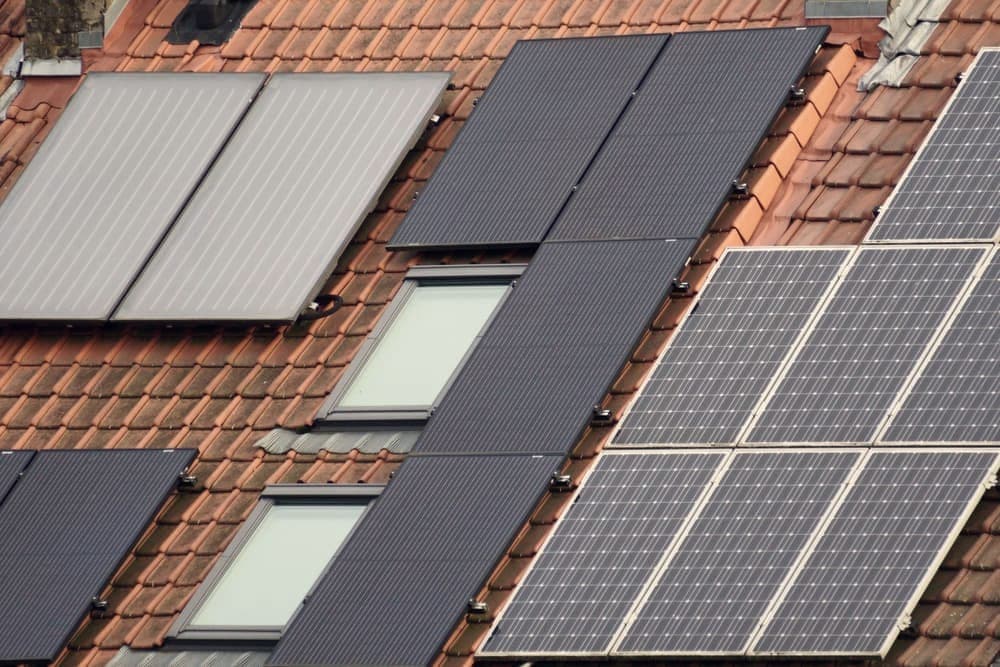
How much collector area you actually need, where it can go, how it plumbs in, the pump specification that rules people out, and the system kit that is not in the panel box.

Winterizing a pool heater
What freezing water does to a heat exchanger, the plugs and valves to open, and why a sealed waterproof cover damages more heaters than it protects.
Solar pool heating panels for inground pools
Panel arrays sized for inground pools, ranked on collector area per dollar, header size and warranty. With the arithmetic for how much collector your pool needs.
Replacing a pool heater
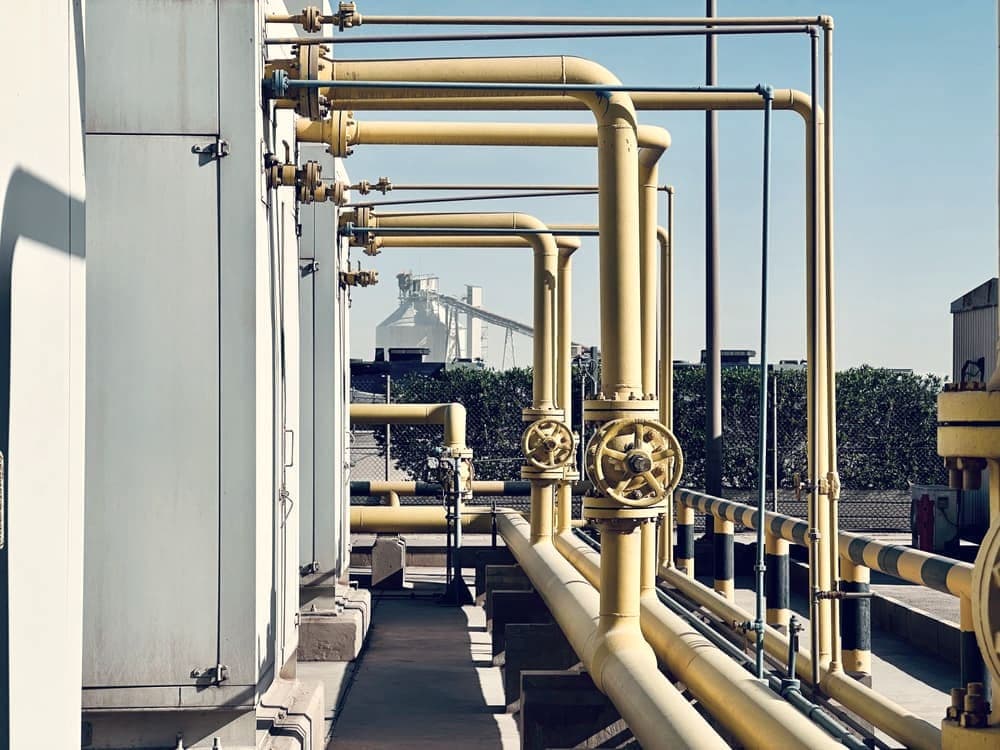
What carries over from the old heater and what does not, why matching the old BTU is usually wrong, and why a replacement is the one affordable moment to switch fuel.
How long do pool heaters last?
Lifespan by heater type, the components that actually fail, what the warranties really cover, and how that should change what you buy in the first place.
What heater fits an Intex or Bestway pool?
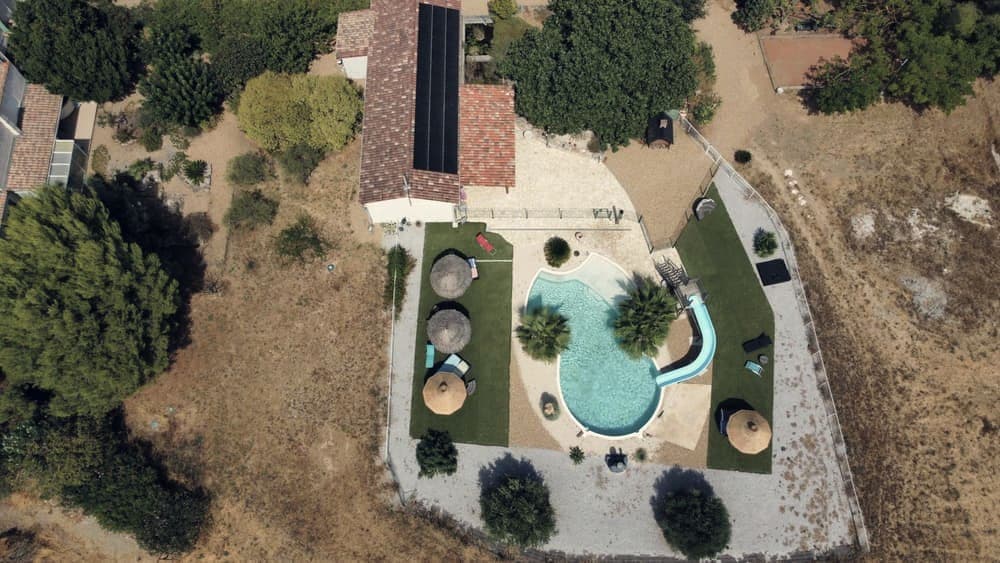
Intex's entire US heating range is one solar mat. The heaters that suit an Intex, Bestway or inflatable pool, ruled in and out on power supply, pump flow rate and hose size rather than on output.