How long do pool heaters last?
Long enough that the answer changes what you should buy. The component that fails first is not the one you would guess, and it is the one you choose at purchase.
Quick picks
Chosen for what survives, which is a different question from what heats best. Live prices come from the retail listing.
| # | Product | Best for | Price |
|---|---|---|---|
| 1 | 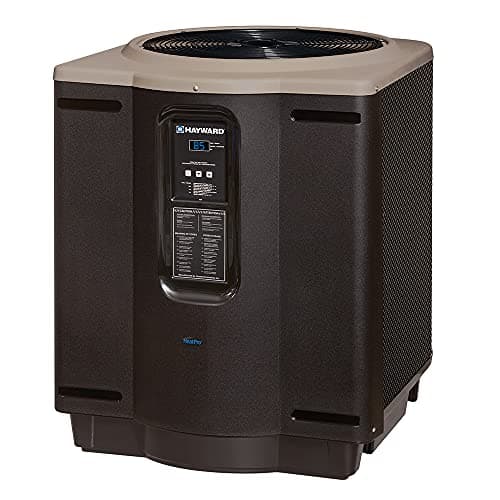 Best bet on longevity Hayward HeatPro Pool Heat Pump Titanium exchanger and an established-brand parts channel. The exchanger is what ends a heater, and titanium does not corrode. | Lowest running cost per degree when you want real temperature control | |
| 2 | 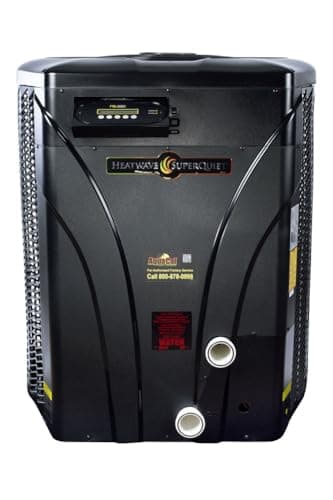 Best if you want it documented AquaCal HeatWave SuperQuiet SQ160R Pool Heat Pump Titanium exchanger plus the only published efficiency figure with conditions on this site. | A full-size pool where the titanium exchanger, app control and warranty are worth paying for | |
| 3 | 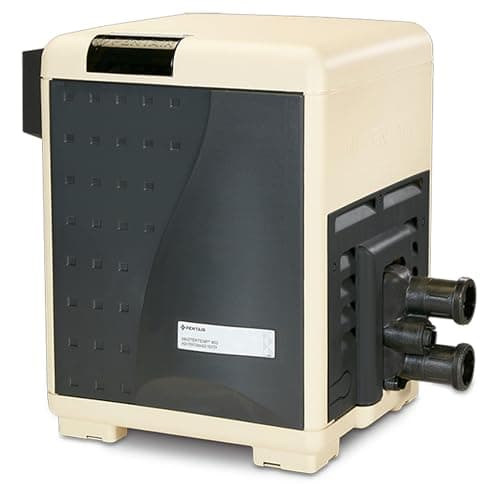 Best gas heater for parts availability Pentair MasterTemp 400 Natural Gas Pool Heater An enormous installed base, which is what determines whether a control board is obtainable in year eight. | A full-size pool heated on demand, when you want the largest gas class | |
| 4 |  The cheapest way to extend a heater's life Sun2Solar 1600 Series Ultimate Blue Solar Cover A heater that runs half as many hours lasts roughly twice as long. Nothing else on this list is as cheap. | An inground pool you cover most nights, every season | |
| 5 | 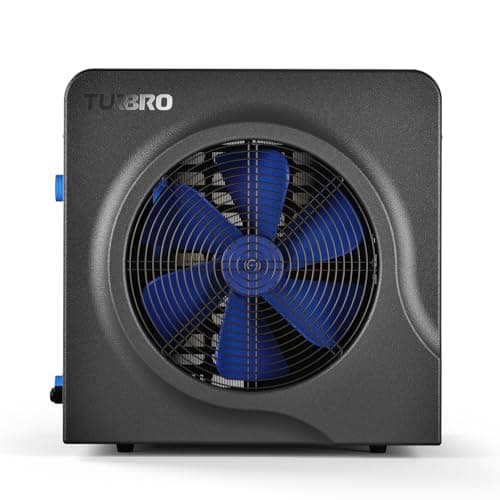 The honest short-warranty option TURBRO Manatee M18 18,000 BTU Above-Ground Pool Heat Pump 2 years on the machine, and an import brand with no parts history to check. Cheap now, unknown in year five. | An above-ground pool up to about 6,000 gallons, with no 240V circuit available |
#ad We earn a commission if you buy through this link, at no extra cost to you. It never changes the ranking. How this site is funded. Prices last checked October 17, 2026.
The honest answer, by type
We are going to be careful here, because lifespan is exactly the kind of number that gets quoted confidently by people who have not measured it. No manufacturer on this site publishes an expected service life. What they publish is a warranty term, and that is a commercial decision as much as an engineering one — but it is a real, checkable number, and it is the floor the maker is prepared to stand behind.
| Heater | Published warranty | Source |
|---|---|---|
| TURBRO Beluga B33V | 2 years machine, 5 years compressor | Listing |
| TURBRO Manatee M18 | 2 years full machine | Listing |
| Hayward HeatPro | Not published on the retail listing | — |
| Raypak propane heaters | Not published on the retail listing | — |
| Pentair MasterTemp | Not published on the retail listing | — |
| Blue Wave solar cover (for scale) | 3 years limited | Listing |
Most heater listings do not publish warranty terms at all — you have to read the manufacturer's own warranty document, which is a separate PDF and frequently differs by whether a professional installed the unit. That last condition is the one that catches people.
What actually fails, in order
- The heat exchanger. This is the one that ends a heater, because replacing it usually costs a substantial fraction of a new machine. It fails by corrosion, and corrosion is a function of water chemistry and material. Copper is the standard and the most vulnerable; cupro-nickel resists better; titanium is effectively immune. Our page on heaters for saltwater pools covers which heaters state which.
- The control board. The commonest actual failure, and usually repairable — if the part still exists. On an established brand it will; on an import unit bought five years ago it may not. This is the single strongest argument for a mainstream brand.
- The compressor (heat pumps only). Expensive, which is why compressor warranty terms are quoted separately and are longer than machine terms. TURBRO’s 5 years on the B33V compressor is the meaningful number on that listing.
- Ignitors, gas valves and pressure switches (gas and propane). Consumables, more or less. Annoying, cheap, and not the end of anything.
- The cabinet. Rarely terminal, but in coastal air it goes first cosmetically. Hayward names an Ultra Gold corrosion finish for exactly this.
The variable you control
Run hours. A heater that runs 200 hours a season accumulates wear at half the rate of one running 400, and the cheapest way to halve your run hours is not a better heater — it is a cover.
| Evaporation is about 70% of a pool's heat loss | DOE |
| A floating cover stops nearly all of it | |
| Heater run hours fall roughly in proportion | |
| Fewer run hours → fewer ignition cycles, less exchanger exposure |
This is a second-order benefit that nobody advertises: the cover's headline case is the fuel bill, and the longevity effect arrives free on top of it. Our payback page costs out the first effect.
Water chemistry is the other one. A heat exchanger corroding from the inside is being attacked by your water, not by age — low pH is aggressive to copper, and a heater run on chronically unbalanced water can lose its exchanger in a fraction of the time it would otherwise last. This is unglamorous and it is the highest-leverage maintenance there is.
Repair or replace
A rough framework rather than a rule.
| Failure | Typical outcome | Reasoning |
|---|---|---|
| Ignitor, pressure switch, thermostat | Repair | Cheap parts, straightforward labor, no reason to scrap a working machine. |
| Control board | Repair if the part exists | The whole question is parts availability, which is a brand question. |
| Compressor, in warranty | Claim | This is what the separate compressor term is for. |
| Compressor, out of warranty | Usually replace the machine | The part plus the refrigerant work approaches the cost of a new unit. |
| Heat exchanger | Usually replace the machine | And if it corroded, ask why before buying the same thing again. |
The second column says 'usually' deliberately. On a heater that is otherwise young and on a machine with a strong parts channel, an exchanger replacement can make sense. On a ten-year-old unit it rarely does.
Once that decision comes out as “replace”, the job itself has its own set of questions — what carries over from the old install, whether to match the old BTU, and whether to change fuel while everything is open. Replacing a pool heater works through those.
What this means for what you buy
- Buy the exchanger material your water demands. Titanium if the pool is salt, cupro-nickel at minimum if you want a gas heater on salt, and check rather than assume. This is the decision that most affects how long the machine lives and it is made once, at purchase.
- Prefer a brand with a parts channel. Not for build quality — for the control board in year seven. Our brand comparison covers who has one.
- Read the compressor term separately on any heat pump. A 2-year machine and 5-year compressor warranty tells you exactly which part the manufacturer expects to outlast the other.
- Size it so it is not always at full fire. A heater running flat out every day is working harder than one that reaches temperature and modulates. The BTU calculator will tell you what you need.
- Buy the cover. Every section of this page ends here because the arithmetic keeps arriving at the same place.
One seasonal failure worth separating out: freeze damage. Water left in a heat exchanger over a hard winter splits it, and that is the failure that ends a heater rather than one you repair. Winterizing a pool heater covers the drain plugs people miss and the sealed cover that causes more damage than it prevents.
Solar is the outlier, and it deserves a note
A solar panel array has no compressor, no burner, no ignitor and no control board — it is plastic tubing and a diverter valve. There is very little in it to fail, which is the genuine argument for solar that is not about running cost. The failure modes are UV embrittlement of the absorber over many years and freeze damage in one night if it is not winterised. Our solar heating guide covers the winterising, which is the part people skip.
Covers are the opposite: they are consumables. One to three years of warranty is typical, UV is what kills them, and a reel cover is the cheapest intervention available.
Every pick, in detail
What each one publishes, what is good and bad about it, and — the section this category usually omits — what we could not judge without owning one.
Hayward HeatPro Pool Heat Pump
If you are heating a pool with electricity, this is the shape of machine to do it with. A heat pump moves heat instead of making it, and at the assumptions we publish it delivers a million BTU into the water for about a fifth of what an electric resistance heater costs to deliver the same. It is slower than gas and it fades as the air gets colder, which is exactly when you want it — that trade is the whole decision.
Best for Lowest running cost per degree when you want real temperature control
| Type | Air-source heat pumpThe manufacturer publishes no retrievable specification sheet; figure is as listed at retail. | Retail listing |
|---|---|---|
| Rating convention | Rated by BTU/hr OUTPUTThis is the trap in the category. Gas heaters are rated by fuel INPUT, heat pumps by heat OUTPUT. A 140,000 BTU heat pump and a 140,000 BTU gas heater do not deliver the same heat. | Published standard |
| Cost per million BTU delivered | About $10.75 at our published assumptionsUS average residential electricity at 18.34 cents/kWh (EIA, June 2026) and an assumed COP of 5.0. Both are substitutable on our running-cost calculator. | Our arithmetic |
- Cheapest running cost per delivered BTU of any controllable heater
- No gas line, no combustion, no flue
- Holds a set temperature rather than depending on the weather
- Slow — expect most of a day to move a full-size pool ten degrees
- Efficiency falls with air temperature, so it is weakest in the shoulder season
- High purchase price against a gas heater of comparable output
- The COP this specific unit achieves at your conditions
- Compressor and control-board longevity
- Noise at the distance your deck actually sits from it
These need a unit in hand across a season. We do not have one, so we do not have an opinion worth printing on them.
#ad We earn a commission if you buy through this link, at no extra cost to you. It never changes the ranking. How this site is funded. Prices last checked October 17, 2026.
AquaCal HeatWave SuperQuiet SQ160R Pool Heat Pump
The heat pump for a buyer who wants a titanium heat exchanger, app control and a long exchanger warranty, and is willing to pay more per BTU to get them. At 128,000 BTU/hr it delivers less heat than the Hayward and Raypak units this site already ranks, and it is not the cheaper of the three, so it does not win on heat per dollar. What it does have is the one number the category usually hides: a published COP, at a stated test condition.
Best for A full-size pool where the titanium exchanger, app control and warranty are worth paying for
| Rated output | 128,000 BTU/hrHeat-pump convention: OUTPUT into the water. Not comparable with a gas heater's input rating. | Retail listing |
|---|---|---|
| Published COP | 5.7 at 80°F air / 80°F water / 80% humidityThe conditions are the point. That is the AHRI standard rating, and 80°F air is a summer afternoon — a heat pump's COP falls as the air cools, so this figure says very little about the shoulder season most people buy one for. AquaCal's own technical packet publishes no COP at all. | Retail listing |
| Heat exchanger | ThermoLink titaniumTitanium is the corrosion-resistant option and matters most on salt pools. | Retail listing |
| Water flow required | 30 to 70 GPMA real constraint at both ends: some single-speed pumps push more than 70 GPM, and a variable-speed pump run low for filtration can fall under 30. | Retail listing |
| Electrical | 208-230V single phase, 43.3 minimum circuit ampacityA dedicated circuit sized by an electrician, not a spare breaker. | Retail listing |
| Control | Digital panel with PoolSync WiFi | Retail listing |
| Cost per million BTU delivered | About $9.43 at the published COP of 5.7US average residential electricity at 18.34 cents/kWh (EIA, June 2026) divided by 5.7. At the more conservative COP of 5.0 we assume across the site it is about $10.75 — and at real shoulder-season air temperatures it will be worse than either. | Our arithmetic |
- Publishes a COP and the conditions it was measured at, which most of this category does not
- Titanium heat exchanger and a corrosion-resistant cabinet
- PoolSync WiFi control is included rather than an add-on
- Fewer BTU per hour than the Hayward HeatPro and Raypak 8450, at a higher price than the Raypak
- About 13 hours to lift 20,000 gallons ten degrees — slower than both of those
- Retail pages disagree on the warranty term, and on whether this model cools as well as heats
- The COP it reaches at 50°F air, which is the number that would actually decide a shoulder-season purchase
- Compressor and control-board life
- Noise, despite the SuperQuiet name — no decibel figure is published
These need a unit in hand across a season. We do not have one, so we do not have an opinion worth printing on them.
#ad We earn a commission if you buy through this link, at no extra cost to you. It never changes the ranking. How this site is funded. Prices last checked October 17, 2026.
Pentair MasterTemp 400 Natural Gas Pool Heater
The third name in every gas-heater comparison, and the one the listings describe as the quiet one. It is a 400,000 BTU/hr input heater, low-NOx certified, which puts it in the same class as the biggest Raypak — and therefore in the same speed bracket: hours rather than a day. Pentair does not state a thermal efficiency percentage in the listings we read, so we run it at the 82% we assume for gas generally.
Best for A full-size pool heated on demand, when you want the largest gas class
| Rated input | 400,000 BTU/hrGas convention: fuel burned per hour, not heat delivered. Delivered heat is this figure times the thermal efficiency. | Retail listing |
|---|---|---|
| Emissions | Low NOx certified | Retail listing |
| Thermal efficiency | Not stated as a percentage in the listings we readThe listings say best-in-class efficiency without a number. We run it at 82%, the assumption we use for every gas heater on the site, and would revise it if Pentair published a figure we could cite. | Retail listing |
| Cost per million BTU delivered | About $28.36 at 82% efficiencyUS average residential natural gas at $24.09/Mcf (EIA, June 2026). | Our arithmetic |
- Largest common residential gas class, so the fastest heat-up on this site
- Low NOx certified, so it is permitted in the air districts that require it
- Described across listings as noticeably quieter than the older gas designs
- Roughly two and a half times a heat pump's cost per delivered BTU
- 400,000 BTU/hr demands a gas supply most houses were not piped for
- No thermal efficiency percentage in the listings, so the efficiency claim is unverifiable
- Real delivered efficiency in service
- Heat exchanger life against your water chemistry
- Whether your gas meter and line can feed it without an upgrade
These need a unit in hand across a season. We do not have one, so we do not have an opinion worth printing on them.
#ad We earn a commission if you buy through this link, at no extra cost to you. It never changes the ranking. How this site is funded. Prices last checked October 17, 2026.
Sun2Solar 1600 Series Ultimate Blue Solar Cover
The cover to buy if you intend to keep using it in five years. 16 mil is the thickest tier the category sells, and thickness on a solar cover buys durability rather than heat — Bob Vila measured every cover in its hands-on group at the same 4 to 5 degrees, from 12-mil clear to 16-mil blue. Pay the extra for the one that survives being dragged over the coping twice a day, not for a temperature difference that did not show up in the only published one-hour test in this category.
Best for An inground pool you cover most nights, every season
| Price shown for | 24 ft roundThis product is sold in several sizes on one listing. The live price and photograph on this page are the ones Amazon returns for this variant; other sizes are priced separately. | Retail listing |
|---|---|---|
| Thickness | 16 milThe manufacturer publishes no retrievable specification sheet; figure is as listed at retail. | Retail listing |
| Color | Blue | Retail listing |
| Stated lifespan | 5 to 10 years for the 16-mil tierSwim University's published figure for 16-mil covers generally, not a Sun2Solar warranty statement. | Retail listing |
| Bubble side | Bubbles face the waterCategory-wide instruction, not brand-specific. The bubbles are the insulating layer and they have to touch the water. | Published standard |
4 to 5 degrees F in one hour
Claimed by Bob Vila, measured across all covers in their group. Conditions: One hour under 2pm sun on 89 to 92 degree F days. Source
Their figure was the same for every cover they put on the water. Read our reconciliation of what a one-hour reading actually measures before you plan around this number.
- Thickest tier sold, which is where the durability difference actually is
- Blue absorbs more of the incoming energy at the surface than clear does
- Cuts oversize to your pool shape with household scissors
- Heavy and awkward at 16 mil — a large inground cover is genuinely a two-person job without a reel
- Costs meaningfully more than the 12-mil version for no measured heating advantage
- Whether the seams hold up over five seasons of daily handling
- How the bubble layer survives repeated dragging over rough coping
- Whether the stated lifespan tier holds for this specific product line
These need a unit in hand across a season. We do not have one, so we do not have an opinion worth printing on them.
#ad We earn a commission if you buy through this link, at no extra cost to you. It never changes the ranking. How this site is funded. Prices last checked October 17, 2026.
TURBRO Manatee M18 18,000 BTU Above-Ground Pool Heat Pump
The plug-in heat pump, and the honest version of that category. It runs on a normal 110-120V GFCI outlet, carries a titanium exchanger, and TURBRO states a COP of 5.5 — in the same range the established brands publish rather than the impossible numbers import listings often print. It is also the only listing we read that tells you the truth about speed: TURBRO's own note says reaching your target temperature 'may take a few days rather than immediate results'. Believe that note.
Best for An above-ground pool up to about 6,000 gallons, with no 240V circuit available
| Rated output | 18,000 BTU/hrHeat pumps rate by output. 18,000 BTU/hr is about an eighth of a full-size unit. | Manufacturer |
|---|---|---|
| Stated COP | 5.5No test condition is published with it. Read it as a warm-air best case, as with every COP in this category. | Manufacturer |
| Supply | 110-120V, GFCI plug, IPX4The whole point of the unit. No electrician, no dedicated 240V circuit. | Manufacturer |
| Heat exchanger | Titanium | Manufacturer |
| Pool size the maker names | Up to 6,000 gallons — round pools to 16 ft, rectangular to 12 x 20 ft | Manufacturer |
| Operating range | Heats to 59-104°F in ambient air from 41-109.4°F; also cools | Manufacturer |
| Warranty | 2-year full machine | Manufacturer |
| Time to lift 6,000 gallons ten degrees | About 28 hours of run time6,000 x 8.33 x 10 = 499,800 BTU, divided by 18,000 BTU/hr. Ignores the heat the pool loses while heating, so the real figure is longer — which is what TURBRO's 'a few days' note is telling you. | Our arithmetic |
- Plugs into a standard outlet — no electrician, which can be the larger cost on a small pool
- Titanium exchanger at this price, so a salt pool is not ruled out
- The listing states the slow heat-up rather than hiding it
- 18,000 BTU/hr means days, not hours, to reach temperature from cold
- Almost useless without a cover — it cannot outrun overnight evaporation loss
- TURBRO is an import brand with no long service record we could check
- Compressor life, which is the whole question on a budget heat pump
- The COP it actually reaches at 60°F air
- Parts and warranty support in three years' time
These need a unit in hand across a season. We do not have one, so we do not have an opinion worth printing on them.
#ad We earn a commission if you buy through this link, at no extra cost to you. It never changes the ranking. How this site is funded. Prices last checked October 17, 2026.
Questions people actually ask
How long does a pool heater last?
What usually breaks first on a pool heater?
Does a solar cover make a pool heater last longer?
Is it worth repairing an old pool heater?
Do heat pumps last longer than gas heaters?
- Average retail price of electricity to US residential customers: 18.34 cents/kWh, June 2026U.S. Energy Information Administration · read 2026-09-02
- US residential natural gas price: $24.09 per thousand cubic feet, June 2026U.S. Energy Information Administration · read 2026-09-02
- US residential propane price: $2.674 per gallon, week ending 30 March 2026U.S. Energy Information Administration · read 2026-09-02
- Energy content conversion factors: 3,412 BTU per kWh, 1,036 BTU per cubic foot of natural gas, 91,452 BTU per gallon of propaneU.S. Energy Information Administration · read 2026-09-02
- U.S. Department of Energy pool-energy figures (evaporation share, BTU per pound evaporated, cover savings, recommended temperatures, wind effect)Recreonics, reproducing and attributing the U.S. Department of Energy · read 2026-09-02
- Pool heater roundup: the 8.33 BTU per gallon per °F figure, attributed on the page to Alicia Toedter of Leslie'sBob Vila · read 2026-09-02
- TURBRO Manatee M18 listing: 18,000 BTU, stated COP 5.5, titanium heat exchanger, 110-120V GFCI plug, rated for pools to 6,000 gallons, 2-year machine warranty, and the maker's own note that reaching target temperature 'may take a few days rather than immediate results'TURBRO, as listed at retail · read 2026-09-20
- TURBRO Beluga B33V listing: 33,000 BTU full DC inverter, titanium heat exchanger, WiFi, rated for pools to 10,000 gallons, 2-year machine / 5-year compressor warranty, claimed 'COP rating up to 15.8 (AHRI Standard 1160(I-P))', and explicitly not recommended for inflatable poolsTURBRO, as listed at retail · read 2026-09-20
- Hayward W3HP21404T HeatPro listing: same 140,000 BTU rating, Ultra Gold corrosion-resistant finish, tan cabinet, 40 x 31.5 x 50 in, 320 lbHayward, as listed at retail · read 2026-09-20
- Blue Wave NS120 listing: 24 ft round, 8 mil blue, 18 lb, 3-year limited manufacturer warranty, and the maker's own storage instruction to roll rather than fold and keep it in the shade when off the poolBlue Wave, as listed at retail · read 2026-09-20
#ad Where a retailer’s listing is cited above as the source of a published specification, that link is an affiliate link, at no extra cost to you. Independent sources and manufacturer documentation are never wrapped and earn nothing. How this site is funded.
Every URL above was fetched and returned content on the date shown. Where a figure is ours rather than somebody else’s, the arithmetic is on the page and on the methodology page. If you find an error in it, we would genuinely like to know.
Read next

Winterizing a pool heater
What freezing water does to a heat exchanger, the plugs and valves to open, and why a sealed waterproof cover damages more heaters than it protects.
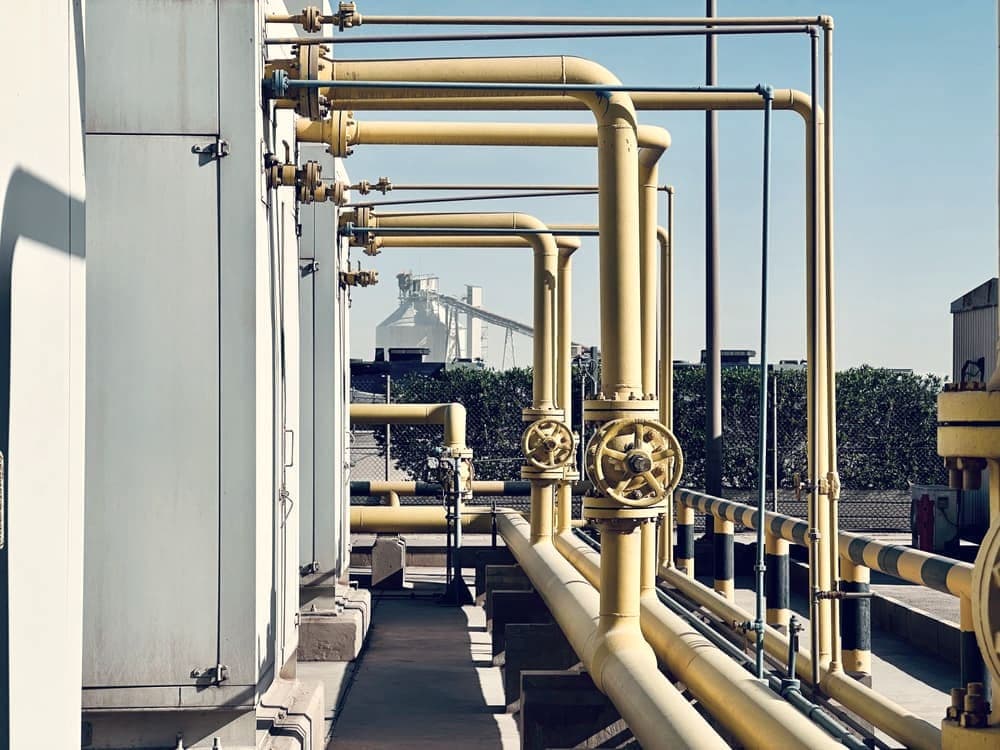
Replacing a pool heater
What carries over from the old heater and what does not, why matching the old BTU is usually wrong, and why a replacement is the one affordable moment to switch fuel.
What a pool heater really costs
Purchase, install and running cost taken together, and why the cheapest heater to buy is regularly the most expensive one to own.

Is a pool heater worth it?
The pre-purchase doubt, answered with arithmetic: what a heater costs to run per week of swimming you actually gain, when the honest answer is no, and the cheaper thing to try first.
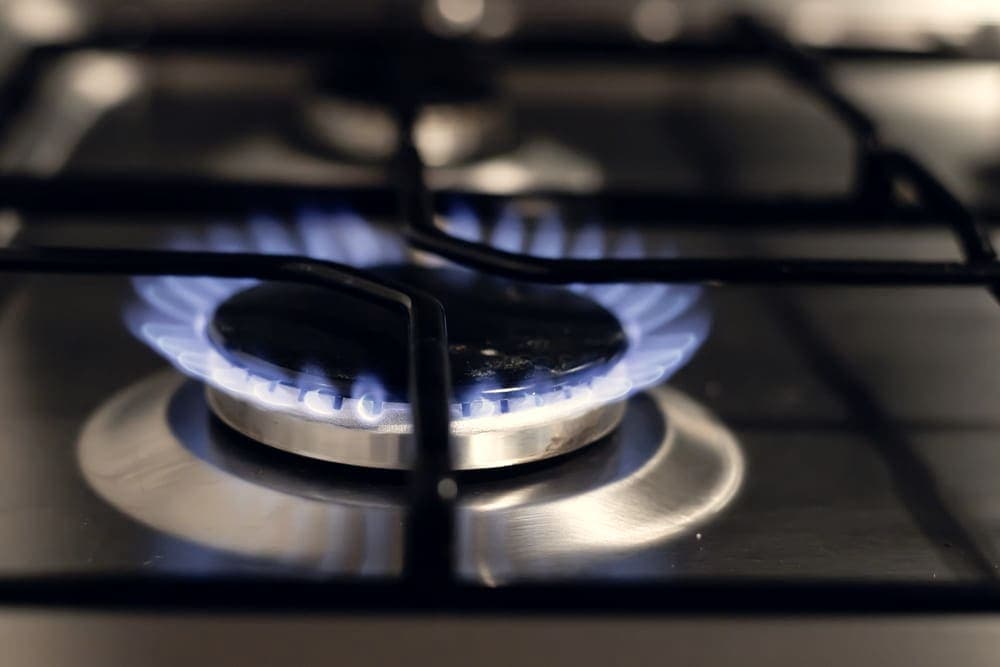
Pool heater brands, compared
Hayward, Pentair, Raypak, Jandy, AquaCal and FibroPool at brand level: what each builds, what each publishes, and which to shortlist.
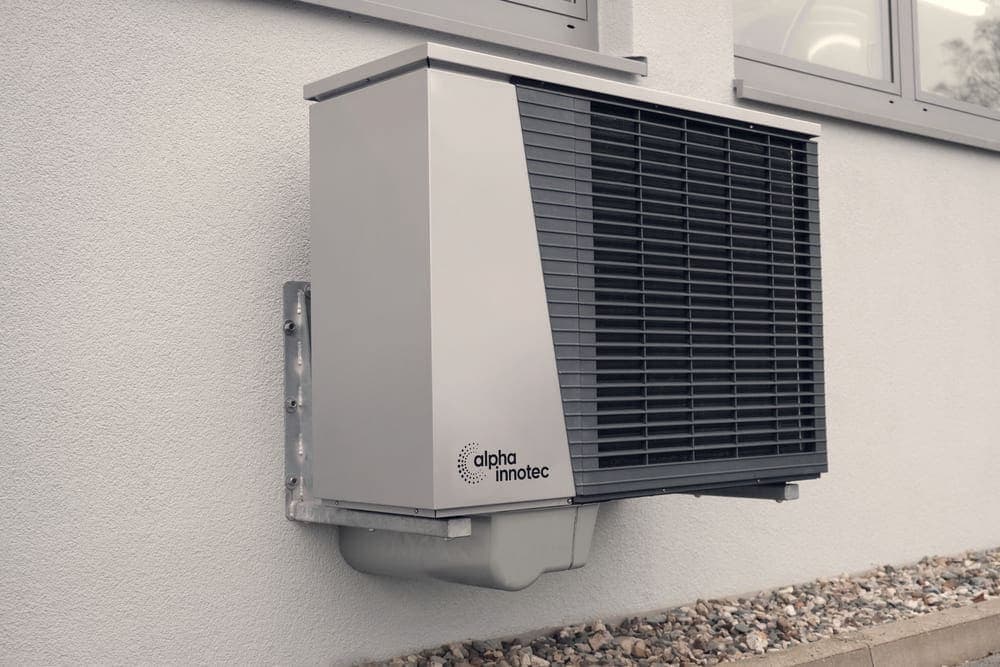
Pool heaters for saltwater pools
Salt corrodes the one part of a heater you cannot replace cheaply. Titanium against cupro-nickel against copper, and the heaters that state which they use.

Does a solar cover pay for itself?
The full payback derivation from one measurement you can take tonight, plus a sensitivity table for people whose pool is nothing like the example.