Replacing a pool heater
The heater failed and the pad is open. That is the cheapest hour you will ever get to change your mind about how this pool is heated — and almost nobody uses it.
Quick picks
What a replacement job actually needs — the heater, the base it sits on, and the valve you can only fit while the plumbing is open. Live prices come from the retail listing.
| # | Product | Best for | Price |
|---|---|---|---|
| 1 | 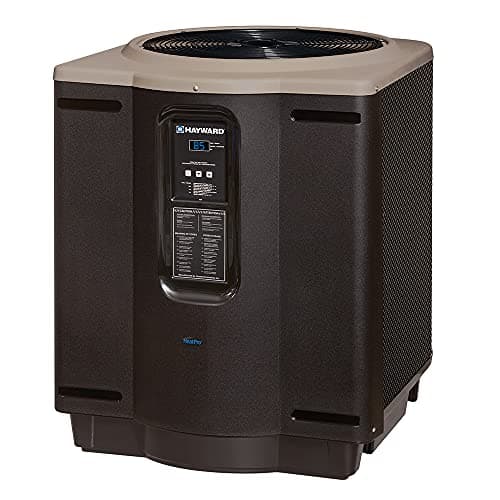 The switch worth considering Hayward HeatPro Pool Heat Pump If you are replacing gas anyway, this is the moment a heat pump costs least to adopt. About a third of gas per delivered BTU. | Lowest running cost per degree when you want real temperature control | |
| 2 | 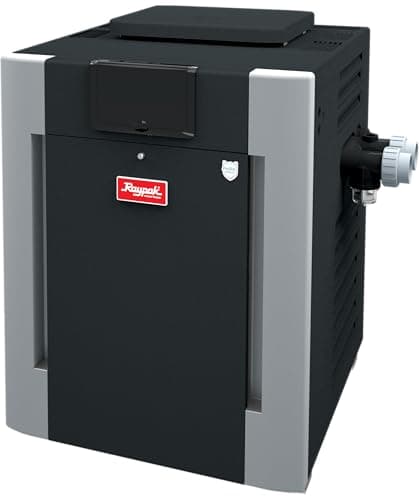 Best like-for-like gas Raypak Digital Natural Gas Pool Heater Reuses the gas line, the plumbing and the pad. The cheapest replacement there is, and often the right one. | Heating fast and occasionally, rather than holding a temperature | |
| 3 | 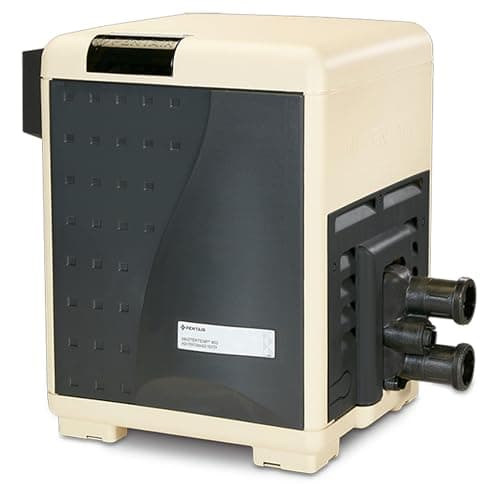 If you are matching the big gas class Pentair MasterTemp 400 Natural Gas Pool Heater 400,000 BTU input, and the brand most likely to still have parts for it in ten years. | A full-size pool heated on demand, when you want the largest gas class | |
| 4 | 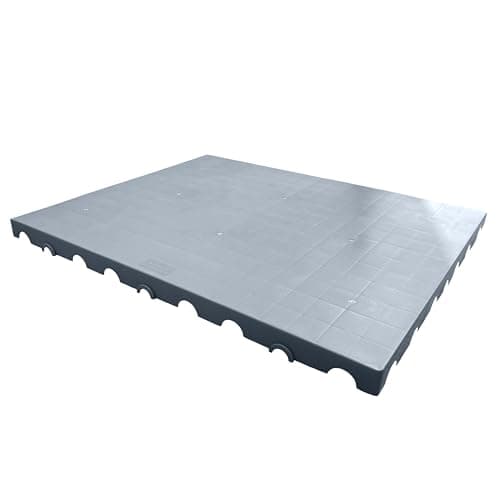 The thing nobody budgets for Poolzilla Pool Equipment Mounting Pad, 39.5 x 31 in A heat pump needs a level base. The old gas heater's footing is rarely the right shape. Check the footprint first. | Giving a new heat pump a level base when the old heater's footing will not do | |
| 5 | 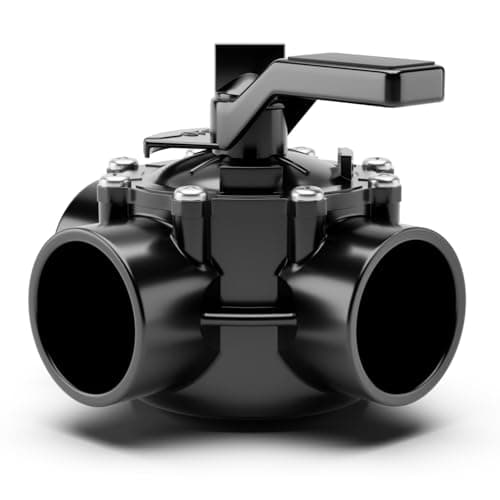 Do this while the pipe is cut FibroPool 3-Way Positive Seal Diverter Valve, 1.5 in A bypass around the heater costs almost nothing now and cannot be retrofitted later without cutting again. | Plumbing a bypass around the new heater while the pipework is already open | |
| 6 |  Do this and replace smaller Sun2Solar 1600 Series Ultimate Blue Solar Cover Cut the overnight loss first and the heater you need to buy gets cheaper. This is the order that saves money. | An inground pool you cover most nights, every season |
#ad We earn a commission if you buy through this link, at no extra cost to you. It never changes the ranking. How this site is funded. Prices last checked October 17, 2026.
The part nobody tells you
A pool heater replacement is normally treated as a like-for-like swap: the old one died, put the same thing back. That is frequently the right answer and it is always the cheapest one on the day.
But it is worth understanding what is temporarily true while that old heater is out. The plumbing is cut. The pad is exposed. Whoever is doing the work is already on site with the gas or the electrical open. Every one of those is a cost that a fuel change normally has to pay for on its own, and right now they are sunk.
That is not an argument that everybody should switch. It is an argument that the decision is worth five minutes now, because it will cost several times as much to revisit in three years.
What carries over, and what does not
| Replacing | Plumbing | Fuel supply | Electrical | Base |
|---|---|---|---|---|
| Gas with the same-size gas | Reusable | Reusable | Reusable | Reusable |
| Gas with a larger gas heater | Reusable | Often needs resizing — the expensive surprise | Reusable | Usually reusable |
| Gas with a heat pump | Mostly reusable | Abandoned — cap it | New dedicated 240V circuit | Needs a level pad the right shape |
| Heat pump with a heat pump | Reusable | n/a | Usually reusable | Check the footprint against the old one |
| Anything with solar panels | New run to the collectors | Abandoned | Minimal | Roof or ground mounting instead |
'Reusable' means the infrastructure is the right type, not that it is in good condition. Unions that have been hot for ten years frequently do not come apart cleanly, and that is a normal part of the job rather than a sign something is wrong.
The row that catches people is the second one. Going up a size in gas looks like a simple swap and is not: a bigger burner draws more, and a line sized for the old heater may not feed the new one. Our gas heater roundup goes into why the gas line decides more than the heater does. Price that before you choose the model, not after.
Do not automatically match the old BTU
The instinct is to write down the number on the old data plate and buy that. Three reasons to think again.
- The old one may have been wrong. It was sized by whoever installed the pool, possibly decades ago, possibly by habit. An undersized heater that never quite kept up is a common reason people stop using a pool — and an oversized one costs more up front and wants a bigger gas line for no benefit.
- Your pool may have changed. If you have added a cover, planted a windbreak, or stopped heating the spa, you need less heat than you did. DOE puts the heating-cost saving from covering a pool when it is not in use at 50 to 70%, and that shows up as a smaller heater, not just a smaller bill.
- The two rating systems are not comparable. This is the one that causes real mistakes. Gas heaters are rated by fuel input; heat pumps by heat output. Replacing a “400,000 BTU” gas heater with a “400,000 BTU” heat pump is not a like-for-like swap — it is not a product that exists, because domestic heat pumps top out around 140,000 BTU/hr of output and that is roughly equivalent to a 170,000 BTU/hr gas heater rather than a 400,000 one.
Work it out rather than copying it. Our BTU calculator takes your gallons, the rise you want and how long you will wait, and returns the number in the convention the listing you are reading uses.
| A gas heater's rating is fuel INPUT | about 82% reaches the water |
| A heat pump's rating is heat OUTPUT | it is already the delivered figure |
| 400,000 BTU/hr gas ≈ 328,000 BTU/hr delivered | |
| 140,000 BTU/hr heat pump = 140,000 BTU/hr delivered |
The heat pump is not a weaker machine for the money — it is a slower one that costs about a third as much to run. What you are trading is hours, not warmth. The heating time calculator turns that into an actual number of hours for your pool.
What a replacement costs, and what we will not tell you
We are a national publisher with no premises and no installers, so we do not quote labor. Anybody who gives you a national figure for pool heater installation is guessing, because the number is dominated by your gas line, your electrical panel and your local rates.
What is national is the equipment, and that is what the prices on this page are: live figures from the retail listing, refreshed daily. Alongside the heater, budget for the small items — a pad if you are moving to a heat pump, unions and valves, and the fittings that will not survive disassembly.
For the ten-year view rather than the day-one one, our page on what a pool heater really costs sets purchase against running cost across a decade, which is the horizon on which a fuel switch actually pays or does not.
The parts people forget
- A base for a heat pump. Gas heaters and heat pumps do not have the same footprint, and a heat pump needs to sit level and stay level. Worth measuring rather than assuming: the pad we rank above is 39.5 x 31 in, which suits most units and is fractionally under the larger Hayward HeatPro cabinet at 40 x 31.5 in.
- A bypass. A three-way diverter around the heater lets you route flow past it for winterizing or service. It costs a few dollars while the pipe is already cut and a great deal more as a separate job later.
- Unions. If the old heater was plumbed in hard rather than with unions, fix that now. The next replacement will thank you.
- The gas line cap, if you are abandoning gas. This is a job for whoever is licensed to do it, not a plug from a hardware store.
Repair or replace, briefly
If you have not yet decided that the old heater is finished, that decision belongs elsewhere and we have written it out properly: how long pool heaters last covers what actually fails, which failures are worth repairing and which end the machine. The short version is that ignitors, switches and thermostats are repairs, control boards are repairs if the part still exists, and a corroded heat exchanger is usually the end.
One thing worth carrying into the replacement: if the exchanger corroded, ask why before buying the same thing again. If the pool is salt, the answer is probably the exchanger material, and our page on heaters for saltwater pools explains which heaters state titanium or cupro-nickel and which do not.
The order to decide in
- Confirm the old one is actually finished — exchanger and out-of-warranty compressor failures usually are, everything else usually is not.
- Work out the size you need now, from your pool and your cover situation, rather than copying the old data plate.
- Decide the fuel while the pad is open, because this is when changing it is cheapest. Our which heater to buy guide settles that on running cost, speed and install.
- Price the infrastructure before the model — the gas line for gas, the circuit and pad for a heat pump.
- Buy the cover in the same week. It is the one purchase that makes every other number on this page smaller, and the payback arithmetic is not close.
Every pick, in detail
What each one publishes, what is good and bad about it, and — the section this category usually omits — what we could not judge without owning one.
Hayward HeatPro Pool Heat Pump
If you are heating a pool with electricity, this is the shape of machine to do it with. A heat pump moves heat instead of making it, and at the assumptions we publish it delivers a million BTU into the water for about a fifth of what an electric resistance heater costs to deliver the same. It is slower than gas and it fades as the air gets colder, which is exactly when you want it — that trade is the whole decision.
Best for Lowest running cost per degree when you want real temperature control
| Type | Air-source heat pumpThe manufacturer publishes no retrievable specification sheet; figure is as listed at retail. | Retail listing |
|---|---|---|
| Rating convention | Rated by BTU/hr OUTPUTThis is the trap in the category. Gas heaters are rated by fuel INPUT, heat pumps by heat OUTPUT. A 140,000 BTU heat pump and a 140,000 BTU gas heater do not deliver the same heat. | Published standard |
| Cost per million BTU delivered | About $10.75 at our published assumptionsUS average residential electricity at 18.34 cents/kWh (EIA, June 2026) and an assumed COP of 5.0. Both are substitutable on our running-cost calculator. | Our arithmetic |
- Cheapest running cost per delivered BTU of any controllable heater
- No gas line, no combustion, no flue
- Holds a set temperature rather than depending on the weather
- Slow — expect most of a day to move a full-size pool ten degrees
- Efficiency falls with air temperature, so it is weakest in the shoulder season
- High purchase price against a gas heater of comparable output
- The COP this specific unit achieves at your conditions
- Compressor and control-board longevity
- Noise at the distance your deck actually sits from it
These need a unit in hand across a season. We do not have one, so we do not have an opinion worth printing on them.
#ad We earn a commission if you buy through this link, at no extra cost to you. It never changes the ranking. How this site is funded. Prices last checked October 17, 2026.
Raypak Digital Natural Gas Pool Heater
The right answer when speed matters more than running cost — a weekend pool you want warm on Friday afternoon rather than one you hold at temperature all season. At the assumptions we publish, gas costs roughly two and a half times what a heat pump costs per delivered BTU, and it will get there in a fifth of the time. Buy the speed if you need the speed.
Best for Heating fast and occasionally, rather than holding a temperature
| Type | Natural gas or propane fired, digital controlThe manufacturer publishes no retrievable specification sheet; figure is as listed at retail. | Retail listing |
|---|---|---|
| Rating convention | Rated by BTU/hr INPUTA 400,000 BTU gas heater burns 400,000 BTU an hour and delivers roughly 82% of it. Do not compare that number directly against a heat pump's output rating. | Published standard |
| Cost per million BTU delivered | About $28.36 at our published assumptionsUS average residential natural gas at $24.09/Mcf (EIA, June 2026) and an assumed 82% thermal efficiency. | Our arithmetic |
- Fast — hours rather than most of a day on a full-size pool
- Works the same in cold air, unlike a heat pump
- Lower purchase price than a heat pump of equivalent real output
- Roughly two and a half times a heat pump's cost per delivered BTU
- Needs a gas line sized for it, which is often the real cost
- Propane instead of natural gas raises the running cost by about a quarter again
- The efficiency this specific unit achieves in service
- Heat exchanger life against your water chemistry
- Whether your existing gas supply can feed it without an upgrade
These need a unit in hand across a season. We do not have one, so we do not have an opinion worth printing on them.
#ad We earn a commission if you buy through this link, at no extra cost to you. It never changes the ranking. How this site is funded. Prices last checked October 17, 2026.
Pentair MasterTemp 400 Natural Gas Pool Heater
The third name in every gas-heater comparison, and the one the listings describe as the quiet one. It is a 400,000 BTU/hr input heater, low-NOx certified, which puts it in the same class as the biggest Raypak — and therefore in the same speed bracket: hours rather than a day. Pentair does not state a thermal efficiency percentage in the listings we read, so we run it at the 82% we assume for gas generally.
Best for A full-size pool heated on demand, when you want the largest gas class
| Rated input | 400,000 BTU/hrGas convention: fuel burned per hour, not heat delivered. Delivered heat is this figure times the thermal efficiency. | Retail listing |
|---|---|---|
| Emissions | Low NOx certified | Retail listing |
| Thermal efficiency | Not stated as a percentage in the listings we readThe listings say best-in-class efficiency without a number. We run it at 82%, the assumption we use for every gas heater on the site, and would revise it if Pentair published a figure we could cite. | Retail listing |
| Cost per million BTU delivered | About $28.36 at 82% efficiencyUS average residential natural gas at $24.09/Mcf (EIA, June 2026). | Our arithmetic |
- Largest common residential gas class, so the fastest heat-up on this site
- Low NOx certified, so it is permitted in the air districts that require it
- Described across listings as noticeably quieter than the older gas designs
- Roughly two and a half times a heat pump's cost per delivered BTU
- 400,000 BTU/hr demands a gas supply most houses were not piped for
- No thermal efficiency percentage in the listings, so the efficiency claim is unverifiable
- Real delivered efficiency in service
- Heat exchanger life against your water chemistry
- Whether your gas meter and line can feed it without an upgrade
These need a unit in hand across a season. We do not have one, so we do not have an opinion worth printing on them.
#ad We earn a commission if you buy through this link, at no extra cost to you. It never changes the ranking. How this site is funded. Prices last checked October 17, 2026.
Poolzilla Pool Equipment Mounting Pad, 39.5 x 31 in
The item nobody budgets for and everybody needs when a gas heater comes out and a heat pump goes in. A heat pump has to sit level on something solid, and the old gas heater's footing is rarely the right shape. Poolzilla publishes 39.5 x 31 in and a 750 lb capacity, which covers any domestic pool heat pump on weight — but check the footprint, because it does not cover every one of them on width.
Best for Giving a new heat pump a level base when the old heater's footing will not do
| Dimensions | 39.5 x 31 in, 2 in highMeasure your unit first. Hayward's HeatPro W3HP21404T is 40 x 31.5 in and will overhang this pad slightly; the newer W3HP21405T at 33.6 x 30.5 in sits on it comfortably. | Manufacturer |
|---|---|---|
| Capacity | 750 lbComfortably above any domestic pool heat pump we list — the heaviest on this site is 320 lb. Weight is not the constraint here; footprint is. | Manufacturer |
| Surface | Textured, stated as non-slip once loaded | Manufacturer |
| Ground | Stated for solid, soil or gravel, with load-spreading features underneath | Manufacturer |
- Publishes a real capacity figure and real dimensions, which most pads do not
- Works on gravel and soil, not just an existing slab
- Far cheaper and faster than pouring concrete for a heater swap
- At 39.5 x 31 in it is fractionally too small for the larger Hayward HeatPro cabinet
- No published thickness rating or freeze-cycle data
- A pad is not a substitute for a genuinely level base — it spreads load, it does not correct a slope
- How it settles on soft ground over several seasons
- Whether it stays flat through freeze and thaw
- Long-term UV stability of the resin
These need a unit in hand across a season. We do not have one, so we do not have an opinion worth printing on them.
#ad We earn a commission if you buy through this link, at no extra cost to you. It never changes the ranking. How this site is funded. Prices last checked October 17, 2026.
FibroPool 3-Way Positive Seal Diverter Valve, 1.5 in
The valve that turns a heater swap into a heater swap you can service. A three-way diverter plumbed around the heater lets you route flow past it entirely — for winterizing, for a repair, or for the days you do not want the heat. FibroPool publishes a CPVC body rated to 50 psi, lubeless PTFE seats and a one-year warranty, which is more than most pool valves state. If the old heater came out and the plumbing is already cut, this is the cheapest upgrade available and the one you cannot retrofit later without cutting it again.
Best for Plumbing a bypass around the new heater while the pipework is already open
| Size | 1.5 in slip ports1.5 in is the common above-ground and small-inground size. Full-size inground equipment pads are frequently plumbed in 2 in, and this valve does not fit those. | Manufacturer |
|---|---|---|
| Body | CPVC, rated to 50 psi | Manufacturer |
| Seats | Lubeless PTFE, described as serviceableThe usual failure on a pool diverter is a dried-out greased seat. PTFE seats are meant to remove that maintenance item. | Manufacturer |
| Function | Handle closes any one of the three ports, or leaves all three open and throttled | Manufacturer |
| Warranty | 1 year manufacturer | Manufacturer |
- Publishes a pressure rating and a warranty, which pool valves often do not
- Lubeless seats remove an annual maintenance job
- Lets you throttle rather than just divert, which matters on heat pumps with a flow window
- 1.5 in only — wrong size for most full-size inground equipment pads
- Slip ports glue in permanently; there is no union version of this valve
- 50 psi is adequate rather than generous for a system with a dirty filter
- Handle and seat life across many seasons of sun
- Whether the CPVC body tolerates repeated freeze cycles
- How it behaves at the top of its pressure rating
These need a unit in hand across a season. We do not have one, so we do not have an opinion worth printing on them.
#ad We earn a commission if you buy through this link, at no extra cost to you. It never changes the ranking. How this site is funded. Prices last checked October 17, 2026.
Sun2Solar 1600 Series Ultimate Blue Solar Cover
The cover to buy if you intend to keep using it in five years. 16 mil is the thickest tier the category sells, and thickness on a solar cover buys durability rather than heat — Bob Vila measured every cover in its hands-on group at the same 4 to 5 degrees, from 12-mil clear to 16-mil blue. Pay the extra for the one that survives being dragged over the coping twice a day, not for a temperature difference that did not show up in the only published one-hour test in this category.
Best for An inground pool you cover most nights, every season
| Price shown for | 24 ft roundThis product is sold in several sizes on one listing. The live price and photograph on this page are the ones Amazon returns for this variant; other sizes are priced separately. | Retail listing |
|---|---|---|
| Thickness | 16 milThe manufacturer publishes no retrievable specification sheet; figure is as listed at retail. | Retail listing |
| Color | Blue | Retail listing |
| Stated lifespan | 5 to 10 years for the 16-mil tierSwim University's published figure for 16-mil covers generally, not a Sun2Solar warranty statement. | Retail listing |
| Bubble side | Bubbles face the waterCategory-wide instruction, not brand-specific. The bubbles are the insulating layer and they have to touch the water. | Published standard |
4 to 5 degrees F in one hour
Claimed by Bob Vila, measured across all covers in their group. Conditions: One hour under 2pm sun on 89 to 92 degree F days. Source
Their figure was the same for every cover they put on the water. Read our reconciliation of what a one-hour reading actually measures before you plan around this number.
- Thickest tier sold, which is where the durability difference actually is
- Blue absorbs more of the incoming energy at the surface than clear does
- Cuts oversize to your pool shape with household scissors
- Heavy and awkward at 16 mil — a large inground cover is genuinely a two-person job without a reel
- Costs meaningfully more than the 12-mil version for no measured heating advantage
- Whether the seams hold up over five seasons of daily handling
- How the bubble layer survives repeated dragging over rough coping
- Whether the stated lifespan tier holds for this specific product line
These need a unit in hand across a season. We do not have one, so we do not have an opinion worth printing on them.
#ad We earn a commission if you buy through this link, at no extra cost to you. It never changes the ranking. How this site is funded. Prices last checked October 17, 2026.
Questions people actually ask
How much does it cost to replace a pool heater?
Can I replace a gas pool heater with a heat pump?
Should I buy the same BTU as my old pool heater?
Will a new pool heater use my existing plumbing?
Can I replace a pool heater myself?
How long should a pool heater last before it needs replacing?
- Average retail price of electricity to US residential customers: 18.34 cents/kWh, June 2026U.S. Energy Information Administration · read 2026-09-02
- US residential natural gas price: $24.09 per thousand cubic feet, June 2026U.S. Energy Information Administration · read 2026-09-02
- US residential propane price: $2.674 per gallon, week ending 30 March 2026U.S. Energy Information Administration · read 2026-09-02
- Energy content conversion factors: 3,412 BTU per kWh, 1,036 BTU per cubic foot of natural gas, 91,452 BTU per gallon of propaneU.S. Energy Information Administration · read 2026-09-02
- U.S. Department of Energy pool-energy figures (evaporation share, BTU per pound evaporated, cover savings, recommended temperatures, wind effect)Recreonics, reproducing and attributing the U.S. Department of Energy · read 2026-09-02
- Pool heater roundup: the 8.33 BTU per gallon per °F figure, attributed on the page to Alicia Toedter of Leslie'sBob Vila · read 2026-09-02
- Poolzilla pool equipment mounting pad listing: 39.5 x 31 in with a 2 in height, 750 lb capacity, textured non-slip surface, stated as sized for pool heat pump systems and usable on solid, soil or gravel groundPoolzilla, as listed at retail · read 2026-09-26
- FibroPool 3-way positive-seal diverter valve listing: 1.5 in slip ports, CPVC body rated to 50 psi, lubeless PTFE seats, handle can close any one port or leave all three open, 1-year manufacturer warranty, and named on the listing as suitable for heater plumbingFibroPool, as listed at retail · read 2026-09-26
#ad Where a retailer’s listing is cited above as the source of a published specification, that link is an affiliate link, at no extra cost to you. Independent sources and manufacturer documentation are never wrapped and earn nothing. How this site is funded.
Every URL above was fetched and returned content on the date shown. Where a figure is ours rather than somebody else’s, the arithmetic is on the page and on the methodology page. If you find an error in it, we would genuinely like to know.
Read next

Winterizing a pool heater
What freezing water does to a heat exchanger, the plugs and valves to open, and why a sealed waterproof cover damages more heaters than it protects.
How long do pool heaters last?
Lifespan by heater type, the components that actually fail, what the warranties really cover, and how that should change what you buy in the first place.
What a pool heater really costs
Purchase, install and running cost taken together, and why the cheapest heater to buy is regularly the most expensive one to own.
Which pool heater to buy
Every type of pool heater ranked on what it costs to deliver a million BTU into the water, how many hours it needs to do it, and what the install actually involves.
Heat pump vs gas pool heater
The two options priced per delivered BTU and timed on the same pool, with the one question that decides which trade suits you.
Pool heater BTU calculator
Enter gallons, the rise you want and how long you will wait. Returns the BTU rating to shop for, in the same convention the listings quote.