How to heat a pool with solar panels
Not whether to — that argument is settled elsewhere. This is the sizing, the plumbing and the parts list, including the part people leave out of the basket.
Quick picks
Everything a working installation needs, in the order you would put it in a basket. The system kit is on this list because leaving it off is the single commonest way this purchase stalls.
| # | Product | Best for | Price |
|---|---|---|---|
| 1 | No photo The panel system to size from SmartPool SunHeater S601P Solar Heating System Two 2 x 20 ft collectors, 80 sq ft. That figure is what the sizing arithmetic below runs on. | Adding real heat with no running cost, on a sunny site | |
| 2 | 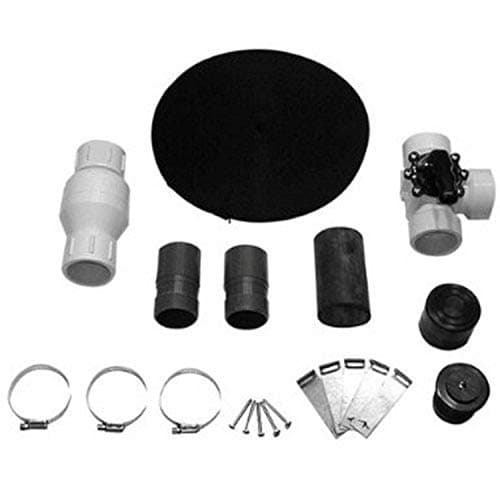 The part that is not in the box SmartPool WWSK21 SunHeater System Installation Kit SunHeater states one SK21 is required per installation and sold separately. One kit covers up to four systems. | Completing a SunHeater panel installation — you need one, not several | |
| 3 | No photo If you would rather buy it all at once SunQuest 2 x 20 ft Solar Pool Heater Panels Sold in configurations that bundle the roof or rack kit and the diverter. Needs at least a 3/4 HP pump. | A self-install where you would rather buy the mounting and diverter hardware in one go | |
| 4 | 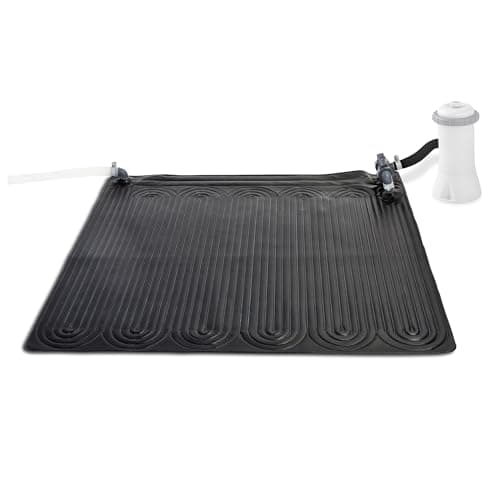 If the pool is small Intex 28685E Solar Heater Mat, 47 x 47 in Rated to 8,000 gallons and pumps under 2,000 gal/hr. Below that size a panel array is more system than the water needs. | An above-ground pool up to about 8,000 gallons, on a sunny site | |
| 5 |  Buy this alongside, always Sun2Solar 1600 Series Ultimate Blue Solar Cover Panels put heat in during the day. A cover is what stops it leaving overnight, and the sun's daily budget is fixed. | An inground pool you cover most nights, every season |
#ad We earn a commission if you buy through this link, at no extra cost to you. It never changes the ranking. How this site is funded. Prices last checked October 18, 2026.
What this page is for
Whether solar collector panels are the right technology for your pool is a separate question, and we answer it in two places already: the solar roundup ranks the systems and states the trade, and solar against gas runs the widest comparison in the category.
This page assumes you have decided and answers the next question, which almost nobody covers properly: what does actually installing them involve? How much collector, where it goes, how it plumbs in, what your pump has to be able to do, and which parts are sold separately.
Step 1: how much collector you actually need
This is the step that decides whether the whole project works, and it is the step people under-buy. The rule of thumb in the trade is collector area equal to 50 to 100% of the pool’s surface area, toward the top of that range in cooler or cloudier climates.
The useful move is to convert that into a number of boxes. A SunHeater S601P is two 2 by 20 foot panels — 80 square feet of collector per system. So:
| Pool surface: 16 x 32 | = 512 sq ft |
| Collector needed at 50% | = 256 sq ft |
| Collector needed at 100% | = 512 sq ft |
| One 80 sq ft system covers | about 16% of the pool |
Four two-panel systems to reach the bottom of the range, about seven to reach the top
That is 8 to 14 panels. Laid side by side at 2 ft wide, eight panels occupy a block of roof roughly 16 by 20 feet, and fourteen roughly 28 by 20 feet. This is the number that surprises people, and it is why a single system bought for a full-size pool disappoints.
A smaller pool is a much friendlier problem. An 18-foot round above-ground pool has a surface of about 254 square feet, so the same rule puts it at 127 to 254 square feet of collector — two of these systems lands comfortably inside that range.
This page is the method. If you want the products, our inground panel roundup ranks the kits on collector area, header size and published warranty.
Step 2: where the panels go
Three mounting options, and the constraint is almost never the area itself:
- Roof. The usual answer, because the area exists and it is unshaded. It is also the most work, the most plumbing run, and the option where a leak is expensive. A high-wind kit is a separate purchase on most systems.
- Rack. A frame at ground level, angled toward the sun. Much easier to service and to drain, and much easier to get wrong on orientation because you are choosing the angle rather than inheriting it.
- Ground. Panels laid flat on a suitable surface. The cheapest and simplest, at some cost in efficiency, and it needs ground that is not going to be walked on.
Orientation: south-facing is best in the northern hemisphere. East or west works, with more area to compensate.
Shading is the binding constraint, not square footage. Collector area that is shaded between roughly 10am and 4pm is not collector area. Go and look at the intended spot at midday, in the season you care about, before you order anything — tree shade in June is not tree shade in April.
Step 3: how it plumbs in
The panels go inline after the filter, so that what reaches them is already clean, and before any chlorinator or chemical feeder. Water leaves the filter, goes up to the collectors, is warmed as it passes through them, and comes back down to the return.
The part that makes it usable day to day is a diverter valve. Without one, every drop of filtration flow goes through the panels whenever the pump runs, including at night, which is genuinely counterproductive — a collector on a roof after dark is a radiator pointed at the sky and it will move heat out of your pool. With a diverter you take the panels in and out of circuit without repiping anything.
Step 4: the pump specification that rules people out
Your existing filtration pump has to push water up to the collectors and back, and it was not specified with that in mind. This is where a lot of above-ground setups fall over.
SunQuest states a minimum of 3/4 HP for its panels. Check your pump’s data plate before ordering anything at all — it is a two-minute check that prevents the most annoying possible outcome, which is a roof full of panels and not enough pump to feed them.
Two related points worth knowing:
- Header diameter is a flow spec. SunQuest publishes 2 inch outside-diameter headers and describes the benefit as less back pressure. Wider headers mean the panels resist the flow less, which matters precisely because the pump is working harder than it was designed to.
- Height costs you head. A ground or rack mount asks far less of the pump than a two-story roof does. If your pump is marginal, that alone can decide the mounting question.
Step 5: controls, or doing it by hand
The manual version is a diverter valve you turn. Panels on in the morning, off at dusk. It works, it costs nothing beyond the valve that came in the kit, and it depends entirely on somebody remembering.
The automatic version is a solar controller with two temperature sensors — one at the panels, one in the water — driving a motorized valve. It sends water to the collectors only when they are warmer than the pool, which also solves the night problem by itself. It is more equipment and more money, and it is usually the right call if the panels are on a roof you cannot see from the house.
What to expect, and the gap in the claims
Here the category does something worth pointing at. These are published figures for solar collector panels, and the pattern is not subtle:
| Claim | Who says it | Condition attached |
|---|---|---|
| Up to 6-10°F | SunHeater, on its own page for the S601P | Under favorable conditions |
| Up to 15°F | Retail listings for the same S601P | None stated |
| As much as 15°F | Bob Vila, describing the S601P | With ample sunlight |
| 10°F | SunQuest, in its listings | Sized and installed correctly |
The manufacturer's own claim for the S601P is the smallest number on this list, and the largest numbers sit furthest from the manufacturer. None of them attaches a time period, which means every one of these is a cumulative ceiling reached over days of good sun rather than a daily gain.
Read the SunQuest condition again, because it is the honest one: sized and installed correctly. That means collector area at 50 to 100% of the pool surface — the four-to-seven-system arithmetic from the top of this page. Most disappointed owners bought one system and got one system’s worth.
Nothing on this site states a temperature without naming which of three quantities it is, because conflating them is exactly why this category’s published numbers range so widely. The reconciliation is here.
Freeze protection and winterizing
Panels full of water in a hard freeze split, and this is not a marginal risk — it is the normal failure mode. In any climate that freezes, the collectors have to drain down for winter, every year.
This is why the direct-flow design SunHeater advertises matters more than it sounds: a system that drains cleanly is a system that actually gets drained. Check how a given set of panels winterizes before you buy, and put the drain-down on the same list as closing the pool rather than treating it as an optional autumn job.
What panels will not do
- Work at night. They collect solar energy, so after dark they do nothing — and worse than nothing if you keep circulating through them, which is the argument for the diverter or the controller.
- Rescue a cold cloudy week. That is the mechanism rather than a defect. Panels extend a warm season at the margins and are poor at holding a temperature through bad weather.
- Stop the overnight loss. The Department of Energy puts about 70% of a pool’s heat loss on evaporation, and no collector addresses that. On solar this matters more than on any other technology, because your daily gain is capped by the sun rather than by your budget — a cover is the only way to make a fixed daily gain go further.
If this is turning into a bigger project than you wanted
Two honest off-ramps. If the appeal was the zero running cost rather than the panels specifically, the home-built version is the same physics for less money and more of your own labor. If it was the heat rather than the free-ness, the ranked picks across every heater type set solar beside heat pumps and gas on a single cost-per-delivered-BTU basis, and for a lot of pools the answer turns out to be a heat pump and a cover rather than a roof full of collectors.
Every pick, in detail
What each one publishes, what is good and bad about it, and — the section this category usually omits — what we could not judge without owning one.
SmartPool SunHeater S601P Solar Heating System
Solar panels that plumb into the return line and heat the water with sunlight rather than fuel, which puts their running cost at zero — the only entry in the whole heating category where that is true. The trade is that you cannot dial in a temperature: the panels deliver what the sun gives them on the day, and on a cloudy week they deliver very little.
Best for Adding real heat with no running cost, on a sunny site
| Type | Roof, rack or ground-mounted solar collector panels, plumbed inline | Manufacturer |
|---|---|---|
| Collector area | Two 2 x 20 ft panels, 80 sq ft totalThis is the number to size from. The trade rule of thumb is collector area equal to 50-100% of the pool's surface, so a 16 x 32 pool needs several of these systems rather than one. | Manufacturer |
| Material | Polypropylene, stated not to corrode or scale | Manufacturer |
| Also required | One SK21 System Installation Kit per installation, sold separatelyThe manufacturer's own wording. One SK21 serves up to four of these two-panel systems. The panels on their own are not a complete installation, which is the commonest surprise in this product category. | Manufacturer |
| Running cost | $0 in fuelThe circulation pump is already running for filtration. There is no additional fuel or electricity cost attributable to the heat. | Our arithmetic |
Up to 6 to 10 degrees F
Claimed by SunHeater, on its own product page for the S601P. Conditions: Stated as under favorable conditions; no time period given. Source
Worth reading beside the figure below. The manufacturer's own claim for this product is 6 to 10 degrees. The retail listings for the same model say up to 15. The larger number is the one further from the manufacturer.
As much as 15 degrees F
Claimed by Bob Vila, describing the S601P. Conditions: Stated as requiring ample sunlight; no time period given. Source
Note the phrasing: with ample sunlight it can boost temperature by as much as 15 degrees. That is a cumulative ceiling reached over days of good sun, not a figure you will see in an afternoon.
- Zero fuel cost, forever — nothing else in this category can say that
- No combustion, no gas line, no additional electrical service
- Panels can be added to as the budget allows
- You get the sun's schedule, not yours
- Needs real unshaded mounting area, and plumbing work to install
- Does nothing on a cold cloudy week, which is when you most want it
- Actual heat output at your latitude, roof pitch and shading
- How the panel material survives a decade of UV and freeze cycles
- Whether the included fittings suit your existing plumbing
These need a unit in hand across a season. We do not have one, so we do not have an opinion worth printing on them.
#ad We earn a commission if you buy through this link, at no extra cost to you. It never changes the ranking. How this site is funded. Prices last checked October 18, 2026.
SmartPool WWSK21 SunHeater System Installation Kit
The part that is not in the panel box, and the reason a lot of solar collector purchases sit in a garage for a fortnight. SunHeater's own page states plainly that one SK21 System Installation Kit is required per installation and is sold separately — it carries the diverter and the connection hardware that actually joins the panels to your return line. One kit serves up to four of the two-panel systems, so most installs need exactly one of these and no more.
Best for Completing a SunHeater panel installation — you need one, not several
| What it is for | The connection and diverter hardware that joins SunHeater collector panels to the pool's return plumbingThe manufacturer publishes no retrievable specification sheet; figure is as listed at retail. | Retail listing |
|---|---|---|
| How many you need | One per installation, covering up to four two-panel systemsSunHeater states one SK21 is required per installation and sold separately. Buying one per panel set is a common and expensive misreading. | Manufacturer |
- Turns a box of panels into an installation that can actually be finished
- One kit covers up to four two-panel systems, so it does not scale with panel count
- The diverter is what lets you take the panels out of circuit without repiping
- Sold separately from the panels, which is easy to miss when ordering
- Specific to the SunHeater system — not a generic solar bypass kit
- No published specification sheet, so what is in the box comes from the listing
- Whether the supplied fittings suit non-standard existing plumbing
- How the diverter valve holds up across seasons of use
- Whether one kit is genuinely sufficient at the top of its stated four-system range
These need a unit in hand across a season. We do not have one, so we do not have an opinion worth printing on them.
#ad We earn a commission if you buy through this link, at no extra cost to you. It never changes the ranking. How this site is funded. Prices last checked October 18, 2026.
SunQuest 2 x 20 ft Solar Pool Heater Panels
The DIY-oriented alternative, and its useful difference is that the configuration you need is sold as one item: the listings pair the panels with a roof and rack kit and a diverter kit rather than leaving the connection hardware as a separate purchase you have to know about. Panels are also sold in 2 x 12 ft as well as 2 x 20 ft, which matters when the mounting area is an awkward shape rather than a clear roof plane.
Best for A self-install where you would rather buy the mounting and diverter hardware in one go
| Panel sizes | 2 x 20 ft and 2 x 12 ft collectors, sold in multi-panel configurationsThe manufacturer publishes no retrievable specification sheet; figure is as listed at retail. | Retail listing |
|---|---|---|
| Construction | Tube-on-web design, polypropylene, described as UV resistant | Retail listing |
| Headers | 2 in outside-diameter headersHeader diameter is a flow-restriction spec. Wider headers mean less back pressure on a filtration pump that was never sized to push water up onto a roof. | Retail listing |
| Minimum pump | 3/4 HPThe specification most likely to rule this out at your house. Check your pump's data plate before ordering anything. | Retail listing |
| Mounting | Ground, rack or roof; hardware included in the roof/rack configurations | Retail listing |
| Running cost | $0 in fuelThe circulation pump is already running for filtration. There is no additional fuel or electricity cost attributable to the heat. | Our arithmetic |
10 degrees F
Claimed by SunQuest, in its retail listings. Conditions: Stated as applying to a heater sized and installed correctly; no time period given. Source #ad
The conditional is doing real work here: sized and installed correctly means collector area at 50-100% of the pool surface, which is far more panel than most people buy.
- Sold in configurations that bundle the roof or rack kit and the diverter
- Two panel lengths, which helps on an awkward mounting area
- Wide 2 in headers, so less back pressure on an existing filtration pump
- Needs at least a 3/4 HP pump, which rules out a lot of above-ground setups
- No manufacturer specification sheet — every figure here is from the listings
- Still a self-install: roof work and plumbing are yours to do or to pay for
- Real output at your latitude, roof pitch and shading
- How the polypropylene survives a decade of UV and freeze cycles
- Whether the bundled mounting hardware suits your particular roof or rack
These need a unit in hand across a season. We do not have one, so we do not have an opinion worth printing on them.
#ad We earn a commission if you buy through this link, at no extra cost to you. It never changes the ranking. How this site is funded. Prices last checked October 18, 2026.
Intex 28685E Solar Heater Mat, 47 x 47 in
The cheapest thing on this site that adds heat rather than keeping it, and the only reason it works is that it is honest about its scale: one mat is a small collector plumbed into a small pool's filter line, and Intex rates it for 8,000 gallons. On the pool it was designed for it is a genuinely sensible purchase with no running cost at all. On a full-size inground pool it is a rounding error, and buying several to make up the difference gets expensive faster than people expect.
Best for An above-ground pool up to about 8,000 gallons, on a sunny site
| Dimensions | 47.25 x 47.25 in, flat before fill | Manufacturer |
|---|---|---|
| Rated pool size | Above-ground pools up to 8,000 gallonsIntex's own page words this as "up to 8,000 gal / 11ft sq surface". It does not define what the 11 ft sq refers to — it is not the mat's own flat area, which works out nearer 15 sq ft — so we quote the gallon figure and leave the other alone rather than guess at it. | Manufacturer |
| Pump requirement | Filter pumps up to 1/3 HP, or a flow rate under 2,000 gal/hrThis is the specification that decides whether it fits your setup, and it is the one most listings bury. | Manufacturer |
| Connections | 1.25 in hose attachment points, with adaptors supplied for a 1.5 in connection | Manufacturer |
| Material | UV-stabilized PVCStated in retail listings. Intex's own product page does not name the material. | Retail listing |
| Running cost | $0 in fuelThe filter pump is already running to filter the water. There is no additional fuel or electricity cost attributable to the heat. | Our arithmetic |
Approximately 5 to 9 degrees F
Claimed by Intex, on its own product page. Conditions: Stated as depending on weather condition; no time period is given. Source
Intex's exact wording is that it is designed to increase pool water temperature by approximately 5-9 degrees Fahrenheit depending on weather condition. With no period attached, this is a cumulative ceiling over days of good sun, not a figure you will watch happen in an afternoon.
- No running cost at all — the filter pump is already circulating the water
- Intex publishes real numbers for it, which most of this category does not
- Mats can be added in series as the budget allows
- Rated to 8,000 gallons, so it is the wrong tool for a full-size pool
- Needs a low-flow pump — over 2,000 gal/hr and it is outside its own spec
- Delivers what the sun delivered, so it does nothing on a cool cloudy week
- Actual output at your latitude, mat angle and shading
- How the PVC survives several seasons of UV and freeze cycles
- Whether the supplied adaptors suit a non-Intex filter system
These need a unit in hand across a season. We do not have one, so we do not have an opinion worth printing on them.
#ad We earn a commission if you buy through this link, at no extra cost to you. It never changes the ranking. How this site is funded. Prices last checked October 18, 2026.
Sun2Solar 1600 Series Ultimate Blue Solar Cover
The cover to buy if you intend to keep using it in five years. 16 mil is the thickest tier the category sells, and thickness on a solar cover buys durability rather than heat — Bob Vila measured every cover in its hands-on group at the same 4 to 5 degrees, from 12-mil clear to 16-mil blue. Pay the extra for the one that survives being dragged over the coping twice a day, not for a temperature difference that did not show up in the only published one-hour test in this category.
Best for An inground pool you cover most nights, every season
| Price shown for | 24 ft roundThis product is sold in several sizes on one listing. The live price and photograph on this page are the ones Amazon returns for this variant; other sizes are priced separately. | Retail listing |
|---|---|---|
| Thickness | 16 milThe manufacturer publishes no retrievable specification sheet; figure is as listed at retail. | Retail listing |
| Color | Blue | Retail listing |
| Stated lifespan | 5 to 10 years for the 16-mil tierSwim University's published figure for 16-mil covers generally, not a Sun2Solar warranty statement. | Retail listing |
| Bubble side | Bubbles face the waterCategory-wide instruction, not brand-specific. The bubbles are the insulating layer and they have to touch the water. | Published standard |
4 to 5 degrees F in one hour
Claimed by Bob Vila, measured across all covers in their group. Conditions: One hour under 2pm sun on 89 to 92 degree F days. Source
Their figure was the same for every cover they put on the water. Read our reconciliation of what a one-hour reading actually measures before you plan around this number.
- Thickest tier sold, which is where the durability difference actually is
- Blue absorbs more of the incoming energy at the surface than clear does
- Cuts oversize to your pool shape with household scissors
- Heavy and awkward at 16 mil — a large inground cover is genuinely a two-person job without a reel
- Costs meaningfully more than the 12-mil version for no measured heating advantage
- Whether the seams hold up over five seasons of daily handling
- How the bubble layer survives repeated dragging over rough coping
- Whether the stated lifespan tier holds for this specific product line
These need a unit in hand across a season. We do not have one, so we do not have an opinion worth printing on them.
#ad We earn a commission if you buy through this link, at no extra cost to you. It never changes the ranking. How this site is funded. Prices last checked October 18, 2026.
Questions people actually ask
How many solar panels do I need to heat a pool?
Do solar pool panels need a special pump?
Where do solar panels connect to the pool plumbing?
Is the mounting and connection hardware included with solar pool panels?
How much will solar panels raise my pool temperature?
Do solar pool panels have to be drained for winter?
- SunHeater S601P manufacturer page: two 2 x 20 ft panels totaling 80 sq ft, an increase of "up to 6-10°F under favorable conditions", and "One SK21 System Installation Kit is required per installation (sold separately)"SunHeater Solar (SmartPool) · read 2026-09-08
- Pool heater roundup: the 8.33 BTU per gallon per °F figure, attributed on the page to Alicia Toedter of Leslie'sBob Vila · read 2026-09-02
- Average retail price of electricity to US residential customers: 18.34 cents/kWh, June 2026U.S. Energy Information Administration · read 2026-09-02
- US residential natural gas price: $24.09 per thousand cubic feet, June 2026U.S. Energy Information Administration · read 2026-09-02
- US residential propane price: $2.674 per gallon, week ending 30 March 2026U.S. Energy Information Administration · read 2026-09-02
- Energy content conversion factors: 3,412 BTU per kWh, 1,036 BTU per cubic foot of natural gas, 91,452 BTU per gallon of propaneU.S. Energy Information Administration · read 2026-09-02
- U.S. Department of Energy pool-energy figures (evaporation share, BTU per pound evaporated, cover savings, recommended temperatures, wind effect)Recreonics, reproducing and attributing the U.S. Department of Energy · read 2026-09-02
- Pool heater roundup: the 8.33 BTU per gallon per °F figure, attributed on the page to Alicia Toedter of Leslie'sBob Vila · read 2026-09-02
Every URL above was fetched and returned content on the date shown. Where a figure is ours rather than somebody else’s, the arithmetic is on the page and on the methodology page. If you find an error in it, we would genuinely like to know.
Read next
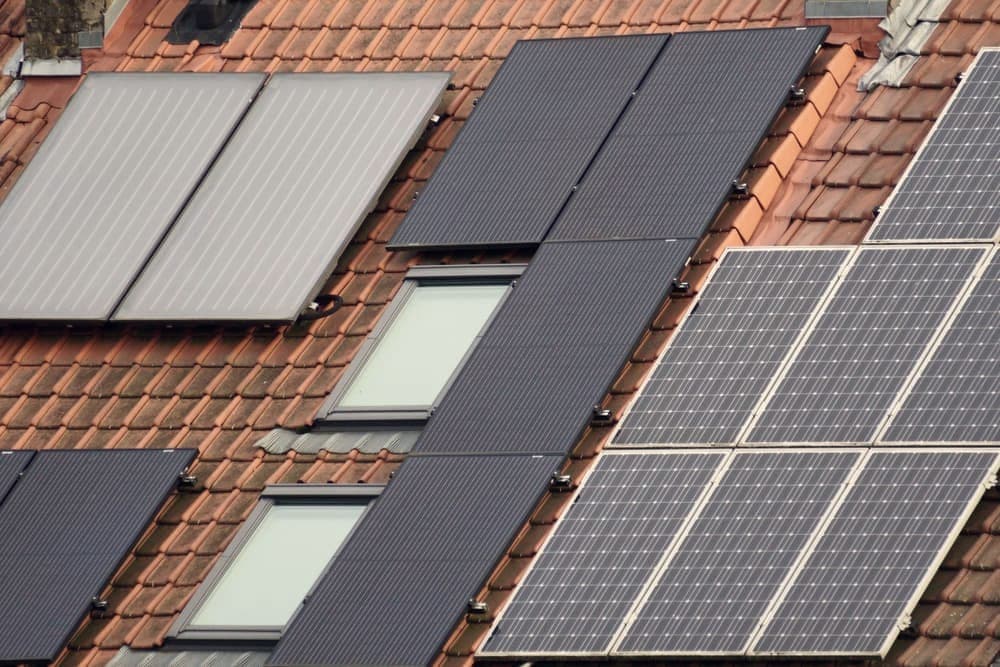
Solar pool heating panels for inground pools
Panel arrays sized for inground pools, ranked on collector area per dollar, header size and warranty. With the arithmetic for how much collector your pool needs.

Solar heaters for above-ground pools
Every kind of solar heater sold for above-ground pools, ranked on collector area against pool surface — the arithmetic that shows why one dome does almost nothing and one panel system is only a start.
Solar pool heaters
Solar collector panels: zero fuel cost forever, at the price of getting the sun's schedule instead of your own. Ranked, with the trade stated plainly.
Building your own solar pool heater
The physics of a homemade solar collector, how much area you actually need, and an honest list of the parts that take longer than the videos suggest.
Solar panels vs a gas pool heater
Zero dollars per million BTU against about twenty-eight, and roughly a day of sunshine against about six hours. Which trade suits your pool, and the case for owning both.
Intex solar mat review
The 28685E solar mat: a collector plumbed into a small pool's filter line, rated to 8,000 gallons, with no running cost at all. What Intex publishes and where the limits are.

Solar cover vs pool heater
A hundred-dollar cover against a three-thousand-dollar heater, and the measurement that tells you which half of the problem you actually have.
Do you need a bypass valve on your pool heater?
The four jobs a bypass does, which heater types genuinely require one, and why even a thirty-dollar solar mat ships with one in the box.