Solar covers for kidney, oval and freeform pools
Covers are sold as rectangles and rounds. Plenty of pools are neither, and the choice between buying to shape and buying oversized is worth real money.
Quick picks
Ranked by how well each approach handles an outline that is not a rectangle. Live prices come from the retail listing.
| # | Product | Best for | Price |
|---|---|---|---|
| 1 | 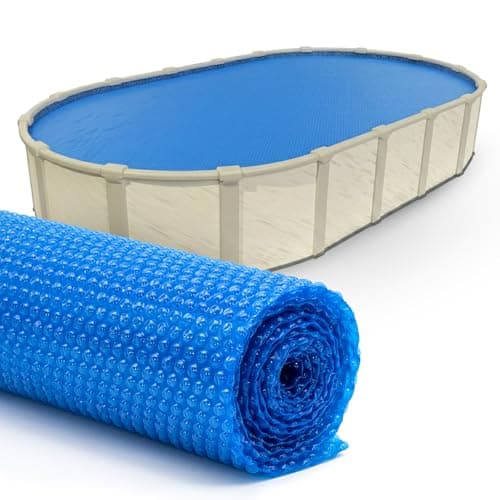 Best if your pool is a stocked oval Sun2Solar Blue 15 ft x 30 ft Oval Solar Cover, 12 Mil Cut to a 15 x 30 oval, so you are not paying for corners you throw away. 12 mil. | A 15 x 30 ft oval above-ground pool | |
| 2 | 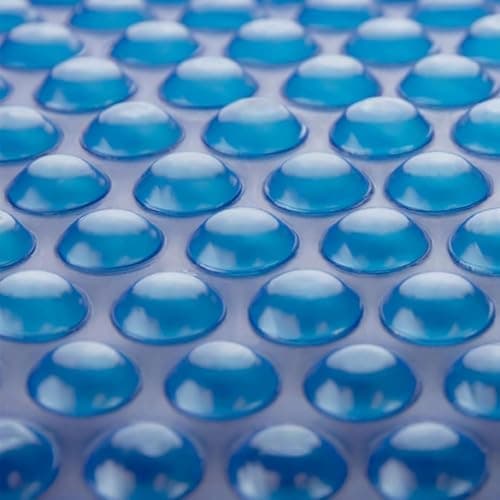 Best to buy oversized and trim Sun2Solar 1600 Series Ultimate Blue Solar Cover The heavyweight rectangle. Buy the smallest one that covers your shape, float it, cut it. | An inground pool you cover most nights, every season | |
| 3 | 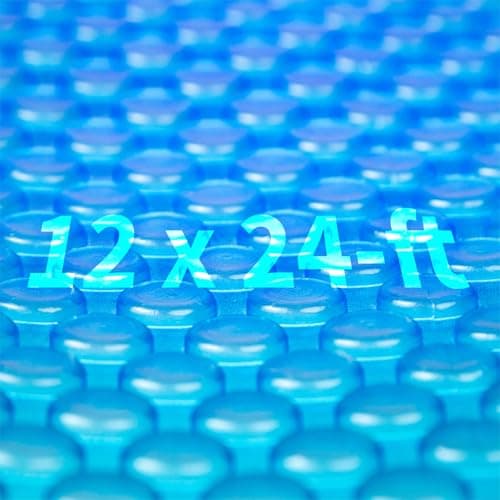 Best mid-weight to cut Blue Wave 12-Mil Solar Blanket 12 mil is the sensible middle, and easier to handle once you have cut a complicated outline. | Buying on price within the 12-mil tier | |
| 4 | 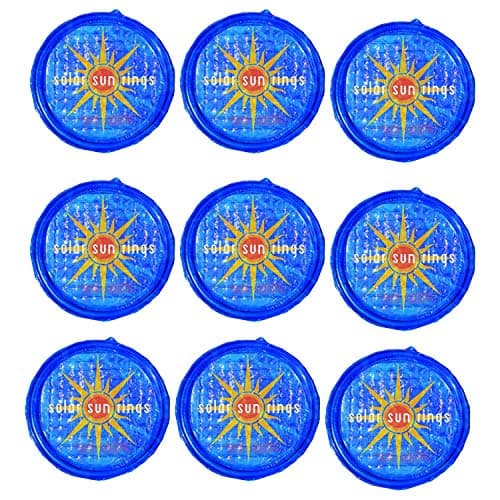 When the shape defeats a blanket Solar Sun Rings Rings tile any outline, including around a spa spillover. Worse per square foot, and they fit where nothing else does. | A pool you would otherwise leave uncovered because the blanket is too much work | |
| 5 | 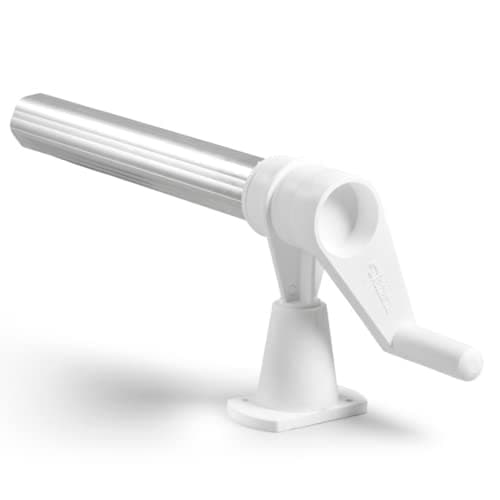 The problem a cut cover creates Feherguard Premium Above-Ground Solar Cover Reel System A trimmed freeform cover has no straight edge to roll onto. Read the reel section before you cut. | A round or oval above-ground pool wider than 24 ft | |
| 6 | 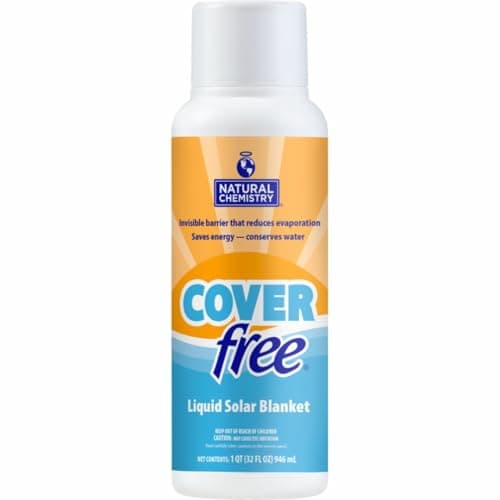 The last resort that always fits Cover Free Liquid Solar Blanket A molecular layer does not care what shape the pool is. Weaker than a blanket, and it works on the pools a blanket will not. | The same job as HeatSavr, when it is cheaper on the day |
#ad We earn a commission if you buy through this link, at no extra cost to you. It never changes the ranking. How this site is funded. Prices last checked October 17, 2026.
Three approaches, and the arithmetic that picks one
Our size-by-size guide handles the common rounds and rectangles, and the measuring and cutting guide covers the general method. This page is about the pools those two send away with a single sentence: kidneys, freeforms, L-shapes, Grecians and ovals that are not stocked.
You have three options, and which is cheapest is a question of waste.
| Approach | What you buy | Waste | Best when |
|---|---|---|---|
| Buy to shape | A cover cut to your outline — ovals from stock, anything else custom | Almost none | Your shape is a stocked oval. Custom-cut is a specialist order, not an Amazon one |
| Buy oversized and trim | The smallest rectangle that fully covers the water | 10-30% of the material | Almost every kidney, freeform and L-shape |
| Tile it | Solar rings or a liquid cover | None — they conform | Shapes with islands, spillovers or planters that defeat a single sheet |
The waste figure is the whole decision. A kidney inside a 16 x 32 rectangle wastes roughly a fifth to a quarter of the sheet, which on a 16 mil cover is real money — but a custom-cut cover typically costs more than that premium.
Ovals: the one shape worth buying to shape
Oval above-ground pools are common enough that covers are stocked cut to shape, and on an oval the math favors buying to shape clearly.
| A 15 x 30 ft rectangle = 450 sq ft of material | |
| A 15 x 30 ft oval = about 353 sq ft of water | pi x 7.5 x 15 |
| Waste if you buy the rectangle = about 97 sq ft, or 22% |
Buying the oval costs roughly what the rectangle costs. You are throwing away a fifth of the cover for nothing, and the offcuts are the corners — which, as below, are the parts a reel would have gripped.
The catch is stock: ovals come in far fewer sizes than rectangles. If your 18 x 33 is not listed, you are back to buying oversized and trimming, and that is a perfectly good answer.
Kidneys and freeforms: buy the rectangle
There is no stocked kidney cover, and custom-cut covers are a specialist order rather than something you add to a basket. The practical answer for almost every freeform pool is the standard method, done carefully:
- Measure the extremes. The longest point to point, and the widest point to point, at right angles to each other. Those two numbers are the rectangle you need to cover.
- Buy the next size up from both. Never under. A cover an inch short at one edge leaves a gap that evaporates all night.
- Float it and leave it. A few hours in the sun and the material relaxes and stops shrinking back. Cutting a cold cover is how you end up short.
- Cut to the waterline with household scissors. The bubbles do not deflate and the edge does not need sealing.
- Cut in stages on a complicated outline. Trim to within a few inches first, check it sits, then take the rest. You cannot add material back.
Steps, benches, spillovers and islands
The features are usually harder than the outline. A few rules that hold up:
- Cut around a step, not over it. Cover material sitting on a submerged step is doing nothing, and it makes the cover heavier and harder to handle.
- A flap that has to be lifted will stop the cover being used. If a feature needs a flap every time, cut the feature out entirely and accept the small uncovered area.
- A raised spa or spillover usually defeats a single sheet. Cover the main body and leave the spa; or use rings, which tile to anything.
- An island or a planter means a cover in two pieces. That is fine and it is what most people with that pool end up doing.
Thickness: go thinner than the size table says
Our size guide says buy the thickest cover you can handle, and drop to 8 mil only once the pool gets large. On an odd shape, shift that down a grade.
The reason is handling. A rectangle folds predictably; a trimmed kidney does not. Every time it comes off it goes onto the deck in a shape that does not stack, and a 16 mil cover in that situation is a two-person job on a pool where a 12 mil one is not. A cover that is on the water beats a heavier cover in the shed, every time.
When to give up on a blanket
Some pools genuinely defeat a sheet: a tight freeform with a raised spa, a rock waterfall in the coping, or a heavily planted surround that leaves nowhere to put the cover when it is off.
For those, the honest options are solar rings, which tile any outline and are worse per square foot but conform to anything, or a liquid cover, which is a molecule-thick film that does not care what shape the pool is. Both are weaker than a blanket and both are better than the blanket you never put on. That trade is worked through properly on each of those pages.
Every pick, in detail
What each one publishes, what is good and bad about it, and — the section this category usually omits — what we could not judge without owning one.
Sun2Solar Blue 15 ft x 30 ft Oval Solar Cover, 12 Mil
One of very few covers sold cut to an oval rather than as a rectangle you trim down, and on an oval pool that matters more than it sounds. A 15 x 30 rectangle trimmed to an oval throws away roughly a fifth of the material you paid for, and the offcuts are the corners where a reel would otherwise grip. Buying to shape costs about the same and wastes nothing.
Best for A 15 x 30 ft oval above-ground pool
| Shape | Cut to a 15 x 30 ft ovalNot a rectangle. This is the distinction the whole page turns on. | Manufacturer |
|---|---|---|
| Thickness | 12 mil | Manufacturer |
| Color | Blue | Manufacturer |
Raises water temperature by up to 15°F
Claimed by Sun2Solar. Source #ad
The same unconditioned figure Sun2Solar prints across its whole range, from 8 mil to 16 mil and in every shape. A single number covering an entire catalog is a range claim, not a measurement of this cover.
- Cut to shape, so you are not paying for corners you cut off
- 12 mil is the sensible middle of the thickness range at this size
- Sold in the same oval sizes above-ground pools actually come in
- Ovals are stocked in fewer sizes than rectangles — if yours is not listed, you are back to trimming
- Same unconditioned 'up to 15°F' claim as the rest of the range
- 450 sq ft of wet cover is a reel job, not a one-person lift
- Whether the delivered oval matches the stated dimensions closely
- Seam life at the curved edges
- How much of the 15°F is daytime gain and how much overnight retention
These need a unit in hand across a season. We do not have one, so we do not have an opinion worth printing on them.
#ad We earn a commission if you buy through this link, at no extra cost to you. It never changes the ranking. How this site is funded. Prices last checked October 17, 2026.
Sun2Solar 1600 Series Ultimate Blue Solar Cover
The cover to buy if you intend to keep using it in five years. 16 mil is the thickest tier the category sells, and thickness on a solar cover buys durability rather than heat — Bob Vila measured every cover in its hands-on group at the same 4 to 5 degrees, from 12-mil clear to 16-mil blue. Pay the extra for the one that survives being dragged over the coping twice a day, not for a temperature difference that did not show up in the only published one-hour test in this category.
Best for An inground pool you cover most nights, every season
| Price shown for | 24 ft roundThis product is sold in several sizes on one listing. The live price and photograph on this page are the ones Amazon returns for this variant; other sizes are priced separately. | Retail listing |
|---|---|---|
| Thickness | 16 milThe manufacturer publishes no retrievable specification sheet; figure is as listed at retail. | Retail listing |
| Color | Blue | Retail listing |
| Stated lifespan | 5 to 10 years for the 16-mil tierSwim University's published figure for 16-mil covers generally, not a Sun2Solar warranty statement. | Retail listing |
| Bubble side | Bubbles face the waterCategory-wide instruction, not brand-specific. The bubbles are the insulating layer and they have to touch the water. | Published standard |
4 to 5 degrees F in one hour
Claimed by Bob Vila, measured across all covers in their group. Conditions: One hour under 2pm sun on 89 to 92 degree F days. Source
Their figure was the same for every cover they put on the water. Read our reconciliation of what a one-hour reading actually measures before you plan around this number.
- Thickest tier sold, which is where the durability difference actually is
- Blue absorbs more of the incoming energy at the surface than clear does
- Cuts oversize to your pool shape with household scissors
- Heavy and awkward at 16 mil — a large inground cover is genuinely a two-person job without a reel
- Costs meaningfully more than the 12-mil version for no measured heating advantage
- Whether the seams hold up over five seasons of daily handling
- How the bubble layer survives repeated dragging over rough coping
- Whether the stated lifespan tier holds for this specific product line
These need a unit in hand across a season. We do not have one, so we do not have an opinion worth printing on them.
#ad We earn a commission if you buy through this link, at no extra cost to you. It never changes the ranking. How this site is funded. Prices last checked October 17, 2026.
Blue Wave 12-Mil Solar Blanket
A straightforward 12-mil blanket that competes on price and on the size range it comes in. The interesting thing about it is what it shares with everything else here: it was in the same hands-on group as the Sun2Solar covers and posted the same one-hour temperature change. If the price is better than the equivalent Sun2Solar on the day you look, there is nothing in the published evidence that says you are giving anything up.
Best for Buying on price within the 12-mil tier
| Price shown for | 12 x 24 ft rectangle (NS405)This product is sold in several sizes on one listing. The live price and photograph on this page are the ones Amazon returns for this variant; other sizes are priced separately. | Retail listing |
|---|---|---|
| Thickness | 12 milThe manufacturer publishes no retrievable specification sheet; figure is as listed at retail. | Retail listing |
| Color | Blue | Retail listing |
| Shapes | Round and rectangular, wide size range | Retail listing |
| Bubble side | Bubbles face the water | Published standard |
4 to 5 degrees F in one hour
Claimed by Bob Vila, measured across all covers in their group. Conditions: One hour under 2pm sun on 89 to 92 degree F days. Source
- Often the cheapest way into the 12-mil tier
- Broad size range including the awkward rectangular dimensions
- Blue rather than clear, so more energy is absorbed at the surface
- No published specification sheet to compare against anything
- Whether the material is meaningfully different from other 12-mil blankets
- Seam and edge durability over multiple seasons
- Consistency between production runs
These need a unit in hand across a season. We do not have one, so we do not have an opinion worth printing on them.
#ad We earn a commission if you buy through this link, at no extra cost to you. It never changes the ranking. How this site is funded. Prices last checked October 17, 2026.
Solar Sun Rings
Floating discs you drop on one at a time instead of wrestling a full blanket, sold individually. That convenience is the whole product, and it comes out of the physics: rings leave gaps, and evaporation carries on through every square foot you did not cover. Expect a fraction of a full cover's effect roughly in proportion to the surface you actually covered, and buy them because you will use them, not because they work better.
Best for A pool you would otherwise leave uncovered because the blanket is too much work
| Price shown for | One 60-inch ringSolar Sun Rings list this 60-inch ring by pack count, each pack its own listing: single, 3, 6 and 9. The live price and photograph on this page are the ones Amazon returns for the single-ring listing; the multi-ring packs are priced separately and work out cheaper per ring. | Retail listing |
|---|---|---|
| Coverage | Partial — discs leave gaps between and at the edgesThe gap is not a defect, it is how the product works. It does mean the DOE cover-saving figures do not apply at full strength. | Published standard |
| Typical price | About $40 to $55 each, or about $150 and up per multi-ring packRead from the brand's own current Amazon listings on 2026-10-12: $54.99 for the single ring, and $149.97, $269.94 and $359.91 for the 3, 6 and 9-ring packs — about $40 to $50 a ring as the pack gets larger. Check the live price before buying. | Retail listing |
- One person can put them on and take them off in a couple of minutes
- No reel, no folding, no dragging anything over the coping
- Buy a few at a time instead of committing to one large purchase
- Partial coverage means partial results — the gaps keep evaporating
- Per square foot of coverage they cost far more than a blanket
- Wind moves them around
- How much surface a given number of rings really covers on your pool shape
- How long the material lasts against a full blanket
- Whether the anchoring holds in a breeze at your site
These need a unit in hand across a season. We do not have one, so we do not have an opinion worth printing on them.
#ad We earn a commission if you buy through this link, at no extra cost to you. It never changes the ranking. How this site is funded. Prices last checked October 17, 2026.
Feherguard Premium Above-Ground Solar Cover Reel System
The reel for the big above-ground pools the others do not reach, and the longest warranty in this roundup. Feherguard sells it in four size brackets from 12 to 30 ft wide, with telescopic tubes designed to cut mid-span sag and a lift-off, swing-away design. It is also, by a wide margin, the most expensive reel here, and its listing says nothing about materials or soft-sided pools.
Best for A round or oval above-ground pool wider than 24 ft
| Price shown for | Up to 30 ft wideSold in four size brackets from 12 to 30 ft; the 28 ft version is a separate listing. The live price and photograph on this page are for the up-to-30 ft system — buy the bracket for your pool. | Retail listing |
|---|---|---|
| Pool type | Round and oval above-ground poolsThe manufacturer publishes no retrievable specification sheet; figure is as listed at retail. | Retail listing |
| Tubes | Telescopic, adjustable to pool widthThe listing says the tube design reduces sagging in the middle of the pool — the problem that grows with every extra foot of span. | Retail listing |
| To swim | Lifts off and swings away | Retail listing |
| Warranty | 5 years | Retail listing |
- Reaches 30 ft wide, beyond every other reel in this roundup
- Five-year warranty, the longest here
- Telescopic tubes sized to your pool rather than a fixed length
- The most expensive reel here by a distance
- You must order the size bracket that matches your pool
- No published materials, and no statement on soft-sided pools
- Actual mid-span sag on a 30 ft run with a heavy cover
- Whether it fits soft-sided or frame pools
- What the five-year warranty excludes
These need a unit in hand across a season. We do not have one, so we do not have an opinion worth printing on them.
#ad We earn a commission if you buy through this link, at no extra cost to you. It never changes the ranking. How this site is funded. Prices last checked October 17, 2026.
Cover Free Liquid Solar Blanket
The other liquid cover people search for, and it works on the same monolayer principle as HeatSavr. Everything true of that one is true of this one, including the honest caveat: the mechanism is evaporation suppression, so judge it against your overnight loss, not against what happens in the afternoon.
Best for The same job as HeatSavr, when it is cheaper on the day
| Price shown for | 1 quartThis product is sold in several sizes on one listing. The live price and photograph on this page are the ones Amazon returns for this variant; other sizes are priced separately. | Retail listing |
|---|---|---|
| How it works | Self-spreading monolayer that slows surface evaporation | Published standard |
| Effect on daytime gain | None to speak ofSame reasoning as HeatSavr: a monolayer is optically negligible. | Our arithmetic |
- No physical cover to handle at all
- Fits any pool shape by definition
- Same disruption problem as every monolayer product
- No retrievable data on how much it actually saves
- Measured evaporation reduction on a real pool
- Whether it differs from HeatSavr in any way that matters
These need a unit in hand across a season. We do not have one, so we do not have an opinion worth printing on them.
#ad We earn a commission if you buy through this link, at no extra cost to you. It never changes the ranking. How this site is funded. Prices last checked October 17, 2026.
Questions people actually ask
Can you get a solar cover for a kidney shaped pool?
Should I buy an oval solar cover or a rectangle to cut down?
How do you cut a solar cover to fit an irregular pool?
Will a solar cover reel work with a freeform pool?
What if my pool has a raised spa or a waterfall?
- U.S. Department of Energy pool-energy figures (evaporation share, BTU per pound evaporated, cover savings, recommended temperatures, wind effect)Recreonics, reproducing and attributing the U.S. Department of Energy · read 2026-09-02
- U.S. Department of Energy, Energy Saver: Swimming Pool Covers (archived — the live page now returns 404)U.S. Department of Energy via the Internet Archive · read 2026-09-02
- Hands-on solar cover comparison: 4 to 5°F measured in one hour of 2pm sun on 89–92°F days, with the method statedBob Vila · read 2026-09-02
- Solar cover guide: 0.7°F per hour under noontime sun, 10–15°F held, and published lifespan tiers by thicknessSwim University · read 2026-09-02
- Water density: 62.424 pounds per cubic foot at 39.2°FU.S. Geological Survey, Water Science School · read 2026-09-02
- Sun2Solar 15 ft x 30 ft oval solar cover listing, 12 mil blue — one of the few covers sold cut to an oval rather than as a rectangle to trimSun2Solar, as listed at retail · read 2026-09-27
- Sun2Solar 459153 listing: 18 ft round, 12 mil blue, stated up to 15°F rise and up to 95% evaporation reduction, supplied oversized with extra overlap to trimSun2Solar, as listed at retail · read 2026-09-20
#ad Where a retailer’s listing is cited above as the source of a published specification, that link is an affiliate link, at no extra cost to you. Independent sources and manufacturer documentation are never wrapped and earn nothing. How this site is funded.
Every URL above was fetched and returned content on the date shown. Where a figure is ours rather than somebody else’s, the arithmetic is on the page and on the methodology page. If you find an error in it, we would genuinely like to know.
Read next
Which solar cover to buy for your pool size
Size by size: the solar cover to buy for an 18 ft round, a 24 ft round or a 16 x 32 rectangle, and the handling-weight rule that decides the thickness.
What size solar cover do I need?
Measuring for round, rectangular, oval and freeform pools, why you buy up rather than exact, and the above-ground nominal-diameter trap that catches people out.
Solar pool covers worth buying
Ranked on the specifications that actually differ between covers — thickness tier and published lifespan — because the only hands-on test in this category found no heating difference at all.
Solar sun rings
Floating rings you deploy one at a time. What the gaps between them cost you in evaporation, what they cost per square foot covered, and when they are the right answer anyway.
Solar cover reels
Why a reel is the highest-leverage buy in pool heating, and which ones to look at. Thirty seconds alone versus five minutes and a helper decides whether a cover saves anything.