How a solar cover heats a pool
Two mechanisms, one product, and they work at different times of day. Most confusion in this subject comes from mixing them up.
Quick picks
Two covers that lean on the two different mechanisms this page separates.
| # | Product | Best for | Price |
|---|---|---|---|
| 1 | 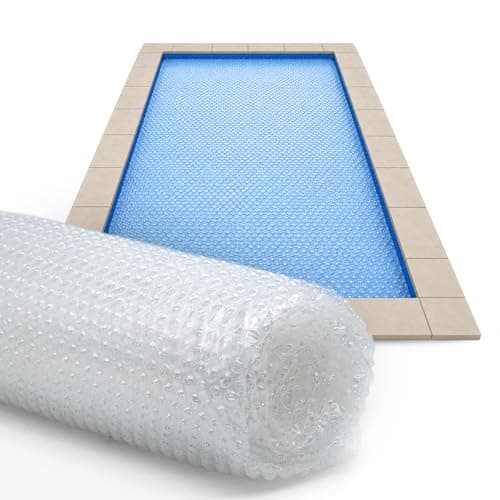 Best use of the daytime mechanism Sun2Solar 1200 Series Crystal Clear Solar Cover Clear film transmits more into the body of the water rather than stopping it at the surface. | Most pools, most budgets — the default recommendation | |
| 2 | 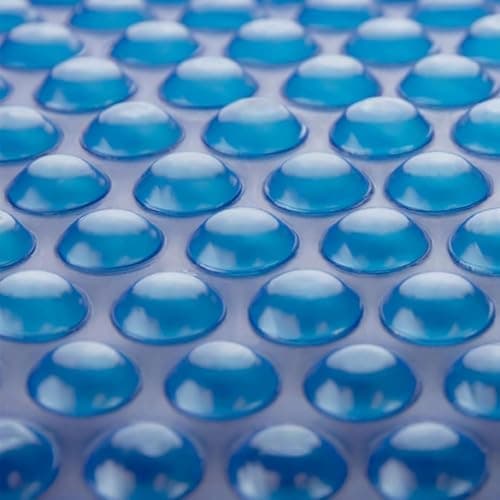 Best use of the overnight mechanism Sun2Solar 1600 Series Ultimate Blue Solar Cover The thicker bubble layer is the part doing the insulating, and it is built to survive daily handling. | An inground pool you cover most nights, every season |
#ad We earn a commission if you buy through this link, at no extra cost to you. It never changes the ranking. How this site is funded. Prices last checked October 18, 2026.
Two mechanisms, and they do not overlap
A solar cover does two entirely separate things, at different times of day, by different physics. Almost every unclear explanation in this subject comes from running them together.
Mechanism one: transmission and absorption, during daylight. Sunlight passes through or is absorbed by the cover material, and the energy ends up in the water. A clear cover transmits more of it into the body of the pool; a colored cover absorbs more of it at the surface and conducts it down. Either way, the ceiling is the energy actually arriving from the sun, and that ceiling is lower than people expect.
Mechanism two: evaporation suppression, all the time and especially at night. The cover is a physical lid. Water molecules cannot leave the surface through it, and DOE attributes about 70% of a pool’s heat loss to exactly that process. This is the larger effect by a wide margin, and it is the one nobody markets.
Mechanism one, quantified
The energy arriving is not a matter of opinion. NASA publishes that about 1,360 W/m² reaches the top of the atmosphere and roughly 48% of it is absorbed at the surface. That gives a working figure of about 653 W/m² under a clear midday sky.
| 512 sq ft = 47.6 m² | surface area |
| 653 W/m² x 47.6 m² = 31,063 W | |
| 31,063 W x 3.412 BTU/hr per W | |
| = 105,987 BTU per hour | |
| ÷ (19,149 gal x 8.33 BTU/gal/°F) |
About 0.66°F per hour
That is the ceiling with a perfect cover, a clear sky and the sun overhead. Real conditions are worse. Swim University independently publishes about 0.7°F per hour for the same scenario, which is a reassuring cross-check on both.
Six hours of good sun is therefore about 4 degrees of daytime gain on a full-size pool, in ideal conditions. That is genuinely useful — and it is also why the “15 degrees” claims cannot be describing a single day.
Mechanism two, quantified
Evaporation is expensive in a way that is hard to intuit, because water carries an enormous amount of energy when it changes phase. DOE’s published figure is 1,048 BTU per pound of 80-degree water evaporated.
| 1 gallon of pool water | about 8.33 lb |
| x 1,048 BTU per lb evaporated | DOE |
8,730 BTU per gallon
For scale: an eighth of an inch off a 512 sq ft pool is about 40 gallons, or roughly 350,000 BTU. That is a third of a million BTU leaving your pool overnight through a mechanism a hundred-dollar sheet of plastic can largely stop.
Compare the two numbers. Daytime gain: about 106,000 BTU an hour into a 16-by-32 pool, in perfect conditions. Overnight evaporation: around 350,000 BTU across a night. The lid is doing more work than the window.
Why the bubbles face down
Both mechanisms explain the same instruction. The bubbles are the insulating layer: they trap air, and trapped air is what slows conduction and holds the film against the water so vapor cannot escape. They have to be in contact with the surface to do either. The full answer is a short page, because it is a short question.
What this means for buying
If the dominant mechanism is evaporation suppression rather than solar transmission, then the properties that matter are the ones that keep the cover on the water: durability, fit, and whether you can deploy it without help. Optical properties matter less than the category implies — clear versus blue is a real but second-order question.
It also means the answer to “should the cover be on during the day” is usually yes: mechanism two runs during daylight too, and on a hot windy afternoon it is running hard. The exceptions are worth knowing.
Every pick, in detail
What each one publishes, what is good and bad about it, and — the section this category usually omits — what we could not judge without owning one.
Sun2Solar 1200 Series Crystal Clear Solar Cover
The value pick, and the one whose logic actually holds up. A clear cover transmits more sunlight into the body of the pool instead of absorbing it at the surface, and 12 mil is the point where lifespan stops being the limiting factor. Bob Vila measured this and the 16-mil blue at the same 4 to 5 degrees in an hour, so you are paying less for the same measured result and giving up some years of service life.
Best for Most pools, most budgets — the default recommendation
| Price shown for | 20 x 40 ft rectangleThis product is sold in several sizes on one listing. The live price and photograph on this page are the ones Amazon returns for this variant; other sizes are priced separately. | Retail listing |
|---|---|---|
| Thickness | 12 milThe manufacturer publishes no retrievable specification sheet; figure is as listed at retail. | Retail listing |
| Color | Clear | Retail listing |
| Stated lifespan | 3 to 4 years for the 12-mil clear tierSwim University's published figure for 12-mil clear covers generally. | Retail listing |
| Bubble side | Bubbles face the water | Published standard |
4 to 5 degrees F in one hour
Claimed by Bob Vila, measured across all covers in their group. Conditions: One hour under 2pm sun on 89 to 92 degree F days. Source
- Clear transmits more light into the water instead of stopping it at the surface
- 12 mil is the sweet spot: real service life without 16-mil bulk
- Cheaper than the 16-mil tier with no measured heating penalty
- Shorter published lifespan tier than 16 mil
- A clear cover shows algae and debris more obviously, which some people dislike
- Whether clear genuinely outlasts or under-lasts blue in the same thickness
- Real-world tear resistance at a pool with rough edges
- How much the clear material clouds over a season of UV
These need a unit in hand across a season. We do not have one, so we do not have an opinion worth printing on them.
#ad We earn a commission if you buy through this link, at no extra cost to you. It never changes the ranking. How this site is funded. Prices last checked October 18, 2026.
Sun2Solar 1600 Series Ultimate Blue Solar Cover
The cover to buy if you intend to keep using it in five years. 16 mil is the thickest tier the category sells, and thickness on a solar cover buys durability rather than heat — Bob Vila measured every cover in its hands-on group at the same 4 to 5 degrees, from 12-mil clear to 16-mil blue. Pay the extra for the one that survives being dragged over the coping twice a day, not for a temperature difference that did not show up in the only published one-hour test in this category.
Best for An inground pool you cover most nights, every season
| Price shown for | 24 ft roundThis product is sold in several sizes on one listing. The live price and photograph on this page are the ones Amazon returns for this variant; other sizes are priced separately. | Retail listing |
|---|---|---|
| Thickness | 16 milThe manufacturer publishes no retrievable specification sheet; figure is as listed at retail. | Retail listing |
| Color | Blue | Retail listing |
| Stated lifespan | 5 to 10 years for the 16-mil tierSwim University's published figure for 16-mil covers generally, not a Sun2Solar warranty statement. | Retail listing |
| Bubble side | Bubbles face the waterCategory-wide instruction, not brand-specific. The bubbles are the insulating layer and they have to touch the water. | Published standard |
4 to 5 degrees F in one hour
Claimed by Bob Vila, measured across all covers in their group. Conditions: One hour under 2pm sun on 89 to 92 degree F days. Source
Their figure was the same for every cover they put on the water. Read our reconciliation of what a one-hour reading actually measures before you plan around this number.
- Thickest tier sold, which is where the durability difference actually is
- Blue absorbs more of the incoming energy at the surface than clear does
- Cuts oversize to your pool shape with household scissors
- Heavy and awkward at 16 mil — a large inground cover is genuinely a two-person job without a reel
- Costs meaningfully more than the 12-mil version for no measured heating advantage
- Whether the seams hold up over five seasons of daily handling
- How the bubble layer survives repeated dragging over rough coping
- Whether the stated lifespan tier holds for this specific product line
These need a unit in hand across a season. We do not have one, so we do not have an opinion worth printing on them.
#ad We earn a commission if you buy through this link, at no extra cost to you. It never changes the ranking. How this site is funded. Prices last checked October 18, 2026.
Questions people actually ask
Does a solar cover work by trapping heat or by adding heat?
How much heat does evaporation actually take?
Do the bubbles go up or down?
- Earth's energy budget: 1,360 W/m² of solar energy at the top of the atmosphere, about 48% absorbed at the surfaceNASA Earth Observatory · read 2026-09-02
- U.S. Department of Energy pool-energy figures (evaporation share, BTU per pound evaporated, cover savings, recommended temperatures, wind effect)Recreonics, reproducing and attributing the U.S. Department of Energy · read 2026-09-02
- Solar cover guide: 0.7°F per hour under noontime sun, 10–15°F held, and published lifespan tiers by thicknessSwim University · read 2026-09-02
- Water density: 62.424 pounds per cubic foot at 39.2°FU.S. Geological Survey, Water Science School · read 2026-09-02
- Pool heater roundup: the 8.33 BTU per gallon per °F figure, attributed on the page to Alicia Toedter of Leslie'sBob Vila · read 2026-09-02
Every URL above was fetched and returned content on the date shown. Where a figure is ours rather than somebody else’s, the arithmetic is on the page and on the methodology page. If you find an error in it, we would genuinely like to know.
Read next
Do solar pool covers work?
The 4-degrees-versus-15-degrees contradiction that runs through this entire category, reconciled from published physics. Three different quantities being reported as one.
Solar cover: bubbles up or down?
The single most-asked question about solar covers, answered in one line and then explained: the bubbles are the insulating layer and have to touch the water.
How fast a pool loses heat
Evaporation, radiation, convection and conduction, with the arithmetic on what each night actually costs and a measurement you can take yourself.
Clear vs blue solar covers
Clear transmits into the water, blue absorbs at the surface. Same energy budget either way — and the only published test measured no difference between them.
Solar pool covers worth buying
Ranked on the specifications that actually differ between covers — thickness tier and published lifespan — because the only hands-on test in this category found no heating difference at all.