Thermal and insulated pool covers
Search for a thermal pool cover and you will be sold a bubble cover. That is not quite a trick, and there is one product in the category that really is built differently.
Quick picks
Ranked on published material specification, because that is the only thing separating these products that a buyer can check.
| # | Product | Best for | Price |
|---|---|---|---|
| 1 | 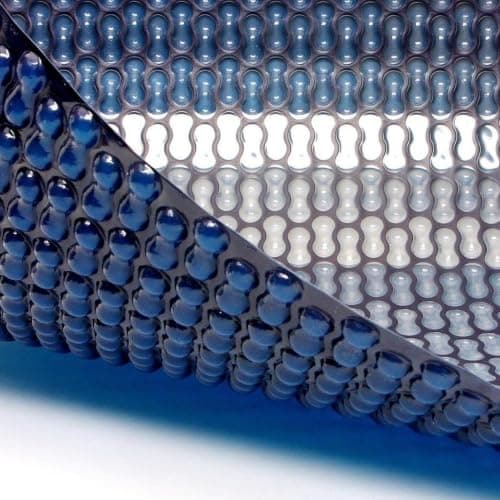 The genuinely different one EnergyGuard GeoBubble 500 Micron Solar Pool Cover 500 micron, hourglass cells, an 8-year pro-rata warranty, and a temperature claim that names its trial. | Someone replacing a split 8 or 12 mil cover for the second or third time | |
| 2 | 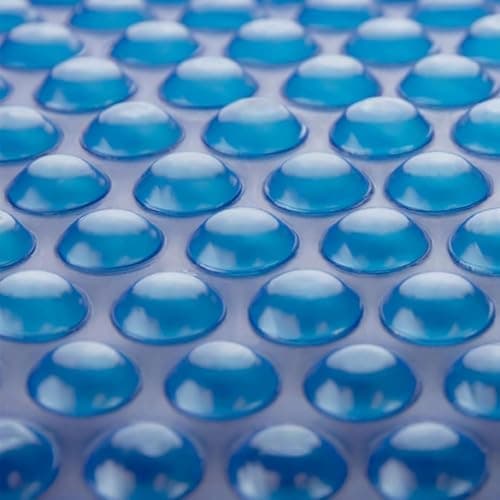 Best heavyweight bubble cover Sun2Solar 1600 Series Ultimate Blue Solar Cover The 1600-series, which is what most listings mean when they say 'thermal'. Far cheaper per square foot. | An inground pool you cover most nights, every season | |
| 3 | 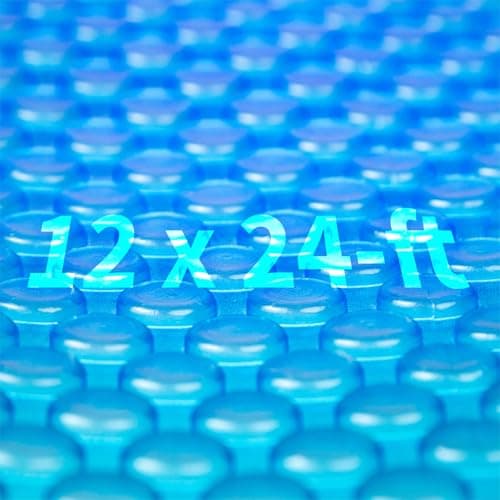 Best mid-weight Blue Wave 12-Mil Solar Blanket 12 mil, the sensible middle, and the thickness most 'thermal blanket' listings are quietly selling. | Buying on price within the 12-mil tier | |
| 4 | 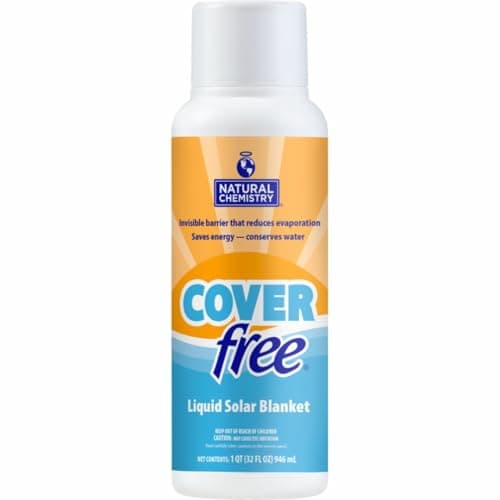 When no cover will get used Cover Free Liquid Solar Blanket A molecular layer instead of a blanket. Weaker, and it works when the alternative is nothing. | The same job as HeatSavr, when it is cheaper on the day | |
| 5 | 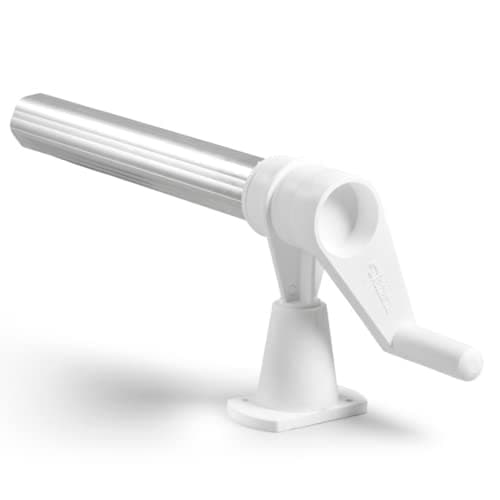 What makes any of them work Feherguard Premium Above-Ground Solar Cover Reel System A heavyweight cover without a reel is a heavyweight cover in the garage. | A round or oval above-ground pool wider than 24 ft |
#ad We earn a commission if you buy through this link, at no extra cost to you. It never changes the ranking. How this site is funded. Prices last checked October 17, 2026.
Three words, mostly one product
“Thermal pool cover”, “insulated pool cover” and “solar blanket” are used more or less interchangeably by sellers, and in the overwhelming majority of cases all three describe the same object: a sheet of polyethylene with air cells molded into it, floating bubble-side down on the water.
We went looking for a distinct insulated product — a closed-cell foam cover, something with a genuine R-value — and there is essentially no such thing sold for domestic pools on the retail channel this site buys from. What comes back on those searches is bubble covers, and hot tub blankets, and occasionally pool wall foam that is not a cover at all.
The one that is genuinely built differently
EnergyGuard GeoBubble is the exception, and it is worth understanding because it is the only cover in this category that publishes engineering rather than adjectives.
| Specification | EnergyGuard GeoBubble | Typical 16 mil bubble cover |
|---|---|---|
| Thickness | 500 micron (about 20 mil), dual-extruded | 16 mil, single film |
| Construction | 350 micron bubble film over a 150 micron back sheet | One layer, bubbles molded in |
| Cell shape | Hourglass, 1,943 per square meter | Round |
| Material ratings published | Vicat softening 93°C, cold crack -25°C, UV stabilized | None published |
| Warranty | 8 years pro rata | Typically 1 to 3 years |
| Temperature claim | Up to 12°F, attributed to 2022 trials of 89°F covered against 80°F uncovered over 29 days | 'Up to 15°F', unconditioned |
The hourglass cell is the substantive claim: round bubbles have a thin-walled stress point where the sphere meets the sheet, and that is where covers split first. Whether the geometry delivers the 8 years is something we cannot verify without owning one for 8 years.
The honest counterweight is price. GeoBubble costs several times what an ordinary cover of the same area costs, and it is opaque rather than translucent — so less light reaches the water than a clear cover passes. It is the right purchase for somebody replacing a split cover for the third time. It is an expensive first cover.
The claim worth noticing
Almost every cover in this category prints a bare temperature number. Sun2Solar says “up to 15°F” across its entire range, from 8 mil to 16 mil, which means it cannot be a measurement of any particular cover. Blue Wave publishes no figure at all.
EnergyGuard’s listing does something different: it attributes its claim to a 2022 trial in which a covered pool held 89°F against 80°F uncovered over 29 days, and separately reports heat pump energy of 16.6 kWh against 193.0 kWh. Those are specific, they name a duration and a comparison, and the trial gap of 9°F is not the same as the “up to 12°F” headline — which is exactly the kind of discrepancy worth knowing about before you buy.
We have not verified the trial. But a claim with a stated method is a different class of statement from a number with nothing behind it, and the difference is most of what separates these products.
What about hot tub thermal blankets?
They come up constantly on these searches and they are a real product — a thick bubble sheet, usually 16 mil, cut square at 6, 7 or 8 feet to drop inside a spa under the hard cover. They work well for what they are.
They are not pool covers, and the square sizes are useless on a pool. If your search for a thermal pool cover is returning 7 x 7 ft squares, you have drifted into the spa aisle.
What to actually buy
- If you have never had a cover: buy an ordinary bubble cover at the thickness your pool size supports. Our size-by-size guide picks one. The first cover captures most of the available benefit; spending up on the first one is the wrong order.
- If you are on your second or third cover: the replacement cycle is the argument for GeoBubble. Three cheap covers in six years costs more than one expensive one that lasts eight.
- If your covers keep splitting at the bubbles: that is the specific failure the hourglass cell is designed to address, and also a sign you are folding rather than rolling.
- If the cover never actually goes on: no thickness helps. Buy a reel, or accept a liquid cover as the weaker thing you will actually use.
Every pick, in detail
What each one publishes, what is good and bad about it, and — the section this category usually omits — what we could not judge without owning one.
EnergyGuard GeoBubble 500 Micron Solar Pool Cover
The one cover in this category that publishes engineering rather than adjectives. 500 microns — about 20 mil — as a 350 micron GeoBubble film extruded over a 150 micron back sheet, an hourglass cell shape meant to remove the thin stress point where ordinary round bubbles split, 1,943 cells per square meter, a 93°C Vicat softening point and a -25°C cold crack rating, backed by an 8-year pro-rata warranty. It costs several times what an 8 mil blanket costs. Whether that is worth it comes down to whether you would have replaced the cheap one three times.
Best for Someone replacing a split 8 or 12 mil cover for the second or third time
| Thickness | 500 micron, roughly 20 milDual-extruded: a 350 micron bubble film over a 150 micron back sheet. Thicker than the 16 mil top of the ordinary range. | Manufacturer |
|---|---|---|
| Bubble geometry | GeoBubble hourglass cells, 1,943 per square meterThe stated purpose is to remove the thin-walled stress point where round bubbles fail first. It is a real design difference, not a finish. | Manufacturer |
| Material ratings | Vicat softening point 93°C, cold crack rating -25°C, UV stabilized | Manufacturer |
| Warranty | 8 years, pro rata | Manufacturer |
| Color | Opaque midnight blue, rated as winter cover materialOpaque rather than translucent, which is the trade: less light to the water, more rated durability and less algae growth. | Manufacturer |
Raises water temperature up to 12°F
Claimed by SolarPoolSupply. Conditions: Attributed to 2022 trials in which a covered pool held 89°F against 80°F uncovered over 29 days. Source #ad
This is one of the very few temperature claims in the category that names a trial period and a comparison pool rather than printing a bare number. The 9°F gap in the trial and the 'up to 12°F' headline are not the same figure, and the trial is the one to read.
- Publishes material engineering — Vicat point, cold crack rating, cell count — which nothing else here does
- 8-year pro-rata warranty against the 1 to 3 years typical of bubble covers
- Its headline temperature claim comes with a stated trial rather than nothing
- Several times the price per square foot of an ordinary 12 mil cover
- Opaque, so less light reaches the water than a clear cover passes
- Sold in fixed sizes and shipped as a cover only — no reel
- Whether 8 years is achieved in a hot climate on a salt pool
- How the pro-rata warranty is administered in practice
- Whether the hourglass cell genuinely outlasts round bubbles on your pool
These need a unit in hand across a season. We do not have one, so we do not have an opinion worth printing on them.
#ad We earn a commission if you buy through this link, at no extra cost to you. It never changes the ranking. How this site is funded. Prices last checked October 17, 2026.
Sun2Solar 1600 Series Ultimate Blue Solar Cover
The cover to buy if you intend to keep using it in five years. 16 mil is the thickest tier the category sells, and thickness on a solar cover buys durability rather than heat — Bob Vila measured every cover in its hands-on group at the same 4 to 5 degrees, from 12-mil clear to 16-mil blue. Pay the extra for the one that survives being dragged over the coping twice a day, not for a temperature difference that did not show up in the only published one-hour test in this category.
Best for An inground pool you cover most nights, every season
| Price shown for | 24 ft roundThis product is sold in several sizes on one listing. The live price and photograph on this page are the ones Amazon returns for this variant; other sizes are priced separately. | Retail listing |
|---|---|---|
| Thickness | 16 milThe manufacturer publishes no retrievable specification sheet; figure is as listed at retail. | Retail listing |
| Color | Blue | Retail listing |
| Stated lifespan | 5 to 10 years for the 16-mil tierSwim University's published figure for 16-mil covers generally, not a Sun2Solar warranty statement. | Retail listing |
| Bubble side | Bubbles face the waterCategory-wide instruction, not brand-specific. The bubbles are the insulating layer and they have to touch the water. | Published standard |
4 to 5 degrees F in one hour
Claimed by Bob Vila, measured across all covers in their group. Conditions: One hour under 2pm sun on 89 to 92 degree F days. Source
Their figure was the same for every cover they put on the water. Read our reconciliation of what a one-hour reading actually measures before you plan around this number.
- Thickest tier sold, which is where the durability difference actually is
- Blue absorbs more of the incoming energy at the surface than clear does
- Cuts oversize to your pool shape with household scissors
- Heavy and awkward at 16 mil — a large inground cover is genuinely a two-person job without a reel
- Costs meaningfully more than the 12-mil version for no measured heating advantage
- Whether the seams hold up over five seasons of daily handling
- How the bubble layer survives repeated dragging over rough coping
- Whether the stated lifespan tier holds for this specific product line
These need a unit in hand across a season. We do not have one, so we do not have an opinion worth printing on them.
#ad We earn a commission if you buy through this link, at no extra cost to you. It never changes the ranking. How this site is funded. Prices last checked October 17, 2026.
Blue Wave 12-Mil Solar Blanket
A straightforward 12-mil blanket that competes on price and on the size range it comes in. The interesting thing about it is what it shares with everything else here: it was in the same hands-on group as the Sun2Solar covers and posted the same one-hour temperature change. If the price is better than the equivalent Sun2Solar on the day you look, there is nothing in the published evidence that says you are giving anything up.
Best for Buying on price within the 12-mil tier
| Price shown for | 12 x 24 ft rectangle (NS405)This product is sold in several sizes on one listing. The live price and photograph on this page are the ones Amazon returns for this variant; other sizes are priced separately. | Retail listing |
|---|---|---|
| Thickness | 12 milThe manufacturer publishes no retrievable specification sheet; figure is as listed at retail. | Retail listing |
| Color | Blue | Retail listing |
| Shapes | Round and rectangular, wide size range | Retail listing |
| Bubble side | Bubbles face the water | Published standard |
4 to 5 degrees F in one hour
Claimed by Bob Vila, measured across all covers in their group. Conditions: One hour under 2pm sun on 89 to 92 degree F days. Source
- Often the cheapest way into the 12-mil tier
- Broad size range including the awkward rectangular dimensions
- Blue rather than clear, so more energy is absorbed at the surface
- No published specification sheet to compare against anything
- Whether the material is meaningfully different from other 12-mil blankets
- Seam and edge durability over multiple seasons
- Consistency between production runs
These need a unit in hand across a season. We do not have one, so we do not have an opinion worth printing on them.
#ad We earn a commission if you buy through this link, at no extra cost to you. It never changes the ranking. How this site is funded. Prices last checked October 17, 2026.
Cover Free Liquid Solar Blanket
The other liquid cover people search for, and it works on the same monolayer principle as HeatSavr. Everything true of that one is true of this one, including the honest caveat: the mechanism is evaporation suppression, so judge it against your overnight loss, not against what happens in the afternoon.
Best for The same job as HeatSavr, when it is cheaper on the day
| Price shown for | 1 quartThis product is sold in several sizes on one listing. The live price and photograph on this page are the ones Amazon returns for this variant; other sizes are priced separately. | Retail listing |
|---|---|---|
| How it works | Self-spreading monolayer that slows surface evaporation | Published standard |
| Effect on daytime gain | None to speak ofSame reasoning as HeatSavr: a monolayer is optically negligible. | Our arithmetic |
- No physical cover to handle at all
- Fits any pool shape by definition
- Same disruption problem as every monolayer product
- No retrievable data on how much it actually saves
- Measured evaporation reduction on a real pool
- Whether it differs from HeatSavr in any way that matters
These need a unit in hand across a season. We do not have one, so we do not have an opinion worth printing on them.
#ad We earn a commission if you buy through this link, at no extra cost to you. It never changes the ranking. How this site is funded. Prices last checked October 17, 2026.
Feherguard Premium Above-Ground Solar Cover Reel System
The reel for the big above-ground pools the others do not reach, and the longest warranty in this roundup. Feherguard sells it in four size brackets from 12 to 30 ft wide, with telescopic tubes designed to cut mid-span sag and a lift-off, swing-away design. It is also, by a wide margin, the most expensive reel here, and its listing says nothing about materials or soft-sided pools.
Best for A round or oval above-ground pool wider than 24 ft
| Price shown for | Up to 30 ft wideSold in four size brackets from 12 to 30 ft; the 28 ft version is a separate listing. The live price and photograph on this page are for the up-to-30 ft system — buy the bracket for your pool. | Retail listing |
|---|---|---|
| Pool type | Round and oval above-ground poolsThe manufacturer publishes no retrievable specification sheet; figure is as listed at retail. | Retail listing |
| Tubes | Telescopic, adjustable to pool widthThe listing says the tube design reduces sagging in the middle of the pool — the problem that grows with every extra foot of span. | Retail listing |
| To swim | Lifts off and swings away | Retail listing |
| Warranty | 5 years | Retail listing |
- Reaches 30 ft wide, beyond every other reel in this roundup
- Five-year warranty, the longest here
- Telescopic tubes sized to your pool rather than a fixed length
- The most expensive reel here by a distance
- You must order the size bracket that matches your pool
- No published materials, and no statement on soft-sided pools
- Actual mid-span sag on a 30 ft run with a heavy cover
- Whether it fits soft-sided or frame pools
- What the five-year warranty excludes
These need a unit in hand across a season. We do not have one, so we do not have an opinion worth printing on them.
#ad We earn a commission if you buy through this link, at no extra cost to you. It never changes the ranking. How this site is funded. Prices last checked October 17, 2026.
Questions people actually ask
What is the difference between a thermal pool cover and a solar cover?
Is there a pool cover with an actual R-value?
Is GeoBubble worth the extra money?
Do thermal pool covers work in winter?
- U.S. Department of Energy pool-energy figures (evaporation share, BTU per pound evaporated, cover savings, recommended temperatures, wind effect)Recreonics, reproducing and attributing the U.S. Department of Energy · read 2026-09-02
- U.S. Department of Energy, Energy Saver: Swimming Pool Covers (archived — the live page now returns 404)U.S. Department of Energy via the Internet Archive · read 2026-09-02
- Hands-on solar cover comparison: 4 to 5°F measured in one hour of 2pm sun on 89–92°F days, with the method statedBob Vila · read 2026-09-02
- Solar cover guide: 0.7°F per hour under noontime sun, 10–15°F held, and published lifespan tiers by thicknessSwim University · read 2026-09-02
- Water density: 62.424 pounds per cubic foot at 39.2°FU.S. Geological Survey, Water Science School · read 2026-09-02
- EnergyGuard GeoBubble listing: 500 micron dual-extruded cover (350 micron GeoBubble film over a 150 micron back sheet), 1,943 cells per square meter, Vicat softening point 93°C, -25°C cold crack rating, 8-year pro-rata warranty, and 2022 trial figures of 89°F covered against 80°F uncovered over 29 days with heat pump draw of 16.6 kWh against 193.0 kWhSolarPoolSupply, as listed at retail · read 2026-09-20
- Sun2Solar 459153 listing: 18 ft round, 12 mil blue, stated up to 15°F rise and up to 95% evaporation reduction, supplied oversized with extra overlap to trimSun2Solar, as listed at retail · read 2026-09-20
- Blue Wave NS120 listing: 24 ft round, 8 mil blue, 18 lb, 3-year limited manufacturer warranty, and the maker's own storage instruction to roll rather than fold and keep it in the shade when off the poolBlue Wave, as listed at retail · read 2026-09-20
#ad Where a retailer’s listing is cited above as the source of a published specification, that link is an affiliate link, at no extra cost to you. Independent sources and manufacturer documentation are never wrapped and earn nothing. How this site is funded.
Every URL above was fetched and returned content on the date shown. Where a figure is ours rather than somebody else’s, the arithmetic is on the page and on the methodology page. If you find an error in it, we would genuinely like to know.
Read next
8, 12 or 16 mil: which solar cover thickness
Thickness buys years, not degrees. The published lifespan tiers, the cost per year of service, and the case for 12 mil on a large pool.
Do solar pool covers work?
The 4-degrees-versus-15-degrees contradiction that runs through this entire category, reconciled from published physics. Three different quantities being reported as one.
Solar pool covers worth buying
Ranked on the specifications that actually differ between covers — thickness tier and published lifespan — because the only hands-on test in this category found no heating difference at all.
Solar cover vs winter cover
The difference is light transmission, and everything else follows from it. Which cover does which job, whether you need both, and what a winter cover does to your water temperature if you leave it on too long.
Which solar cover to buy for your pool size
Size by size: the solar cover to buy for an 18 ft round, a 24 ft round or a 16 x 32 rectangle, and the handling-weight rule that decides the thickness.