Hayward HeatPro review
The heat pump every other unit on this site gets priced against. What Hayward publishes, what it conspicuously does not, and the model-number trap on the way to checkout.
Quick picks
The HeatPro against the two full-size heat pumps this site ranks beside it, plus its own small sibling and the cover that makes any of them a smaller purchase.
| # | Product | Best for | Price |
|---|---|---|---|
| 1 | 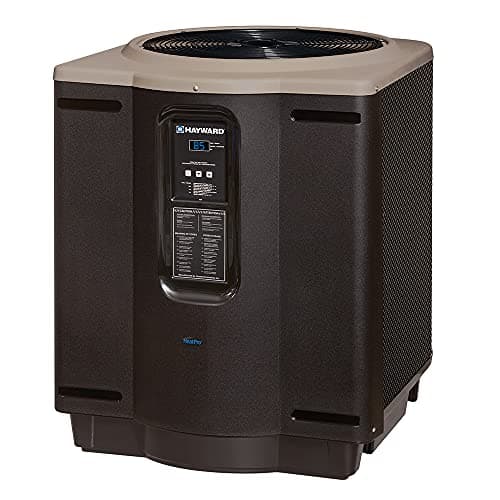 The one being reviewed Hayward HeatPro Pool Heat Pump 140,000 BTU/hr, titanium exchanger, Ultra Gold corrosion finish, and an explicit saltwater claim. | Lowest running cost per degree when you want real temperature control | |
| 2 | 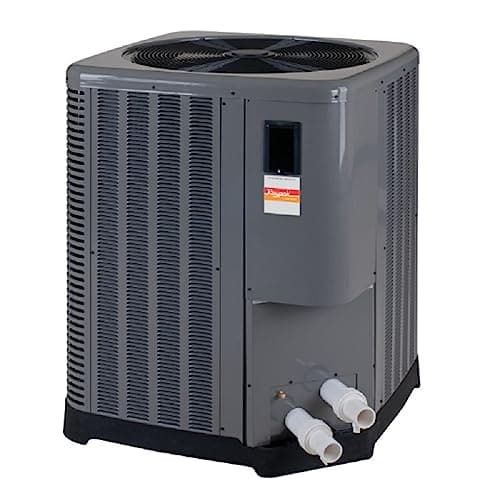 Same output, usually less money Raypak 8450 140,000 BTU Pool Heat Pump 140,000 BTU/hr with a titanium exchanger too. Publishes no COP either. | A full-size pool held at temperature all season, priced against the HeatPro | |
| 3 | 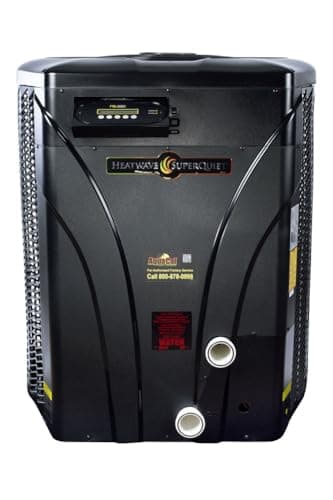 Fewer BTU, but a published COP AquaCal HeatWave SuperQuiet SQ160R Pool Heat Pump 128,000 BTU/hr and the only efficiency figure on this site that names its test condition. | A full-size pool where the titanium exchanger, app control and warranty are worth paying for | |
| 4 | No photo The small one in the same family Hayward HeatPro 50 Above-Ground Pool Heat Pump Hayward's above-ground HeatPro, for pools this unit would be absurd on. | A permanent above-ground pool, when you want an established brand at the small size | |
| 5 |  Buy this first, whichever you choose Sun2Solar 1600 Series Ultimate Blue Solar Cover A heat pump spends all day replacing heat a cover would have kept overnight. | An inground pool you cover most nights, every season |
#ad We earn a commission if you buy through this link, at no extra cost to you. It never changes the ranking. How this site is funded. Prices last checked October 17, 2026.
Why this unit is the benchmark
Across this site, when a heat pump needs to be compared with something, it gets compared with the HeatPro. That is not brand preference; it is because the HeatPro at 140,000 BTU/hr is the unit the rest of the category is priced and specified against, and because it is reliably purchasable rather than dealer-only.
So this review has an unusual job. It is not asking whether the HeatPro is good — it is the reference point. It is asking what Hayward actually publishes about it, and what a buyer is accepting by not knowing the rest.
What is published
- 140,000 BTU/hr output. Heat pumps rate by heat delivered, so this number is directly comparable with other heat pumps and not with a gas heater’s input rating.
- Titanium heat exchanger, stated on both listings.
- Explicit saltwater compatibility. The current listing says “compatibility with a wide range of pool water conditions, including saltwater pools”; the older one goes further with “excellent salt water and chemical corrosion resistance”. Very few heaters state this outright.
- Ultra Gold corrosion-resistant finish and UV-resistant body panels, named for coastal environments. This is about the cabinet and fasteners, not the exchanger.
- 230V supply, for inground installations.
What is conspicuously absent
Also absent: any decibel figure, any stated minimum operating air temperature, and any flow rate specification on the retail listings. The last of those matters — every heat pump has a water flow window, and the number is in the manual rather than the listing.
Two listings, two part numbers, one digit apart
This is the practical warning, and it is the reason to read to the end of the title before ordering. There are two live HeatPro 140,000 BTU listings and they are not the same physical unit.
| Part number | Cabinet | Dimensions | Weight |
|---|---|---|---|
| W3HP21405T | Black | 33.6 x 30.5 x 44 in | 250 lb |
| W3HP21404T | Tan | 40 x 31.5 x 50 in | 320 lb |
Same rated output, same titanium exchanger, same price when we checked. Different footprint, different height and 70 lb apart — which matters if the unit is going into an existing equipment pad or behind a gate.
Measure the space before you order, and check the part number in the title rather than the photograph. The older W3HP21404T is the one with the more explicit corrosion language; the newer W3HP21405T is substantially smaller and lighter. Neither listing explains the relationship between them.
What it costs to run
| Energy for a ten-degree lift = 20,000 x 8.33 x 10 = 1,666,000 BTU | |
| Hours = 1,666,000 ÷ 140,000 = about 11.9 | before heat loss |
| Cost = 1.666 x $10.75 = $17.91 | at an assumed COP of 5.0 |
The cost line uses this site's assumed COP of 5.0, not a Hayward figure, because Hayward does not publish one. At a COP of 5.9 the same heat-up would cost about 15% less; at 3.5 on a cold shoulder-season morning, about 43% more.
That is the cheapest controllable heat available — roughly a quarter of what the same heat costs on propane and a third of natural gas. The heat pump running cost page works through a full season.
Where it sits against what else we rank
| Heat pump | Rated output | Exchanger | Published COP |
|---|---|---|---|
| Hayward HeatPro | 140,000 BTU/hr | Titanium | None published |
| Raypak 8450 | 140,000 BTU/hr | Titanium | None published |
| AquaCal SuperQuiet SQ160R | 128,000 BTU/hr | ThermoLink titanium | 5.7 at 80/80/80 |
Live prices are on the buy buttons above and the ranking by price moves as they do. On output the HeatPro and the Raypak are level; the AquaCal trades about 9% of the heat for the only efficiency figure with conditions attached.
Who should buy it
- Anyone with a 15,000 to 25,000 gallon inground pool who holds a temperature across a season rather than heating on impulse.
- Salt pool owners, because of the explicit compatibility claim rather than an inference from the exchanger material.
- Anyone in coastal air, where the Ultra Gold cabinet claim on the W3HP21404T is a real differentiator.
Who should not
- Anyone who wants a published efficiency figure. Hayward does not give you one. If that matters, the AquaCal SuperQuiet does.
- Anyone heating on demand. Twelve hours for a ten-degree lift is the heat-pump bargain, not a defect — but if you want a cold pool swimmable this afternoon, gas is honest.
- Above-ground pools. 140,000 BTU/hr on 7,000 gallons is the wrong machine at the wrong price. See heat pumps for above-ground pools.
What we could not assess
The COP at any air temperature, because none is published. Compressor and control-board life, which is what actually decides the value of a seven-thousand-dollar machine. The noise, since no decibel figure appears on either listing. And the difference in practice between the two part numbers, which Hayward does not explain and neither listing acknowledges.
Every pick, in detail
What each one publishes, what is good and bad about it, and — the section this category usually omits — what we could not judge without owning one.
Hayward HeatPro Pool Heat Pump
If you are heating a pool with electricity, this is the shape of machine to do it with. A heat pump moves heat instead of making it, and at the assumptions we publish it delivers a million BTU into the water for about a fifth of what an electric resistance heater costs to deliver the same. It is slower than gas and it fades as the air gets colder, which is exactly when you want it — that trade is the whole decision.
Best for Lowest running cost per degree when you want real temperature control
| Type | Air-source heat pumpThe manufacturer publishes no retrievable specification sheet; figure is as listed at retail. | Retail listing |
|---|---|---|
| Rating convention | Rated by BTU/hr OUTPUTThis is the trap in the category. Gas heaters are rated by fuel INPUT, heat pumps by heat OUTPUT. A 140,000 BTU heat pump and a 140,000 BTU gas heater do not deliver the same heat. | Published standard |
| Cost per million BTU delivered | About $10.75 at our published assumptionsUS average residential electricity at 18.34 cents/kWh (EIA, June 2026) and an assumed COP of 5.0. Both are substitutable on our running-cost calculator. | Our arithmetic |
- Cheapest running cost per delivered BTU of any controllable heater
- No gas line, no combustion, no flue
- Holds a set temperature rather than depending on the weather
- Slow — expect most of a day to move a full-size pool ten degrees
- Efficiency falls with air temperature, so it is weakest in the shoulder season
- High purchase price against a gas heater of comparable output
- The COP this specific unit achieves at your conditions
- Compressor and control-board longevity
- Noise at the distance your deck actually sits from it
These need a unit in hand across a season. We do not have one, so we do not have an opinion worth printing on them.
#ad We earn a commission if you buy through this link, at no extra cost to you. It never changes the ranking. How this site is funded. Prices last checked October 17, 2026.
Raypak 8450 140,000 BTU Pool Heat Pump
The other established-brand full-size heat pump you can actually buy online, and the obvious thing to price against the Hayward HeatPro. Same output class, same titanium exchanger logic, and the same trade as every heat pump: the cheapest controllable heat there is, delivered slowly and fading as the air cools. Raypak does not publish a COP figure in the listings we could read, so we run it at the 5.0 we assume for the category.
Best for A full-size pool held at temperature all season, priced against the HeatPro
| Rated output | 140,000 BTU/hrHeat-pump convention: OUTPUT into the water. Not comparable with a gas heater's input rating. | Retail listing |
|---|---|---|
| Heat exchanger | Spiral titanium tubeThe manufacturer publishes no retrievable specification sheet; figure is as listed at retail. | Retail listing |
| Cabinet | Powder-coated steel, sold as DuraSteel | Retail listing |
| Connections | 2 in PVC unions | Retail listing |
| Rated COP | Not published in the listings we readA missing COP is a finding. Without it there is no way to check the efficiency claim, so we run this unit at the category assumption of 5.0 rather than at anything Raypak states. | Retail listing |
| Cost per million BTU delivered | About $10.75 at an assumed COP of 5.0US average residential electricity at 18.34 cents/kWh (EIA, June 2026). Substitutable on the running-cost calculator. | Our arithmetic |
- Full-size output from an established pool-equipment brand
- Titanium exchanger, which is the corrosion-resistant option on a heat pump
- Wide 2 in unions, which keeps back pressure on the filtration pump down
- No COP published in the listings, so the efficiency cannot be checked
- Slow, like every heat pump — most of a day to lift a full-size pool ten degrees
- Fades as the air cools, which is the shoulder season you bought it for
- The COP it actually reaches at your air temperature and humidity
- Compressor and control-board life
- Noise at the distance your deck sits from it
These need a unit in hand across a season. We do not have one, so we do not have an opinion worth printing on them.
#ad We earn a commission if you buy through this link, at no extra cost to you. It never changes the ranking. How this site is funded. Prices last checked October 17, 2026.
AquaCal HeatWave SuperQuiet SQ160R Pool Heat Pump
The heat pump for a buyer who wants a titanium heat exchanger, app control and a long exchanger warranty, and is willing to pay more per BTU to get them. At 128,000 BTU/hr it delivers less heat than the Hayward and Raypak units this site already ranks, and it is not the cheaper of the three, so it does not win on heat per dollar. What it does have is the one number the category usually hides: a published COP, at a stated test condition.
Best for A full-size pool where the titanium exchanger, app control and warranty are worth paying for
| Rated output | 128,000 BTU/hrHeat-pump convention: OUTPUT into the water. Not comparable with a gas heater's input rating. | Retail listing |
|---|---|---|
| Published COP | 5.7 at 80°F air / 80°F water / 80% humidityThe conditions are the point. That is the AHRI standard rating, and 80°F air is a summer afternoon — a heat pump's COP falls as the air cools, so this figure says very little about the shoulder season most people buy one for. AquaCal's own technical packet publishes no COP at all. | Retail listing |
| Heat exchanger | ThermoLink titaniumTitanium is the corrosion-resistant option and matters most on salt pools. | Retail listing |
| Water flow required | 30 to 70 GPMA real constraint at both ends: some single-speed pumps push more than 70 GPM, and a variable-speed pump run low for filtration can fall under 30. | Retail listing |
| Electrical | 208-230V single phase, 43.3 minimum circuit ampacityA dedicated circuit sized by an electrician, not a spare breaker. | Retail listing |
| Control | Digital panel with PoolSync WiFi | Retail listing |
| Cost per million BTU delivered | About $9.43 at the published COP of 5.7US average residential electricity at 18.34 cents/kWh (EIA, June 2026) divided by 5.7. At the more conservative COP of 5.0 we assume across the site it is about $10.75 — and at real shoulder-season air temperatures it will be worse than either. | Our arithmetic |
- Publishes a COP and the conditions it was measured at, which most of this category does not
- Titanium heat exchanger and a corrosion-resistant cabinet
- PoolSync WiFi control is included rather than an add-on
- Fewer BTU per hour than the Hayward HeatPro and Raypak 8450, at a higher price than the Raypak
- About 13 hours to lift 20,000 gallons ten degrees — slower than both of those
- Retail pages disagree on the warranty term, and on whether this model cools as well as heats
- The COP it reaches at 50°F air, which is the number that would actually decide a shoulder-season purchase
- Compressor and control-board life
- Noise, despite the SuperQuiet name — no decibel figure is published
These need a unit in hand across a season. We do not have one, so we do not have an opinion worth printing on them.
#ad We earn a commission if you buy through this link, at no extra cost to you. It never changes the ranking. How this site is funded. Prices last checked October 17, 2026.
Hayward HeatPro 50 Above-Ground Pool Heat Pump
Hayward's small heat pump, and the one to compare with the FibroPool FH255 if your pool is a permanent above-ground one you use all season. The listings put it at 45,000 to 50,000 BTU/hr depending on the SKU and rate it for above-ground pools up to about 13,000 gallons. It is the established-brand answer at the size where an import is usually the only option, and you pay a brand premium for that.
Best for A permanent above-ground pool, when you want an established brand at the small size
| Rated output | 45,000 to 50,000 BTU/hr, by SKUListings show the HP50HA at 45,000 BTU and the HP50TA at 50,000. Both are OUTPUT figures. | Retail listing |
|---|---|---|
| Rated pool size | Above-ground pools up to about 13,000 gallonsThe manufacturer publishes no retrievable specification sheet; figure is as listed at retail. | Retail listing |
| Heat exchanger | Titanium | Retail listing |
| Cost per million BTU delivered | About $10.75 at an assumed COP of 5.0US average residential electricity at 18.34 cents/kWh (EIA, June 2026). Hayward does not publish a COP for this unit in the listings we read. | Our arithmetic |
- An established brand at a size the category mostly leaves to imports
- Titanium exchanger as standard
- Sold in horizontal and square fan configurations, which helps with placement
- 45,000 to 50,000 BTU/hr is modest: about 33 hours to lift 20,000 gallons ten degrees
- Priced above the FibroPool FH255 for a similar output
- Needs its own 240 V circuit like every heat pump
- The COP it reaches at your conditions
- Whether the brand premium buys longer compressor life
- How loud it is beside a small deck
These need a unit in hand across a season. We do not have one, so we do not have an opinion worth printing on them.
#ad We earn a commission if you buy through this link, at no extra cost to you. It never changes the ranking. How this site is funded. Prices last checked October 17, 2026.
Sun2Solar 1600 Series Ultimate Blue Solar Cover
The cover to buy if you intend to keep using it in five years. 16 mil is the thickest tier the category sells, and thickness on a solar cover buys durability rather than heat — Bob Vila measured every cover in its hands-on group at the same 4 to 5 degrees, from 12-mil clear to 16-mil blue. Pay the extra for the one that survives being dragged over the coping twice a day, not for a temperature difference that did not show up in the only published one-hour test in this category.
Best for An inground pool you cover most nights, every season
| Price shown for | 24 ft roundThis product is sold in several sizes on one listing. The live price and photograph on this page are the ones Amazon returns for this variant; other sizes are priced separately. | Retail listing |
|---|---|---|
| Thickness | 16 milThe manufacturer publishes no retrievable specification sheet; figure is as listed at retail. | Retail listing |
| Color | Blue | Retail listing |
| Stated lifespan | 5 to 10 years for the 16-mil tierSwim University's published figure for 16-mil covers generally, not a Sun2Solar warranty statement. | Retail listing |
| Bubble side | Bubbles face the waterCategory-wide instruction, not brand-specific. The bubbles are the insulating layer and they have to touch the water. | Published standard |
4 to 5 degrees F in one hour
Claimed by Bob Vila, measured across all covers in their group. Conditions: One hour under 2pm sun on 89 to 92 degree F days. Source
Their figure was the same for every cover they put on the water. Read our reconciliation of what a one-hour reading actually measures before you plan around this number.
- Thickest tier sold, which is where the durability difference actually is
- Blue absorbs more of the incoming energy at the surface than clear does
- Cuts oversize to your pool shape with household scissors
- Heavy and awkward at 16 mil — a large inground cover is genuinely a two-person job without a reel
- Costs meaningfully more than the 12-mil version for no measured heating advantage
- Whether the seams hold up over five seasons of daily handling
- How the bubble layer survives repeated dragging over rough coping
- Whether the stated lifespan tier holds for this specific product line
These need a unit in hand across a season. We do not have one, so we do not have an opinion worth printing on them.
#ad We earn a commission if you buy through this link, at no extra cost to you. It never changes the ranking. How this site is funded. Prices last checked October 17, 2026.
Questions people actually ask
What is the COP of the Hayward HeatPro?
What is the difference between the W3HP21404T and W3HP21405T?
Is the Hayward HeatPro good for saltwater pools?
How long does a Hayward HeatPro take to heat a pool?
Hayward HeatPro or Raypak 8450?
- Average retail price of electricity to US residential customers: 18.34 cents/kWh, June 2026U.S. Energy Information Administration · read 2026-09-02
- US residential natural gas price: $24.09 per thousand cubic feet, June 2026U.S. Energy Information Administration · read 2026-09-02
- US residential propane price: $2.674 per gallon, week ending 30 March 2026U.S. Energy Information Administration · read 2026-09-02
- Energy content conversion factors: 3,412 BTU per kWh, 1,036 BTU per cubic foot of natural gas, 91,452 BTU per gallon of propaneU.S. Energy Information Administration · read 2026-09-02
- U.S. Department of Energy pool-energy figures (evaporation share, BTU per pound evaporated, cover savings, recommended temperatures, wind effect)Recreonics, reproducing and attributing the U.S. Department of Energy · read 2026-09-02
- Pool heater roundup: the 8.33 BTU per gallon per °F figure, attributed on the page to Alicia Toedter of Leslie'sBob Vila · read 2026-09-02
- Hayward W3HP21405T HeatPro listing: 140,000 BTU, titanium heat exchanger, 230V, 33.6 x 30.5 x 44 in, 250 lb, stated as compatible with saltwater poolsHayward, as listed at retail · read 2026-09-20
- Hayward W3HP21404T HeatPro listing: same 140,000 BTU rating, Ultra Gold corrosion-resistant finish, tan cabinet, 40 x 31.5 x 50 in, 320 lbHayward, as listed at retail · read 2026-09-20
- AquaCal HeatWave SuperQuiet SQ160R listing: 128,000 BTU, 230V single phase 60 Hz, R410A, digital controls, corrosion-resistant cabinet, dual water connectionsAquaCal, as listed at retail · read 2026-09-19
#ad Where a retailer’s listing is cited above as the source of a published specification, that link is an affiliate link, at no extra cost to you. Independent sources and manufacturer documentation are never wrapped and earn nothing. How this site is funded.
Every URL above was fetched and returned content on the date shown. Where a figure is ours rather than somebody else’s, the arithmetic is on the page and on the methodology page. If you find an error in it, we would genuinely like to know.
Read next
FibroPool FH255 review
55,000 BTU for pools to 10,000 gallons, a manufacturer-stated COP of 5.92, a titanium exchanger and a stated Limited Lifetime warranty. Plus the honest limit: it is not much heat.
Pool heat pumps worth buying
Full-size and small heat pumps ranked on published output, exchanger material and what the manufacturer will actually say about efficiency. With the sizing math for your pool.
AquaCal HeatWave SuperQuiet review
AquaCal's SuperQuiet line on the record: a published COP of 5.7 at a summer test condition, a titanium exchanger, a narrow flow window, and less heat per hour than the two full-size rivals this site already ranks.
Pool heaters for saltwater pools
Salt corrodes the one part of a heater you cannot replace cheaply. Titanium against cupro-nickel against copper, and the heaters that state which they use.
What a pool heat pump costs to run
The heat pump running-cost derivation, what happens to it in cold air, and the two inputs that change the answer more than anything else.
Pool heater brands, compared
Hayward, Pentair, Raypak, Jandy, AquaCal and FibroPool at brand level: what each builds, what each publishes, and which to shortlist.
Hayward Universal H-Series review
Hayward's 150,000 BTU gas heater on the record: cupro nickel as standard, a published flow window, one year of parts cover, a power rating that cannot be right, and no thermal efficiency figure anywhere.